Why The Weave? – A Traumatic Novella

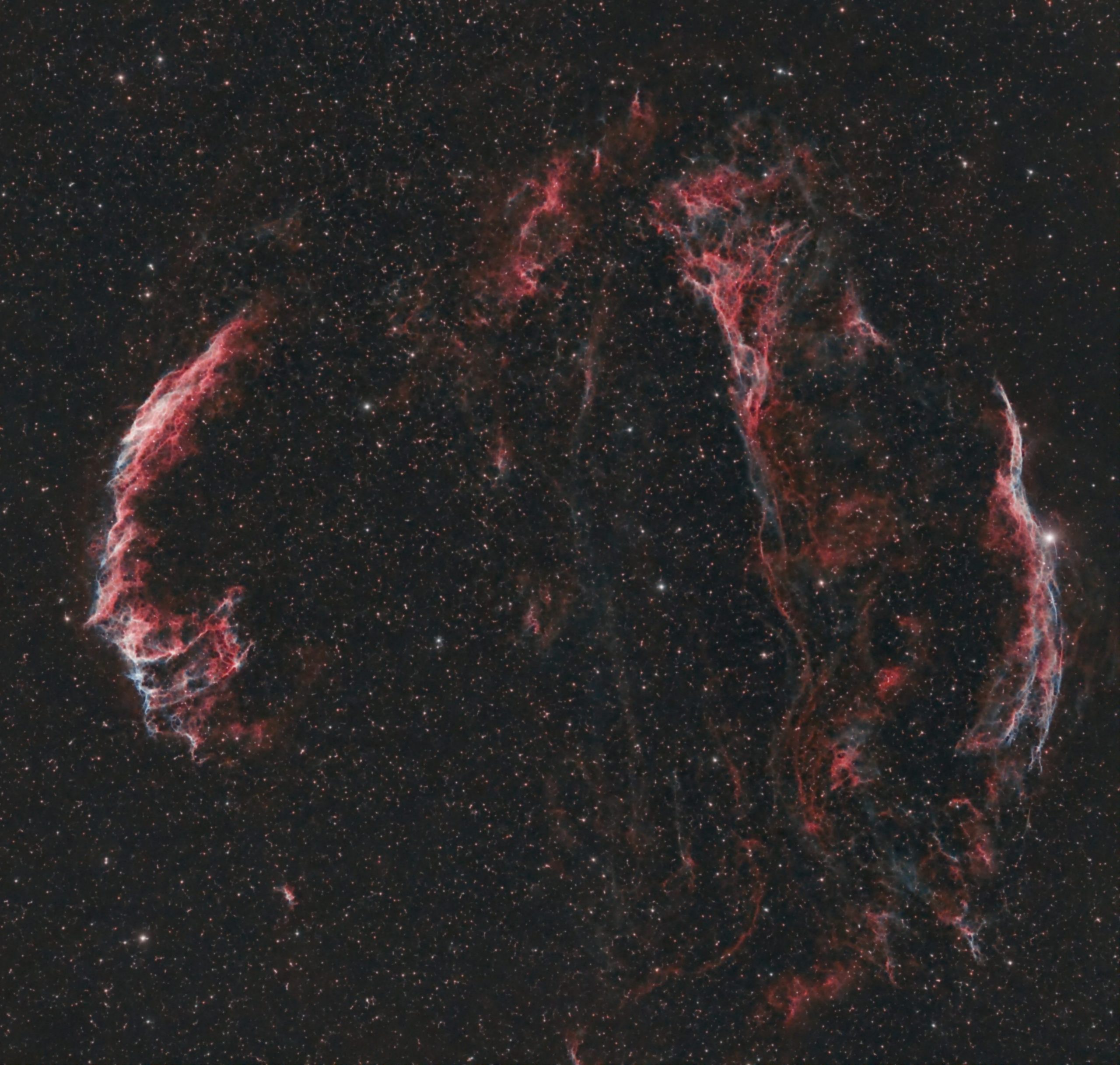
Eagle Nebula’s Pillars of Creation

What lies here is the word that spells magic onto fifty and one sessions of danger, spun out of six-eight rings of smoke. What’s more is not spoken. Just yet. You may feel that characters are fillable like sheets and that dancing may be only a player’s innuendo.

Chapter 0

Before Trollskull learned their footsteps, before Waterdeep adjusted a mirror to catch their faces, the four who would reshape a city were already moving toward one another like constellations deciding on a shared gravity. Their stories were older than their meetings; their wounds older than their names.

Clarissa Brightwater began in Daggerford, where the River Delimbiyr runs soft over its own memory and Chauntea’s priestesses keep more festivals than prudence recommends. She grew up amid the fertile riot of spring, where men raced half-naked through cold water and priestesses carried sacred stone shaped like the world’s oldest metaphor. The festival was laughter, beer, cheering crowds; but Clarissa saw beneath it the quiet truth: the earth’s generosity is not an invitation but a responsibility.

She learned early that abundance is a fragile thing—her mother’s long illness, the fields that yielded less each year, and Callum, the boy who vanished between one season and the next. She prayed not for miracles, but for strength to bear the absence of them. Her faith was not the kind that glowed; it smoldered patiently, like a coal cupped inside the palm.

Chauntea marked her. People called her gentle, but it was the gentleness of loam that can swallow a seed or a secret with equal care. And when she finally left Daggerford, she carried with her the unspoken vow every daughter of the earth learns: I will not let the world starve if I can help it, even if I must go hungry first.

Across windier lands, Lagash was being carved by a different god. He was raised among the storm-prayers and hill-rituals of Enlil’s clergy, where thunder was not weather but grammar, and lightning a signature on the mortal body. He learned the Joining of the Storm before he could read—how to stand naked beneath a sky intent on killing him, how to dance in metal skirts until lightning recognized his fervor and spared the crops.

Power came to him young, and with it the temptation of certainty. The elders taught the secret spell only once, whispering Gilgamesh’ Last Chance with the dread of those who know what divine possession truly costs. Lagash memorized every symbol, every syllable. He swore he would never use it.

And yet… the folded ritual lived in his pack like a future waiting to be paid in flesh. He walked the world with a storm inside him and the knowledge that one day he might have to ask his god to bruise him for ten seconds of borrowed immortality. Pride shaped him, but so did fear—fear that when the storm called his name he would answer.

Far to the south and elsewhere in time, Merric Ricefield grew up on a story older than his family tree. The Harp of Galerion—crafted from druid-tree wood and the last strands of an extinct unicorn’s mane—was less an instrument than a living creature humming between worlds. It had passed through his line like a whispered inheritance, waiting for a child whose hands could tune the universe.

When Merric was still small enough to hide inside a barley sack, he heard the harp’s first call in a dream. When he was older, he learned why: his grand-grand uncle had left behind a scroll of blood-bound summoning, and Merric, who loved music the way others love air, had the right kind of soul to answer.

The harp was not gentle. It broke curses the way a thunderclap breaks silence. It mended bodies as if stitching them from moonlight. It turned weapons into blossoms, armor into branches, slaughter into meadow. Yet Merric, who feared disappointment more than death, never spoke of the power outright. He tucked laughter over it like a bright cloak. A halfling with a song is disarming; a halfling with a miracle is dangerous.

So he performed, wandered, made friends of strangers, and fled from anything that resembled permanence. For him, loss had always been the first note of every melody.

And from the fractured north came Shautha, a daughter of the horse-breeding tribes—tall where others were bent, strong where others stooped. Her people bred the warhorses only orc captains could ride: enormous, keen-eyed beasts smarter than some chieftains and twice as loyal. They guarded the magic that turned ordinary horses into battlefield spirits.

Greed found them, as greed finds all beautiful things. The lesser orc leaders invaded to steal the spell, and Shautha’s tribe fell under its own nobility—warriors who refused to abandon their mares, children who would not leave the breeding grounds. Shautha survived because survival is an ugly art, and she had the body for it: long limbs made for riding, a will that refused to die while something still needed protecting.

Her warhorse died buying her one day of life. She buried its skull in the old way, the way her people believed allowed a mount to run forever across the after-horizon. After that, she never trusted ease. Doors were exits; shadows were threats; people were dangerous unless proven otherwise. She sought a new tribe, but only the kind one chooses, not the kind one is born into.

She carried grief like a well-balanced spear.

And so they came—earth, storm, harp, and horse—to Waterdeep, each propelled by need, each trying not to look as lost as they were. Clarissa searching for healing stronger than hope. Lagash searching for storms he could master before they mastered him. Merric searching for the song that would not break him. Shautha searching for a place where trust was not a liability.

They did not yet know the city was already listening. They did not yet know Trollskull Manor had begun turning in its sleep, preparing to house them. They did not yet know the weave of fate had their names braided already.

They thought they were simply traveling.

But the sun, which never lies to those who watch closely, had already begun to dip differently over Waterdeep—like a curtain about to rise, like a witness leaning forward, like a god inhaling before speaking a world-shaking syllable.

Chapter 1

Waterdeep rose like a promise that had learned to keep itself, and into its great appetite walked four names that would become one story. Clarissa Brightwater wore Chauntea like a wintering ember—grain-sweet, earth-steady—carrying a little book for names she ought to remember and a larger one for those she dared not forget. Lagash came after, sleep bartered away for Enlil’s breath, a folded ritual in his pack that weighed more than parchment and less than the price it would someday exact. Merric Ricefield laughed with the coin-smell of small luck and the hinge-song of a lute that sometimes opened doors better than keys. And Shautha arrived with the calm of a drawn bow and the grief of an emptied prairie, mapping exits the way a midwife maps breaths, counting latches the way the living count on the living.

Trollskull Manor did not look like a beginning. It looked like a bruise on an old street. Yet the house took their measure and shifted its ribs. A glass slid two inches on the bar as if remembering hospitality. The ghost—pale as unbaked bread and twice as opinionated—descended the stairwell to scold the furniture into alignment and the future into attempting itself. Lagash put green thunder between himself and the sudden chill; Merric answered with a kitchen waltz; Shautha lowered her bow without forgiving anything. Clarissa, wheat before storm, opened her hands: we are not here to evict you; we are here to remember how to stay. The air warmed. Dust rose like prayer. Four strangers drew a common breath.

The city made its first inquiry behind the Manor, where laws grow thin and luck is sharpened to a point. A purse went light, a laugh turned teeth, two men pretended hunger was dignity. Shautha moved first, subtraction written in muscle: one, two, no more. Lagash spoke thunder’s grammar, and bravado guttered. Clarissa kneeled where blood met dirty snow and said the sort of sentence that turns a stranger back into a person. Merric gathered rumor with that terrible grin of his; rumor dutifully turned into direction, direction into a name with the color of refusal: Mr Grey.

Durnan’s famous door had the wrong idea about bedtime—it slept at noon behind an invisible barrier—and a single intellect with too many legs made mockery of three stout men before Clarissa’s prayer rose like steam and Shautha’s arrow made the sound you hear just before waking from being hunted. The city noticed them as one notices a stain that will not lift. They followed bread because bread does not lie; it merely leads. Grey’s Food Services was immaculate, and immaculate things are either holy or guilty. He was both, which is to say he was faithful to his clients. Shautha counted cover, exit, ambush, and said, as if taking inventory, “You run food for monsters.” He denied with a smile that was only ever an unopened door. Lagash, lofting a small sin disguised as a spell, committed the rudeness of sticks-to-snakes, and hospitality answered with a magical tablecloth flick—the whole company shaken onto the cobbles, pride frosted with confectioner’s sugar. Mr Grey let everyone back in except the offender. Boldan tried truth and received cake. The ladies called it quits. The men wore icing. Dignity scraped its knee and carried on.

At The Hanged Man a dead beholder floated like a rumour preserved in brine. Clarissa, who had learned that the grammar of bad magic often begins with don’t touch, touched; cold bit. They hurried to Grey’s private room, tasted luxury like a promise that wasn’t theirs, accepted gifts that were, and then the dead followed with the insistence of accounts in arrears—zombies pressing in with the chant of wet things. Ged scattered them in motions that always landed on edge. Lagash clawed sky and skied fire down; even Enlil admires an entrance. Clarissa and Boldan unfurled guardians like a maternal storm. Noska Ur’gray arrived with a dwarf’s ultimatum and a ledger for souls: fight for the eye in the dark or be folded into a very tidy silence. Shautha accepted because living people required it. Lagash paid four thousand glittering apologies from an elf’s secret stash because sometimes even the proud understand arithmetic. The zombie horde prepared to argue; the Open Lord and the Blackstaff arrived instead, as if titles were weather. Mr Grey awoke with his principles intact, which is to say he refused to break client confidence even for survival. Boldan offered him the only civilized checkmate: help them find the lair or fight in the tournament. Principles, when handsomely dressed, are marvelous ways to die.

They split as a single rope unbraids. Ged with Shautha to spectacle; Clarissa with Lagash and Boldan to sewers that smelled of money’s conscience. In the belly of the lair, kobold chefs preached the honest gospel of kitchens: appetite tells the truth even when men cannot. A black pudding fell from a murder hole like punctuation made of acid, divided like a rumor, and ate coin and blade alike. Clarissa lent tools to the suddenly poor; virtue is a long habit of sharing steel. Above a stair the nimblewright-detecting umbrella—Nim’s umbrella—flowered once in sacrificial bravery and died a polite star. Beyond, an army of nimblewrights lifted their heads, paused mid-strike, and remembered obedience. One raised a hand and waved. Nim. All the metal in the room felt like a mistake.

Xanathar arrived the way a god does in an unkind opera: suddenly, above everything. The company woke hanging like ideas from the ceiling, and below them a pot with a single goldfish turned circles like a clock that measures humiliation in seconds. Mr Grey was offered an economy of betrayals and chose none; the beholder disintegrated his courtesy and his body with the same lazy ray. Lagash balked at pet murder; Clarissa offered to save what she ought not need to save; the eye grew bored with a philosopher’s paradox and began to take souvenirs. Ged gave an arm to spectacle; Boldan an arm and the Stone; Clarissa a tongue, the instrument by which she had risen bread and men and prayers. Otto replaced the fish. The eye waved them away with the insolence of power and sent them back to the dirt they knew.

Back in Trollskull, Boldan and Ged touched the Weave and found themselves made a little more like the versions of themselves they boasted about in quieter moments. Clarissa laid despair upon that shimmering skin and the Weave blackened as if scandal were contagious; beauty fled her as if it had only rented space. Lagash carried her to sleep—the luxury of those whose companions watch the door—and Shautha watched the door, because the world is tiring and somebody must.

They went again because there was nothing else to do. The lair greeted them with a wall of water and a dinosaur with excellent timing. The Tall Man dragged oxygen from the idea of oxygen and set it in their mouths; faith in friends is another name for air. In the arena seats, promises were made by men who would vanish before keeping them. A zombie beholder wore all the wrong jewelry and still killed. Lagash’s ward shattered under the mathematics of the dead. Shautha did the moral arithmetic that remains when gods are bored: free the prisoners; break the chains; if you cannot reach the hand, snap the tool that holds it.

And then Merric ended a government with a gesture unworthy of tragedy and precisely fitted to tyranny: he killed the fish. There is philosophy in it; topple the symbol and you unhouse the gaze that made a world smaller than it needed to be. The lair folded like an accordion resigned to a lesser song. Tengridu died and grief made a musician of the halfling who had preferred laughter. Uijhar would later call it tariff; Clarissa could not—she had seen the receipt and knew the cost was not paid, only moved.

They rose from rubble wet and insufficient and still together. They carried back what could be carried: the Stone that remembers too much, the vicious sickle, the rumor that tomorrow had not yet fully refused them. Trollskull received them like a chair accepting the long weight of someone you love. The ghost set four glasses and looked away so that someone would drink. Lagash sharpened his silence. Merric tuned a hush. Clarissa wrote three new names in the little book and underlined one as if ink could keep a body safe. Shautha, palm to cool wood, told the house what houses already know: we are not finished. The beams, brave with nails and memory, answered in their timbered tongue: stay, then; and if you must leave, leave something of yourselves where the grain can keep it. Outside, Waterdeep adjusted its mirrors and pinned four names to its lapel. Inside, breath by stubborn breath, they learned the oldest rite of the living: we will try again in the morning.

Chapter 2

They moved through Waterdeep as if the city had slipped into a fever dream—streets too bright, winds too sudden, and shadows behaving as though they recalled memories no mortal had taught them. Victory over Xanathar should have loosened the city’s breath; instead everything tightened, as if the metropolis feared the vacuum that comes when an old monster dies and all the smaller ones smell the absence.

Trollskull Manor, that eccentric, eldritch beloved house, held them like a lung too full. Clarissa drifted through rooms as though waking from someone else’s nightmare. Shautha sharpened her blades with the weary regularity of someone who sharpened herself against the same touchstone. Merric’s music, once playful as moth-wings, had become a low, tremulous note—he was learning that grief has a pitch. And Lagash… Lagash carried himself with the air of a man whose god spoke at an inconvenient frequency.

Into this fragile constellation stepped Alvyn, the little gnome whose silence held forests inside it. He had a way of materializing like a thought a person almost had—present before properly arriving. Animals trusted him the way some people trust dawn. Shautha, who had little patience for those who pretended harmlessness, watched him with a soldier’s suspicion that softened into something like perplexed respect. When he looked at her, it was as though he recognised the part of her that had once belonged wholly to wind, hoofprints, and long horizons.

Their troubles began anew not with drums but with a whisper: Ten-Ten missing, Clarissa distraught, the Stone of Golorr murmuring riddles in Ged’s reluctant hands. Manshoon’s shadow spread over back-alleys like spilled ink. Whoever held the last keys to the Vault of Dragons would be hunted; whoever carried hope would be followed by dread.

It was the crypts of Chauntea that pulled them under, a place Clarissa approached with reverence and Shautha with the dread of someone who had already buried too many possible futures. The air tasted of old grain and new endings. They found not relics but statues—Shautha’s own shape rendered in cold stone, Ged still and sightless, Ten-Ten’s face frozen mid-thought. Clarissa’s heart cracked like ice around new water. She whispered Chauntea’s name until it frayed.

And then came Roman, the sorcerer whose power looked like the aftermath of a star remembering itself. His arrival was rude as salvation usually is. He strode through curses as through tall grass, undoing stone with a thought and an irritation that bordered on art. Shautha watched the world grow warm around her again and muttered something like thanks that she pretended was aimed at no one.

But the crypt objected violently to their presence. A boulder dropped like a god clearing its throat; the sorcerer’s legs crumpled beneath it. Clarissa’s compassion flared and recoiled in the same breath—guilt is less straightforward than prayer. Lagash enacted his miracle-work with a solemnity so raw it almost embarrassed the divinity he served. When the boulder was rolled aside and the wounds closed, Clarissa’s ring gleamed with the regenerative will she wore like a second heartbeat.

The Golden Sceptre waited for them in the tomb of a halfling bard—the last echo of a life that had known too many final songs. Merric touched the carved symbols with a reverence rare even for him; music recognises its own kin even under centuries of dust. They left the crypt with more weight than treasure.

Back above ground, the world wasted no time demanding further madness. An albino gazer—white as candlewax, terrible as a child’s nightmare—hovered at the edge of their days, spying with a devotion that bordered on affection. Shautha fed it scraps and named it with a grunt that sounded like mockery but was simply her version of tenderness. The creature followed her like an omen hoping for instruction.

But Manshoon’s men wanted it, and wanting from men like that meant taking. They came with blades and arrogance; they left as memories dissolving on cobblestones. Shautha raised her bow to feed their bodies to the gazer, her eyes gone flinty with some old ancestral logic of war. Clarissa stepped between corpse and arrow, her breath trembling. Mercy clashed with pragmatism in the air until the wind itself hesitated. The dead remained where they lay.

And then, as if secrets were made to fall into the wrong moments, Lagash’s past reached out in the shape of the Zhentarim captain who called him kin. Clarissa’s face pale, Shautha’s narrowing with betrayed instinct, Merric watching as though music alone kept him grounded. Alvyn shifted one step between friend and stranger—small but unyielding—as though his body could arbitrate the loyalties of giants.

It was not trust that moved them next, but necessity. Necessity made the map; fear traced the lines; devotion filled the spaces between. They descended again—deeper, colder, under the city’s marble sigh—to the Vault of Dragons, where even breath dared not echo without permission.

The great gold dragon, guardian of unimaginable treasure, rose in a torrent of flame. Beauty too immense is indistinguishable from terror. Lagash called a storm into existence as if daring heaven to judge him; in six heartbeats the dragon judged and struck him down. Clarissa dragged him from death’s edge with hands that trembled but did not fail. Shautha stood between them and the fire as if she had always been built to hold the sky at bay.

Merric whispered a prayer for courage in a language the Harp of Galerion had taught him between dreams. Alvyn disappeared into shadow and reappeared above, beside, beneath the battlefield—his wolf-form flickering like the memory of a moonlit sprint, his arrows singing truths about survival.

They did not win by force. They won by bewildering a memory that was not theirs. The fresco—a great illusion of the dragon’s forgotten past—opened and swallowed them whole. They walked through volcanic shadow, jungle teeth, mocking laughter, and mountains that remembered frost. When they emerged, the spell unraveled, revealing not a monster but a dwarf with a long-lost face.

The staff lay revealed behind him, too visible now, too possible.

Clarissa took responsibility the way some take poison—with a calm that hides fractures. She held the Staff of Aghairon not like a weapon but like a verdict. Someone had to decide what came next. She prayed the goddess might speak through her steadiness.

Exhaustion settled on them like dust after collapse. They retreated into dark corners of the vault to rest: Lagash unconscious but alive; Merric bruised in spirit more than skin; Shautha sharpening her resolve like a blade she meant to use; Alvyn curled in wolf-shape beside them, a silent promise breathing in fur and warmth.

Clarissa kept the staff close, her shadow stretched long across stone, and whispered to the Stone of Golorr as though it might confess something other than riddles. Outside the vault door, Manshoon’s inevitability coiled like a storm gathering its argument.

Whether dawn would find them victorious, broken, or transformed, none of them yet knew. But the city above waited. And the house at Trollskull, though beaten by loss and trembling under destiny’s weight, still held a hearth that whispered:

Return to me. Bring your wounds. Bring your miracles. Bring your unbroken vow to keep going.

And the five of them—Clarissa, Lagash, Merric, Shautha, and small, steadfast Alvyn—slept in shifts, dreaming of dragons, of gold, of choices that might yet remake the city, and of each other, in the hour before destinies decide themselves.

Chapter 3

Waterdeep held its breath the way a chandelier holds light: brightly, trembling, aware of its height. The streets were too clean in the morning, too crowded by noon, and by dusk they had learned to rehearse panic without quite performing it. Rumors drifted like ash—gazers sighted above the Castle; an entire dockside alley walking in borrowed bodies; a whisper that the eye in the dark had opened wider.

Inside Trollskull Manor, the air learned their names and would not set them down. Clarissa moved through rooms with Luna pressed close, her heartbeat and the child’s trying to solve each other. She had seen Callum where no brother should be—pale, wrong, carrying the stillness of a thing that had been emptied and refilled. Mourning Merric felt like misplacing a song you can still hear; she reached for the melody and found only the ache it left behind. She said Chauntea softly, as though the goddess were a midwife and she a woman whose labor would not end.

Shautha returned with the quiet of a blade returned to a sheath—with the same promise of future use. She did not speak of streets that had watched her as if they were owed her stride, nor of friends taken by the beholder’s errand-bearers, nor of Nim carried off like a child who trusted the wrong hand. She oiled the string of her bow and counted exits the house did not know it had. When Clarissa’s gaze snagged on her, gratitude and fury braided in both directions, they nodded as if returning a weapon each had borrowed from the other.

Lagash, storm-shouldered, smelled thunder where other men smelled kitchens. His ritual slept in his pack like a coiled sentence. Pride kept company with dread in his eyes: what if Enlil’s grammar failed him at last; what if it did not. He took inventory of allies and found himself unwilling to be one; some men confuse solitude for strength until friendship puts its hand upon the scale.

Ged’s patience had grown sharp. He moved as if every step might be a footnote correcting fate, his gaze combing the room for mistakes it had yet to commit. Boldan held the Stone of Golorr the way a penitent holds a relic he fears to use—fingers reverent, jaw stubborn. He could feel a city written beneath its surface in scripts of dust and debt.

Help arrived with the clack of a latch that refused to be dramatic. Vincent stepped in as if punctuality could club catastrophe into reason. He laid out leads with the calm glee of a man who knows the shape of a trap and admires the workmanship. Names, routes, kitchens with doors that doubled as confessions; a web whose spider served dinner to monsters. Fala followed with leaves in her hair and defiance in her wrists, unrolling a defense against intellect devourers that smelled of bitter green and good sense. “Breathe this,” they said, “and keep your own mind. It will not stop fear, only hunger.” Which is to say it was honest magic.

They listened, because listening is the city’s first sacrament. The Yawning Portal, said Vincent, had shuttered under an invisible hand; Durnan answered no one. Food went where fear pointed, which was—by circuit, by silence—to the lair beneath the city. Mr Grey sat at the clearing-house of appetite, unassailable not because he could not be hurt but because he would not be bent. The Stone thrummed, remembering roads that had once obeyed it. Somewhere, down in the river fog, Nihiloor’s name cooled the air.

Clarissa watched Luna sleep, the small mouth open to a world that borrowed breath from gods and debts from men, and she knew why mercy sharpened into rage at the exact point where children became collateral. She worried for Nim as if hope were a thread she could keep from fraying by refusing to let it go slack. She thought of the intellect devourers who had already made a meal of people stronger than she—Lagash, even Shautha—and in that arithmetic found only one answer: endure together or be parsed apart.

They rehearsed their courage in small ways. Shautha tied beads into her hair with hands that did not shake. Ged checked the balance of blades as if testing the truth-value of steel. Boldan touched the Stone and then pulled his fingers away like a penitent who has felt an icon flinch. Lagash went to the threshold twice and returned once. Fala’s draught burned the back of the throat and left a taste like iron filing a vow. Clarissa walked the house with a bowl of warm water and a cloth; she blessed lintels and doorknobs, scolded dust into piety, and asked the walls to remember that bodies are allowed to come home.

Outside, the city practiced catastrophe. Griffon riders trimmed their circles tighter with each hour, as if the sky had learned a smaller vowel. The first gazers were only rumors; the second were patrols. At the docks a boy ran until his name fell off him. The statues in the Market looked especially like men pretending not to be afraid.

They mapped their approach without pretending to certainty. The order of it, the clean sequence—Portal, Grey, lair—felt too tidy, which is how you know a plan was written by men who love maps. Still, maps are useful when your enemies prefer mazes. They drew breath around the thought of Durnan, of his door heavy with stories, of the barrier word that lay on it like frost.

Clarissa took Luna’s weight from hip to heart and back again. “Sleep,” she told the child, and also the house, and also the part of herself that wanted rest where the world needed wakefulness. She set Luna down with a prayer tucked beneath the blanket, a faith-knit promise that the house repeated in its timbered voice: we will keep what you love while you go out to love what we cannot keep.

At the window, Shautha watched a crowd become rumor become ash-light. “Soon,” she said, to no one. Ged nodded as if she had solved a proof. Boldan placed the Stone back into its cloth—the gesture of a man putting away a weapon he cannot afford to draw too often. Lagash set a palm briefly against Clarissa’s shoulder, pride translated into awkward kindness, then went to check a sky that did not need checking.

Night arrived with too little darkness. Water carried voices farther than it should. A squadron of griffons banked hard above the Castle, and for a breath the city looked like a painting of itself—urgent, gilded, untrue.

When the door opened of its own accord at dawn, it was only a draft. Still, they looked to each other and said the thing warriors and healers say before the day teaches them a new grammar: “Ready.”

If there was an answer, it came not from gods but from the ordinary majesty of people putting on their boots. Vincent folded his notes and went to ground. Fala lifted her satchel as if it were a standard. Trollskull’s ghost set down four clean glasses without comment, and one of them took a sip too quickly, because hands do that when courage arrives ahead of breath.

They stepped into Waterdeep. Somewhere above, a gazer helloed nothing and received a spear of sunlight for its trouble. The wind smelled of bread and blood and the arrogance of eyes that do not blink. The city, performing its old ritual of revelation, waited to see whether these few would keep the promise it had not dared to make aloud.

They went first to the place where doors learn to listen. They would find it shuttered, and the shut would be a kind of speech. After that, there would be Grey, who understood the theology of appetite. After that, stairs and kitchens and the kind of darkness that calls itself a god.

But for a breath—this breath—they were only people at the edge of a day that had decided to become legend. Clarissa touched the holy symbol at her sternum. Shautha flexed a hand and felt it answer. Ged exhaled the longest held note in his body. Boldan uttered a name he had promised not to say. Lagash remembered lightning and did not flinch.

Waterdeep listened and, as great cities do when they love their children, refused to tell them how it would end.

Chapter 4

They carried their exhaustion upstairs, but the house was not done with them. Trollskull hummed with the quiet insistence of a theatre that knows its cast is lying about the depth of their wounds. And so, in that late hour when walls thin and memory breathes through the grain, their pasts drifted up like incense from a cracked censer.

Clarissa’s began with wheat. Wheat, and the river, and the soft obstinacy of Daggerford mornings when men stripped to linen and plunged into the cold as if absolution were a temperature. She had watched them as a girl—watched her father’s breath shake, watched the priestesses lift the sacred stone shaped like a woman’s secret and call down Chauntea’s abundance with laughter that outran propriety. She had thought, then, that holiness was honey, warmth, the business of healing bruised knuckles and coaxing seedlings toward spring.

But cities have long shadows, and Clarissa had followed her brother’s into the alleys of Waterdeep before she ever had the strength to acknowledge that she was following the shadow of a corpse. Callum—still alive in the picture her love insisted on painting—had walked into the hands of Phineas, into the splintered orbit of Fagin’s charity that taught children how to steal innocence by losing their own. She did not know, then, that her brother’s skull had been hollowed and lit from within by an intellect devourer wearing his smile. She only knew she loved him, and that grief becomes faith when you refuse to let it rot. She learned to heal because she could not save him. She learned to pray because hope needs vocabulary.

In another room, Ged dreamed in footnotes and bruises. He had been born of a cleric and a thief, though neither role lasted long enough to raise him. His earliest cradle had been an aunt’s weary kitchen, where “Geddoverhere!” softened eventually into an affectionate name rather than an indictment. He would have been called restless if the village had had the mercy to diagnose him; instead he was called trouble, and sometimes “moron,” a title he carried like a small stone in the shoe—annoying, but harmless until he stepped wrong.

In the forests of Ahm he met Grimble Gromble, trickster monk, who trained him by first hurling him bodily through the air, as if flight were the prerequisite for enlightenment. The training that followed was less instruction and more provocation, punctuated by puzzle boxes, impossible errands, and one perfect lesson: the world does not owe you understanding; you must steal understanding from the world. Ged learned quickly, recklessly, and imperfectly, exactly as intended.

He learned to fight, then to lose, then to lose worse. In Hope Valley he witnessed the kind of darkness that has rules, the kind of cruelty that prides itself on consistency. He fought the twins who moved like half-remembered dreams, and watched White Fang lie broken under a dome of blackness tighter than any grave. He listened to Akira’s grief sharpen itself on blame—your fault, your foolishness, your running off—and hated himself for making sense of it. He tried to fight Drefan Vandemar, failed, and failed again, though the man’s mercy was more frightening than his skill. Ged lived because there was more for him to lose. It was a lesson he despised. It was also the lesson he needed.

Shautha’s past came on hooves—iron-shod, frost-rimmed, pounding across memory’s steppe. She had been born to an orc tribe whose elegance outsiders never bothered to see. The breeders of war horses held a secret magic older than any chieftain’s boast: a spell that turned ordinary beasts into companions worthy of battle, mounts whose rage was intelligent and whose loyalty was earned, not commanded.

She had been tall enough, strong enough, to be chosen by one such horse when she was barely old enough to hold a spear steady. The bond was immediate and entirely unsentimental; the horse obeyed because she did not ask politely. Together they broke ambushes, outran betrayal, and learned the unwise joy of depending on another creature. And then the greedy tribes came, storming the breeders’ fields to seize the magic that refused to be stolen. Shautha survived. Her horse did not. Some griefs are too large to bury and too dignified to parade; hers took the shape of silence, long as winter and twice as sharp.

Boldan’s guilt was a different kind of animal—patient, heavy, with the slow tread of a beast that knows its prey cannot escape. In war he had been given an order that redefined him: kill the prisoners. He had obeyed until he couldn’t; then he tried to kill himself, and failed even that. When he woke, life had been handed back to him not as mercy but as assignment. The gods left him breathing so he could suffer properly, and through that suffering perhaps stumble into redemption. He did not know which he deserved. He still doesn’t.

Lagash’s history burned. Quite literally. Enlil’s priests had taught him every form of scarcity: scarce praise, scarce sleep, scarce comfort. The ritual he learned—Gilgamesh’ Last Chance—was the kind passed down only to those the god intended to break open like seed husks. When he cast it for the first time, lightning scarred him in the patterns of ancient grammar. Power lived behind his eyes afterward, restless, coiled, unwilling to be merely borrowed. Somewhere between devotion and possession lay the truth of him, and he has never admitted aloud how often he wonders who, exactly, is steering whom.

Merric’s past blew in on a soft chord. Meadowbee, valley of halflings, had once welcomed an elf who had sworn never again to raise a blade. Galerion had taught music the way master smiths teach fire—to listen, to shape, to let it burn only when it must. In time another student fashioned the harp that would become a creature, a companion, a dimensional echo. Merric, inheritor of the harp’s lineage by accident of blood and the treacherous whims of family heirlooms, found himself holding music that could unmake curses or turn armies into gardens. Power like that is a kind of affection: overwhelming, inconvenient, and loyal beyond reason.

Alvyn dreamed sparingly, as rangers do. The Feather of Secomber tended no legends, only small precise truths—tracks in mud, weather in leaves, the habits of terrified field mice. But there had been moments, growing up by the river’s hem, when the air felt thick with attention, as though some wind-borne god had paused to take him in. He learned the bow by listening to birds. He learned stillness by imitating stones. He learned mercy by watching what fear does to living creatures. And when Enlil whispered his name, he looked up without surprise. The gods, after all, have a habit of choosing the quiet ones.

All of it rose through Trollskull like a tide—their griefs, their oaths, their unfinished questions. The house took them as they were, as houses do when they have begun to love the people inside them: flawed, unbeautiful, radiant, exhausted. Each returned to sleep wearing the oldest version of themselves like a second skin. But sleep is also a corridor, and dawn rarely finds you where you entered.

Outside, Waterdeep rehearsed another storm. Inside, six adventurers slept under the weight of their unspoken beginnings, each dreaming toward the person they were required to become.

Chapter 5

In the hour when Waterdeep’s great bells faltered and the sky ripened to a color not found on any painter’s wheel, the city learned what it meant to be watched by a god who hated sharing. Xanathar’s assault began not with thunder, but with stillness—the thin, queer stillness that enters a city just before it loses something important. Above Castle Waterdeep, the air split into a battlefield of gazers and griffons, their movements sharp as punctuation marks in a dying poem. Far below, at the docks, intellect devourers threaded through alleys like thoughts escaping a broken mind.

Clarissa Brightwater, carrying Luna on her hip and her own fear beneath her ribs, understood too well the traitorous weight of love. The vision of Callum, pale as unfinished dawn; the memory of Merric already curling into legend; the guilt of leaving Nim in the hands of monsters who shaped minds as easily as potters shape clay—all of it clung to her. So when Shautha led her back toward Trollskull, Clarissa let herself be guided. Even the strongest roots sometimes require the company of a sturdier tree.

But Waterdeep, like all great cities, had a habit of answering despair with surprise. Vincent, dependable as a hinge that never squeaks, arrived with leads sharp enough to cut the darkness. Fala, with hands that smelled of herbs and stubborn hope, offered a defense against the intellect devourers—a little circle of safety in a world being gnawed from the ankles upward. And Boldan—awkward, earnest Boldan—carried the Stone of Golor, trembling with secrets that might yet tip the balance.

Yet hope has a way of requiring confirmation. For that, they sought Durnan.

The Yawning Portal greeted them with a shuttered door and an invisible barrier that pressed the touch back like a disapproving elder. Lagash, never one to converse softly with fate, shouted for Durnan, and fate answered with an intellect devourer. One creature—just one—cut down Lagash, Boldan, and Ged like stalks in the same careless swing. Only Shautha’s merciless precision and Clarissa’s devotion hammered into spellwork saved them from becoming hollowed relics.

Revived and chastened, they turned to the city’s least likely oracle: Mr Grey.

Grey’s Food Services, improbably still open while Waterdeep bled, welcomed them with the scent of pastries and the disarming charm of a man who knew exactly how much trouble he was not in. Grey, with his languid humour and culinary diplomacy, dispensed samples with the generosity of a minor deity. And then Lagash—some men cannot resist spoiling their own salvation—assaulted him with sticks-to-snakes. The magical backlash flung them across the street like poorly made dolls. Mr Grey, affronted but still polite, permitted everyone but Lagash to return. Boldan’s Zone of Truth only added cake to their humiliation. When they finally withdrew, it was with crumbs, bruises, and the dawning realization that Grey was no man’s stepping stone.

Night fell. The city changed shape.

Outside The Hanged Man tavern drifted the corpse of a beholder—an omen Clarissa could neither resist nor fully understand. Touching it bestowed a cold burn, a kiss from a dead tyrant. Inside, Grey’s private room revealed itself as a sanctuary of sybaritic comfort. Clarissa, who had spent her life kneeling in fields and at sickbeds, felt a disquieting flutter: luxury is its own kind of magic, and some hearts are starved for it.

But comfort is fragile in a city at war. As she lifted a drink to her lips, the dead rose. Zombies poured in through every breach, every night-soft corner. Boldan in holy fury, Shautha in fierce clarity, Ged a storm in disciplined form, Clarissa radiant with Chauntea’s guardians—and Lagash, somehow, still solving problems by worsening them—faced the tide of rot.

Grey, bizarrely, had been undone by a single drink. Lagash shook him awake while Clarissa’s spirit guardians carved sanctified arcs through the corrupted. And then the room betrayed them. A paralysis fell, cold and complete, freezing Clarissa, Boldan, Ged, Silveryfingers, and Mr Deeppockets in mute helplessness. Above, in some mockery of theatre, a zombie beholder crept into place, and Noska Ur’gray delivered his ultimatum: serve Xanathar or die.

Shautha accepted the terms; Lagash purchased their lives with 4,000 gold he did not truly have. Once freed, they escaped through a galaxy of staggering violence—Lagash’s fireball blooming like a murderous flower above the street, Boldan and Clarissa releasing devastating radiance that flattened the undead until none remained to hiss or plead. The Open Lord and Blackstaff descended as though answering a summons from destiny itself. Waterdeep exhaled, briefly.

They gathered at Trollskull, divided by conviction. Boldan, Clarissa, and Lagash chose the sewers, guided by the Stone’s inscrutable hunger. Ged and Shautha, their blood singing for contest, stepped toward the arena. Two roads braided from the same thread of fate.

In the depths of Xanathar’s lair, they found Solomil—a wrecked dwarf barely clinging to selfhood. They freed him, sent him upward with Lagash’s unlikely entourage, and pressed on. The kitchen yielded cowering kobold chefs. Then came the black pudding: thick, intelligent, and vindictive. Their retreat was desperate, their victory costly. Lagash and Boldan’s weapons corroded to ruin; Clarissa lent hers with the air of a mother who expected them returned clean.

At the staircase’s summit, her nimblewright-detecting umbrella exploded in her hands without harming her—a divine joke, perhaps, but she pressed on. They entered a hall of steel bodies: nimblewrights frozen mid-gesture until they surged forward as one. A single blade grazed Clarissa. Then—stillness. Nim, waving from the far end, gentle as a child caught misbehaving.

Above, unseen, Nessa faced oblivion for their sake.

While Clarissa embraced Nim with relief enough to crack her ribs from within, the unseen threads of fate snapped into place. Xanathar appeared in the great hall—no, not appeared, but revealed himself, as though he had always been there, just beyond the reach of sanity. His eye raked them, and Clarissa fell senseless, caught in the cold geometry of antimagic.

They hung upside-down before him: Lagash raging with useless defiance; Boldan bleeding humility and fury; Ged calculating even with one arm left; Clarissa tongueless, terrified, trying valiantly to atone by bearing witness. Below them, a goldfish circled in its pot, oblivious to its importance.

Lagash refused to harm Xanathar’s pet. Mr Grey paid for that refusal with annihilation—reduced not to ash, but to the idea of ash. The Beholder, bored with their pleas, replaced his pet with an old dwarf named Otto, who blinked in confusion, having been promoted without consent.

Then came the losses: Ged’s arm, Boldan’s arm and the Stone of Golor, Clarissa’s tongue. Pain as punctuation. Humiliation as grammar.

They were teleported to the surface like refuse spat from a terrible mouth.

At the Weave, Boldan and Ged reclaimed what was stolen. Clarissa, heart thundering, reached too. And the Weave—perhaps offended, perhaps merely honest—drained her. Her beauty, vitality, and strength ran out of her like light fleeing a collapsing star. The Weave turned black in protest. They restored it. Clarissa could not restore herself.

She believed Lagash saw her as she now was: diminished, faithless, ruined. She believed she deserved the loss.

Lagash, stubborn as collapsing stone, carried her to the Weave again. She woke in his arms, held him, then released him—not because she wanted freedom, but because she feared burden.

The Manor, unaware of tragedy, welcomed Uijhar with its usual architectural indifference. Boldan embraced him; Shautha greeted him with the wary fondness she reserved for old companions; Roman arrived soon after, bearing carrot cake that had apparently been intercepted by a particularly ambitious crow. Upstairs, Lagash struggled with a wounded kenku. Uijhar helped her down, Roman glowered at his disappointing meal, and then darkness fell.

The stench arrived first, followed by silhouettes with knives. Uijhar shoved the kenku outside. Roman drew a flaming wall with dramatic contempt. Lagash hurled sticks that became serpents. Ged cut into the melee like a blade remembering its purpose. Roman’s fireball blossomed, unreasonable and bright. Victory came, messy and inevitable.

And in that scorched aftermath, one truth flickered:

Waterdeep was not a city besieged by a monster.

It was a city performing a ritual of revelation—one in which each of them would learn what they truly were, and what price the world would demand for knowing.

Chapter 6

At last light the city came to a hush that was not silence but attendance. Waterdeep, bruised and overstimulated, squared its shoulders the way a great animal does before hosting something sacred. Trollskull Manor felt it first. The old beams tightened with the confidence of a theatre that finally trusted its cast; the windows learned reverence; the door remembered it was a threshold and not merely an aperture.

Bread appeared upon the counter as though invoked—round loaves split by patient hands, heat rising from them like modest miracles. Boldan broke the first crust without sermon. He named the dead instead, and the names—Grey, Tengridu, Nim-in-hiding, the fish that was not a fish—rose like incense that believed in itself. Ged stood beside him, counting with the quiet accuracy grief demands. Some men mourn; some men audit.

Clarissa laid the Staff of Aghairon on the threshold, that thin holiness between ours and everyone’s. She set it down not as weapon but as verdict. The Weave lifted its head—shy, chastened—like a creature permitted beauty again. Shautha laid the long table from door to street: plank on barrel on crate, an altar of unpretentious sacraments. She placed Mr Grey’s napkin at the head. No plate. That was his privilege.

Merric’s melody haunted the brickwork, the Harp’s afterimage trembling like a half-remembered kindness. Alvyn quietly threaded green above the lintel, a hunter’s oath: nothing entering would remain unfed.

Lagash arrived last, sky-stitch still in his hair—he had always worn weather like a second language. The ritual in his pack strained for release; he refused it gently, which is the rarest kind of defiance. Tonight the storm obeyed by dissolving into rain. Children blinked. A griffon blinked back.

“Bread for enemies,” Clarissa said, raising the knife. “Names for strangers.” And she served them, one by one: Ten-Ten’s trembling fingers, Ged’s cautious pride, Boldan’s wounded duty, Shautha’s unembarrassed hunger, Lagash’s reluctant gratitude, even the surviving nimblewrights who accepted their bread with the surprise of machines discovering sacrament.

No one called it closure. It was not. It was custody—the living agreeing to hold one another carefully, even when they failed, even when they bled.

Only after the last crumb had been taken did Boldan and Ged lift the Staff and carry it inward—into the Manor, where power surrendered itself to covenant and covenants were kept simply, by sweeping the floor.

The city exhaled. Somewhere above, a storm decided it would be rain and was thanked for its restraint.

Earlier that day, Uijhar had walked the City of the Dead with his usual mixture of piety and complaint. Hammer Clang had floated into the darkness with unhurried dignity, and he had wished her a sweet death. Her treasure—gold and three Acorns of Silvanus—waited dutifully where she said it would. The acorns ticked in his palm like polite hearts. A paladin is merely a gambler who tithes to probability, he thought, and felt almost philosophical.

There was, of course, the matter of Clarissa: he had not yet met her, but rumour tended to sketch beautiful women with the charcoal of the sketcher’s appetite. And Lagash—poor, self-correcting Lagash—had once again unravelled by her hand. Uijhar clapped the man’s shoulder when the Tabaxi confession spilled out like rain unsure of which roof to favour. Men tell the truth only when they believe the truth irresistible.

“It’s probably hopeless,” he sighed, “but let’s go beg the weaponsmiths for the ring of regeneration.”

And hopeless it almost was—until Lagash’s persuasion, sharpened by desperation, pried the miracle free. Clarissa slid the ring onto her finger, and in a breath her beauty returned, not coyly but with full divine insolence. Lagash looked away out of politeness and because no one should stare at a miracle lest it think one available.

Then came the funeral of Mr Grey.

Tears of anger streamed down Shautha’s face as she remembered the helplessness, the indignity, the devourers erupting from that poor little man like white lies scaling into policy. The procession behaved until grief remembered it had been invented to embarrass the living. Pandemonium erupted; Uijhar did not smite so much as edit the creatures—removing the unnecessary, leaving cleaner sentences behind.

Clarissa was restored; Kelemvor was appeased; chaos was corrected by the Tall Man’s sorcery. And when the time came to choose who would descend once more into the Beholder’s lair, it was—predictably—the beautiful girl who balked. Even the half-elven forester stepped forward without vanity. Men do not rise to courage; courage lowers itself politely so they may reach it.

Uijhar declared he would lead. Of course he did.

Xanathar’s arena greeted him with the self-importance of an institution that had never questioned its budget. Water rose up in a parable of drowning; a dinosaur announced itself with poor timing. Uijhar pulled himself together—paladins are expected to—and soon found himself on the spectator stand, cloak dripping with offended incense.

“Death to Xanathar!” he bellowed at the gladiators. Revolutions often begin when a spectator mistakes himself for a protagonist, but Uijhar had the manners to make it look rehearsed.

The two prisoners they freed promptly vanished when a Zombie Beholder entered, as absent allies often do. Lagash managed a ward before collapsing; Uijhar finished the creature with inelegant but adequate zeal. Arithmetic, he found, made the most convincing last rites.

Elsewhere, unseen, Tengridu was disintegrated, Ged was wise enough to flee, and Shautha solved her terror by inflicting it upon the kobold kitchen staff.

Xanathar fell—not to Uijhar’s strong right arm, nor Lagash’s thundering grammar, nor the Big Woman’s precision, but to the Little Man, who killed the tyrant’s goldfish and thus unsungly unhinged a monster.

Great evil turns out to be surprisingly administrative: remove the right symbol and the institution collapses.

Uijhar comforted Merric—“Great evil cannot be stopped without great sacrifice”—and rehearsed the version of the tale Volo would pay for. Less carp, more heroism.

And yes: treasures were returned, sickles reclaimed, the Stone of Golorr retrieved. Shautha gained means to restore Trollskull; Ged gained Ten-Ten; Clarissa gained Lagash’s complicated devotion; the city gained a reprieve.

Blessed be the Goddess. Blessed be her accounting.

But Waterdeep never allows triumph to settle.

Herman Grey’s Home of Exotic Foods vanished—no splinters, no crumbs, just an immaculate vacancy. Manshoon’s minions, polite burglars of the arcane, left nothing but their punctuation.

Phineas reappeared, still trafficking despair as though it were civic duty. One of the keys to the Vault of Dragons hid in the Temple of Chauntea, where temples kept keys the way oceans held ships: lovingly, guiltily, with historical denial.

Clarissa wanted to go home. Lagash refused. She cried, privately, efficiently. Then she did the only sensible thing: she sought Roman.

He baked. He glowered. He wielded magic with the irritated tenderness of a man disappointed by physics. Shautha distrusted him. Lagash bristled like a storm newly informed it was optional. Clarissa smiled at him with the mercy of a door that has already decided who may enter.

And that evening—after the bread, after the naming, after the relinquishing of the Staff—the house held them the way a lung holds breath. The city listened. The night leaned in.

What they had broken, they would mend.
What they had lost, they would find.
What they had become, they could no longer undo.

And somewhere in Waterdeep, a new evil inhaled, politely, preparing its own threshold.

Chapter 7

They called it the Crypt of Chauntea, but sanctity was only the bait. The room itself was a hinge, and when they stepped across, the valley’s luck swung the wrong way.

Stone first: Shautha, Ged, Ten-Ten—caught mid-breath, their bodies’ grammar struck dumb. The open sarcophagus grinned like an unfinished sentence. Clarissa felt the old farmer’s knowledge move through her: curses ripen fastest in hollows. Later Shautha would name the culprit—medusa—and Clarissa would pretend that made it better. In the moment it only meant too late.

Salvation arrived rudely, as salvation prefers. Roman parted the air the way a star remembers itself, and flesh returned to muscle, nerve to motion. Clarissa had doubted him when he turned his back and left them to the crypt’s etiquette; when the boulder fell and crushed his legs, she—Goddess forgive—felt the flicker of a satisfied correction. It burned away as the same fate reached for Lagash. She levered stone with a grunt and prayer; Lagash’s miracle and her ring’s old green spark made everyone almost themselves again. Almost, which is to say—enough to continue.

“Not a crypt,” she said, binding a scrape with a strip torn from her skirt, “a Death Trap of Six.” The name fit; the place seemed pleased to be properly introduced.

Clues arranged themselves like seeds in a furrow. In the halfling bard’s dust—last survivor’s last box—gleamed the first key to the Vault: the Golden Sceptre. They did not sing. They added it to the ledger.

The Sceptre in Lagash’s hand was a lecture. Shautha, who had already pried the Stone of Golor from Ged’s sober custody, watched the storm-priest claim a second trust and decided a pattern had graduated into a threat. The argument was brief. She took the Sceptre by force, clean as a brand removed from a flank. They were not enemies—only people who loved their city in different tenses.

The Stone, when consulted, gave them the remaining entries in its cruel inventory: an eyestalk from an albino gazer; the hand of a drow. The first arrived obligingly—chalk-white and curious, trailing them like a thought someone had failed to complete. Shautha fed it, and the little monster domesticated itself with the speed of appetite. The second price sat on the table like a dare. Random drow, any hand. A road so straight it bent into evil. Clarissa named it aloud and refused it; some lines you don’t cross even to save a city’s vault.

Manshoon would cross ten such lines before tea. His men came for the gazer and died learning Waterdeep had not exhausted its patience. Swords down. Street quiet. Shautha, practical as drought, moved to feed the bodies to her new pet; Clarissa set her breath between corpse and eyestalk. “No.” Mercy isn’t gentle when it stands where the ground slopes to horror.

Then the scrape along Lagash’s past: a Zhentarim captain, beaten and proud, called the storm-priest brother. The world wobbled. The line between necessary alliance and betrayal blurred its edges. Clarissa felt trust loosen like a tooth.

She would not have gone to the Vault of Dragons if the day had left her to herself. Love is not an argument she trusts in rooms where men prefer certainty. She had chosen Shautha over Ten-Ten in the earth-quaking collapse of Trollskull—a choice made in the clean arithmetic of triage, proved right by the fact of two living bodies instead of one. Yet her ledger kept adding Lagash’s name to its margins. She had thought he killed Ten-Ten when in truth he swapped elf for sparrow and bought a narrow life. “You saved him,” she said. “You frightened me.” Both sentences true; neither cancelling the other.

Laeral Silverhand asked, and that settled the matter. Clarissa decided in the quiet place where decisions do not ask permission: the Staff of Aghairon would pass to neither storm nor bow. If necessary, she would trust the dissolute sorcerer first—Roman, who did not want the Staff, which made him safest.

So they went, against sense, beneath the opera house that rehearsed luxury while the city counted exits. The door opened; the gold dragon did not bother with a speech. Fire arrived first, as manners dictate when immortals meet the immoderate. Even Ged, who has a theory about everything, chose discretion. Lagash called down winter, and the dragon taught him what six seconds are for. Clarissa dragged him out of death’s reach and deliberately failed to wake him. She alone had seen where the Staff hid; she would not let knowledge be argued out of her by love, pride, or habit.

Ten-Ten refused to abandon Lagash’s body. “He’ll wake furious,” Clarissa warned. Ten-Ten’s grin conceded the point and hoisted their friend anyway. “Better angry than a relic,” he said, which is a kind of wisdom.

The only exit now was a fresco with too much confidence in itself. Its magic caught Ged and Ten-Ten like a net that sings while it bites. They fought free, scraped and chastened. Manshoon’s shadow lay over the stair like a silk threat.

The fresco was not paint but forgetting: a spell teaching a dragon to be a dwarf. Each of them saw a different page of the same autobiography—mocking women, a volcano’s cough, a jungle’s patient tiger, mountain snow strict as doctrine. They did the simplest brave thing and stepped forward together. Enchantment cracked. The dwarf blinked his first true blink, and the Staff became obvious because dwarves do not have room in their navels for artifacts that prefer grandeur.

The dwarf vanished with the unoffended speed of sensible people. Ged tried the Staff. Nothing. Clarissa took it, struck the door, and learned that some doors respect only grammar she did not yet speak.

“I’ll ask the Stone how it opens,” she said, placing the Staff where her shadow could guard it. “Then we sleep. Manshoon will come to take it. And after him—” here she did not look at Lagash or Shautha “—after him, others.”

Her prayer to Chauntea was not a request but an apprenticeship. Give me the strength to do the necessary thing, even if I do not qualify as good while doing it.

Pride is a farmer’s sin: the belief that if you tend long enough, the weather will obey. Clarissa learned its other name.

She wrote it in her own voice, crueler than any enemy:

You set yourself above Shautha and Lagash, didn’t you? You thought you could master the Stone of Golor and the Staff of Aghairon like tools in a decent kitchen. Look what you made, Clarissa. Look at them. She is homeless; he is broken the way you should have been if justice liked symmetry. You burned your city. You turned an old evil into a present tense. You do not deserve Lagash. You have betrayed Shautha. You are unfit to stand beside Ged or Ten-Ten. You will not go to find Mystral because you are unworthy of quests. Get your family out of Daggerford. Find Callum. If he is dead, bury him like the sister you failed. Then go to the only creature with motive and strength to drown an aboleth: go to Manshoon and sell what you are.

The page curled under her hand like a leaf discovering frost.

From Ged’s Journal (GE-5)

I had a bad feeling when Lagash gave Clarissa the Stone. Thought it would feed her lies or eat her attention. Did not anticipate “transforms into an aboleth, annexes the Staff, floods the room with corrosive mucus.”

We did well at first: TALKED to a dragon (talking works better than stabbing big holy lizards), got the Staff, hauled some treasure, discovered my innermost self is a huge silver twenty-sider floating above a rainy desert. (Note: try guided meditations with other people. Maybe the location changes. Chart.)

Aurinax left abruptly. He called me friend. Wanted to ask for a fly. Tenten might oblige? Ask later (casually).

Gave the Staff to Clarissa because using it felt like kissing ice with my bones. She tried the door, nothing. Asked Lagash for the Stone and—surprise—he handed it over. Everything went sideways. Stone grew limbs, grabbed Staff, became classic horror: tentacles, teeth, single enormous unblinking. And mucus. All the mucus. Tried diplomacy; turns out the teacher doesn’t give you homework that can kill the teacher. My best spell did less than my worst idea.

Shautha tried words too. No. She fled. Tenten called lightning; no. He hauled Clarissa out. Lagash did his lightning-inside trick—looked like a god borrowing him from himself—and actually hurt it before the ceiling decided to participate. Upside: Zhentarim fell through opera house floor, annoyed the monster.

Problem: sea of mucus dissolving treasure. I threw a lit torch. Hypothesis: if flammable, we run; if not, I lose a torch. Result: flammable. Very. Clarissa waking me later, everything on fire. (Note: do not set the sea on fire while at sea.)

We escaped. Clarissa dragged Lagash into the wall to let the fire make new maps; then out again to us in the square where we watched the opera house reinvent itself as a cautionary tale.

Questions for Clarissa: When you walk through stone with someone, do they become stone like luggage or remain meat like passengers? Can one misplace a friend in a wall?

Back at Roman’s, found he’d attempted suicide (curse-related). Also, our possessions may or may not be inside him dimensionally. Hypothesis: do not test by killing Roman.

Laeral invited us to find her mother, restore her power, travel to the End of the World (not a pub). Others prefer visiting Clarissa’s family to warn them about Manshoon’s civic acquisition. Lagash: temple visit to talk to his god (stairs warning withheld; error).

Scorecard: failed but alive. Saved some treasure from dissolution/explosion. Aboleth busy fighting Zhents (outsourced problem). Lost the Staff. Vault treasure: smithereens. Fire: spreading. People we love: leaving. Manshoon: stronger.

Meta-problem: if I act quickly, disaster; if I think too long, also disaster. Strength gap remains; cost is paid by bystanders. Either fight smarter or learn to be okay with casualties. Please choose the first, Ged.

Grimble said: “Sometimes you’ve got to do dangerous stuff to get what you want,” and also, “Never stop learning. Everything is training.” Action item: bake Roman the best cake coin can buy and ask him to teach me how to slap somebody across a room. With love, if possible.

Back in Trollskull Alley, the air smelled like endings reheated. Roman had tried to cut the thread of himself because curses prefer knots; Clarissa bound him back because kitchens prefer hands. Laeral—Marie, suddenly mortal as an apology—asked for escort to the literal edge of the world to fetch a mother and a power in the same breath. The road forked into obligation and courage. Most chose Clarissa’s family first; Lagash needed to argue with Enlil where the roof is far and the floor cold. Clarissa folded Laeral’s request into her ledger of owed mornings. She would go when the bread allowed.

Outside, Waterdeep continued to perform its ritual of revelation, auditioning new catastrophes for a city too practiced to be surprised. The opera house burned like a sermon against confidence; the Vault filled with smoke and teeth and rumor. Somewhere below the river a thing remembered the Staff was theirs now and began to plan.

Clarissa closed her little book of names, kissed her holy symbol once—bread, door, field, womb—and went to tell her uncle they would be leaving Daggerford as soon as a city allowed. If she could not keep a dragon honest or a relic obedient, she could still keep a family moving. Some salvations are simply logistics blessed by stubbornness.

On the table, the Golden Sceptre lay between Shautha’s measured glare and Lagash’s exhausted hand. The Stone of Golor sulked, pretending to be quieter than desire. Ten-Ten whistled a tune to disguise everyone’s heartbeats. Ged wrote down what no one else could bear to say.

And the door—ordinary, wooden, decent—held. It would open in the morning and refuse, as all honest doors do, to predict who would be on the other side.

Chapter 8

From Ged’s Journal — 41: What’s The Deal With This Town?

We met a stack of new people yesterday and the town still feels like a logic puzzle that resents being solved.

Darren first: alone on Clarissa’s parents’ farm near Stillwater, living in a barn because the house burned. We helped with chores. (Data: I can now kill seven flies in one blow without bruising the leaf they’re seated on. Improvement.) Darren doesn’t eat properly. Question set: Why would anyone not eat when hungry? Does he not get hungry? Hypothesis: too much pipeweed. (We took some. Control test pending: does appetite return when supply dwindles?)

Aisling, at the refugee camp: can lift people with her mind. She must’ve trained a lot. Nina has claimed her as a friend, which is good because Nina needs someone who isn’t a disaster disguised as an uncle.
NOTE TO SELF: Ask Aisling whether she can lift parts of people, e.g., only an arm, or just a hat. Tactical applications obvious. Ethical review also obvious.

Ennis/Innes/Anus (phonetic uncertainty) runs the gate. She had the guards slap Clarissa, then demanded a butterfly as toll. We acquired one (Aisling assisted; Darren’s pipeweed facilitated). Currency appears to be insects.
Research questions: Are different species different denominations? Exchange rate between butterfly and beetle? Is there a central hive?

Skittles, the Vanishing Goblin: can teleport. I theorized we could all hold hands and jump with him. Secondary theory: reappear as one combined entity. Tertiary theory: some limbs fail to render. Decided to postpone.
NOTE TO SELF: Secure volunteer.

There was also a man on the wall who shouted at us and shot Ten-Ten in the foot. Guards laughed. (Guards also laughed at Clarissa’s failed magical disguise. Clerks laugh less; clerks are tired.) We did eventually get in. To-do: find Clarissa’s parents; locate Roman; investigate hooded figures I saw last night; confirm report of monks in a fallen monastery nearby.

And still: why insects for money?

—G.

No Rest for the Living or the Dead (Clarissa)

Ten minutes.

That is how long our welcome lasted at my parents’ door. I had imagined a hearth that remembered me; instead we were returned to the street—Shautha’s word for Daggerford (“nasty”) working through my mouth like a burr you can’t spit out. At the Happy Cow next door the innkeeper would not put us up; his smile had the angle of a door on the wrong hinges.

There was one kindness I could still trust: Lagash’s love. He could not be with me, so he sent his best friend. Alvyn arrived like a small, weathered decision, almost as powerful, certainly braver, and, when the cellar door of a shop offered us a ghoul, absolutely fearless. In wolf shape he went straight for it, knocked it flat; Ten-Ten wanted—what did he want? a leash on the past?—and had it trussed before my breath returned. Skittles slipped in and made the choice simple by making it done. I was relieved. Perhaps the sage is right: The past is illusion; put one foot in front of the other.

At the River Shining, we found Roman not only alive but bearing gifts and not farting (which I record because surprise arrives in humble forms). For me: a pair of ravens, harbingers of a wisdom I intend to deserve. Their names reached me whole: Udon and Ramen. Roman had taken one of the two best rooms—of course he had—and the other cradled Laeral Silverhand, now “Marie,” stripped of power and intent on seeking Mystra, her mother. My family felt far away; the strange sorcerer gave me a home where my own door had not.

I do not know what to think anymore. So I will keep doing: feed, name, open, refuse.

—C.

From Ged’s Journal — 42a: The Shopkeeper Must Be Crazy

Icelin reads books without opening them (or touching them). I tried that once by sleeping with a book under my pillow; got two out of ten in spelling the next day. Conclusion: I am not Icelin. She is also sensitive about how her name is spelled and, more generally, about gravity; Clarissa ticked her off and was summarily hoisted.

Alwyn is Lagash’s friend, and a gnome. I almost asked if he knew Grimble Gromble. Stopped myself. Not all gnomes know each other; also Grimble cultivated mystery like a garden that bites.

Icelin sent us to Mr Boot for Brightwater intel. Instead we found Mr Buzzard—the same man who shot Ten-Ten—now surprisingly agreeable. He accepted IOUs, pointed us toward Clarissa’s parents, then panicked, slammed a spiked grid across the door, and fled to the basement.

Basement data: multiple traps; only the exploding lantern achieved anything. (For a brief moment, people were on fire and it wasn’t my fault. Noted.) Skittles arrived, redistributed all resident beetles (there goes the town’s liquidity), opened a barred door, let out the ghoul, stabbed the ghoul after Alwyn-wolf knocked it over and Ten-Ten tied it, cut off its head, and stole its necklace.

Research questions I decline to pursue: Why did Mr Buzzard have a ghoul in a dress? Why did the ghoul have a necklace?

A tunnel from the basement took us outside, near the tannery. Then we tested Skittles’s teleportation. Results: no missing limbs, no combined torsos, no absent fingernails or articles of clothing. Success. (Relief recorded.)

Mr and Mrs Brightwater proved inhospitable in the ordinary ways: illness and indifference. No room.

At the Happy Cow, Mr Hardcheese declined service to adventurers. He said I looked like Galt. He had met Galt. He would not say more. Decision problem: pursue, or respect the man’s boundaries? (Sally would want to know about Galt. So—pursue.)

At River Shining: Roman no longer trying to kill himself; in a gifting mood. I now own three opal stones that may become animals when called. Hope they are friendly; Clarissa’s ravens are. There’s a word for a group of ravens. I cannot recall it. Sally told me once.

Laeral is in the East Suite, incognito as “Marie.” I am putting that here. If Icelin reads this, she will know. (Hi, Icelin. Please don’t hoist me.)

—G.

From Ged’s Journal — 43: There and Back Again, A Halfling’s Incarceration

We went to the Sword Coast Trader’s Bank to draw some beetles and I ended up robbing the bank. That sounds bad. In my defense, it was a considered decision given the institution’s security posture: zero guards; two clerks; one fell asleep immediately after handing us beetles; the other unleashed a cloud of beetles which predictably escaped; then he himself ran out of town, deserting his post and leaving all the real money unguarded (sleepy clerk does not count; he is now scenery).

I remarked we could do a better job guarding the bank. Clarissa said we should run the bank. Or Ten-Ten should, as replacement for his Waterdeep business. Not my suggestion, but as experiments go it’s elegant: you break a system by demonstrating competence.

Yes, I took gold and later handed it to Roman for storage. Safer there. (I know money isn’t the main thing, but I earned this money and people paid for it with homes and blood; I will not lose it to a nap.)

Term search failure: people who fall asleep standing up are not kleptomaniacs. (Kleptomaniacs are different; we met some of those too.) Word pending.

Complication: the clerk who ran is Ennis’s half-brother. Daggerford intends to execute him. Is that necessary? (Propose: prison.)

Minor grievance with Roman: his cards. Thanks to them I temporarily occupied a stone pantry with a slit of light; across the span, rows of similar containers in alcoves. I prepared to punch my way out—then popped back into Roman’s room before I could make new friends with granite.
Sequence correction: it went cards → marketplace → bank → Temple of Chauntea → River Shining.

Cards: Shautha received nothing. Clarissa and Ten-Ten received wishes. Clarissa plans to use hers for Marie, who is drunk, miserable, and stuck like the rest of us because of a curse. If we try to leave Daggerford we are teleported back once we cross a range limit.
NOTE TO SELF: Determine exact distance. Return coordinate: fixed or fuzzy? Vertical distance? Weight limit? If we must return, sometimes walking away may be the fastest route home. Can Skittles bypass the limit? Bribe matrix to test.

Clarissa has volunteered to stay with Marie and clean up the wreckage; she’ll use a wish to help find Marie’s mother, but tomorrow—after we consult the Society of Friendlies. We met some in the market. They had blueberry muffins and a martial artist called Mr Manyways. Will exchange pointers. Also present: Mr Corridor (loud), Mr Artichoke (appears to run things), and Antwan (insists on Michael, dislikes Skittles’s redistribution model). Invitation to a meeting this evening accepted. (Hunger contingent: high.)

Nina was there with Phineas and James (entertainment industry). James gave me a card. Hope he appears tonight; missed chance earlier. No sign of Icelin. (If you are reading this without opening it, please come to the meeting. Also: how many ravens make a… what was the word?)

Temple of Chauntea: fallen on hard times. Avis is the sole priestess. She explained the decline. I did not record the cause because the statue is excellent. (Apologies to Chauntea; I will donate later. In beetles.)

—G.

By night, the town had taught them its grammar: doors that ask for butterflies; shops that keep ghouls in dresses; banks where beetles fly toward freedom and clerks toward the horizon; a river that reflects a better city without offering directions; an inn where a depowered queen hides under a borrowed name; a wolf who is also a friend; a goblin who is also public transport; a sorcerer who gives ravens new homes and sometimes sends you to jail so you’ll know what stone feels like from the inside.

Clarissa stood with Udon and Ramen on her shoulders and watched the lamps bud along Daggerford’s mean little streets. She could not repair her father’s silence or her mother’s illness tonight. She could carry bread. She could say names. She could choose who slept under a decent roof. She could spend a wish on a woman who had learned how expensive power is by losing it all at once.

“Tomorrow,” she told the ravens. “Tomorrow we learn the price of leaving and whether a goblin can cheat it. Tomorrow we hear what the Friendlies are for. Tomorrow we try again.”

The birds listened, solemn as witnesses, and the town—unblinking, insect-counting, door-loving—listened too.

Chapter 9

First, the bad news.

By dawn the city had learned to smell like a wound. Fires had started in the night—deliberate, hungry, exact—and the refugee tents along the ditch flamed like paper prayers denied. People died. No culprits, only heat and absence. In the square, a dwarf named Jupiter Firstfall swung from a municipal rope, once the Second Clerk at the Bank, now an example. “Theft,” said the notice. “Uncooperative,” said the guards. The gold bricks were not recovered; the beetles were not retrieved. The party stood under him a long breath too long, and guilt weighed what wind could not. It is a talent of cities to make private remorse look civic.

They returned to their rooms and attended to smaller, stranger mercies: the gifts.

Alvyn held the amulet and found a woman in the metal, a laugh trapped like thunder behind glass. “Egra,” she named herself, and the word pressed into him the way destiny leaves a bruise. Find me a champion; better, be one. She did not so much ask as declare.

Ten-Ten attuned to the mirror, and the mirror introduced itself as Talk, a gentleman with polished warnings. “Beware,” it murmured in a borrowed baritone, “there are no small betrayals.” It showed him an image as a courtesy: Tengri’do, his brother, pale with the light that grief mistakes for hope, marooned beneath Shadowfell skies. Companions at his side, unknown. Sorrow at his shoulder, known too well.

Ged tossed an opal and it became a shrimp that outran his hands and his patience. He laughed because you must when the sacred is ridiculous; it is one of the few human arts that teaches humility faster than pain.

Clarissa spoke to the ravens—Roman’s gift, improbable, impeccable. “Ramen,” she said to the first; the bird bowed, formal as a clerk at a temple bank. “I am concerned for you,” he told her, and the candor gentled the room. “I am not my old self,” Clarissa answered, touching the place where grace had once fit like a glove. “I have been damaged.” Udon hop-skip-fluttered to the crown of her head. “You have very soft hair,” he said, and nested in it like an argument for remaining alive.

Then they dressed, because a city that has chosen celebration feels insulted by grief’s punctuality. The Society of Friendlies had thrown a party.

At the door Icelin waited, sulking in a green dress that remembered better days. “Hello, losers,” she said, because affection sometimes wears the only armor it can afford. Nina stood beside her, with news ten sizes larger than her frame: Volo and Fala and Solomil had gone to Darren’s farm; they were safe from the fires. Nina herself had found a friend her own age, Aisling, whose mind could lift people the way storms lift roofs. Hope arrives in ridiculous hats. It was wearing a cookie.

Antoine, master of doorways and disclaimers, bowed. “Welcome to our meeting. We have many activities that are fun—if you like those sorts of things.” Gregorio, twenty and earnest enough to make cynicism look shabby, handed them a program with both hands as if guilt were contagious through paper unless you were careful. “Scripture reading,” he announced. “Chin-ball. Raffle. Dwarven roulette—ask Mr Corridor; it involves beer and awe. Speed dating if you would grasp the town quickly. A puzzle room for the patient. Dice with Karan Korvalin of Tymora if you prefer your prayers quantised. Mr Manyways will demonstrate the choke of many ways for acolytes of bruised enlightenment.”

Blue was the evening’s liturgy. An old elf in expensive indigo. A small elf in a dress the color of an almost-forgotten sea. A halfling gambler in a bishop’s shade of azure. Roman, exquisite, his suit the precise blue of aristocratic thunder. Phineas and James, less ecclesiastical: black and grey, respectively, like a choice no one would make if they had any imagination left. “Marie,” incognito the way constellations try to hide behind a single cloud, was already drunk; Avis of Chauntea tried to keep her cup from refilling the way tide tries to keep the moon from the sea.

Skittles circulated with a ghoul’s head like a child with a favorite ball and a long string he threaded through strangers as if mending a very peculiar sail.

They separated because human beings do, and because courage is a pact you sign in different rooms.

Shauta found the dice.

The halfling from the temple smiled as if chance were a pet he indulged. Roman slid into the seat opposite without asking permission because some men are incapable of the word. The rules were simple; their consequences weren’t. Shauta rolled as if numbers were horses, legs tucked under storm. She won copper upon copper without touching the small reserve of arrogance she kept for men who tried to teach her anything. “You may play with gold at Tymora’s,” Karan confided. “If you enjoy losing faith, bring faith.” Roman bowed to her victories as to a queen whose taxes were not onerous but inevitable.

Ged found Mr Manyways.

“Visualize,” said the master. “Choose three attributes. Declare and act before your body believes you can.” Ged declared dexterity, wisdom, strength; life answered with a palm upon his forehead and a soft redirection to the floor. “Good start,” Mr Manyways approved. “It is a pity about time. She rarely marries imagination, except in poets and thieves.” By which he meant Ged had a talent, and should be kinder with it—or faster.

Ten-Ten tried speed dating and was matched first with Grace, a tiefling with indigo skin and a voice like velvet that knows velvet is a weapon. “You’re new,” she observed, as if novelty were an ankle she might test. He offered charm; she offered curiosity; it is unclear who won, which is how such contests prefer to end. Later, Mr Boot sat across from him, looking everywhere but at the head Skittles swung like a lantern. “Did you kill her?” Ten-Ten asked with the softness that is the only solvent for shame. “No,” Mr Boot said, and the word broke in half in his mouth. “She was my wife.” The necklace on the head’s neck glittered obscenely. “She was my wife,” he repeated, and if there are worse sentences in the world, do not enumerate them here.

Clarissa tried speed dating and was given Drafen, mulleted, melancholic, with eyes so dark you could mistake them for convictions. “I help people find happiness,” he announced. “I teach them to grow food.” It sounded almost like religion. Then Phineas sat, smooth as remembered sin; he asked after employees with the zeal of a man who believes hiring and seduction are species of the same animal. She declined both. You can say no politely. It’s harder to be believed.

Alvyn sought a room without faces and found the puzzle.

Five levers in five colors; a riddle that spoke in onomatopoeia and bluff. He chose as a cautious mind does; the contraption slapped him for insufficient audacity. He chose again, hearing bell, roar, buzz, wind, lute, and organized them into a grammar that satisfied whatever god had been outsourced to supervise. A gold coin fell into his hand; a boot kicked him out into his next mistake. He stumbled through the curtain of noise into the arms of pandemonium.

Because while some of them seduced hazard with games, hazard introduced itself directly to Shauta.

It did not knock. The Aragat leapt with the ruined grace of something that had once been human and now was appetite in a good coat. Its mouth found her arm and wrote a sentence in blood and astonishment: twenty-eight points of pain punctuated by iron. She did not drop. She does not. Her reply was mathematics applied to anatomy.

Clarissa raised her hands and called guardians from the old light. It is a peril of holiness that it sometimes arrives louder than the room can hold. The spirits fell upon friend and foe; Tenten staggered; Ged gritted teeth and stayed. “I didn’t mean—” Clarissa began, but meaning is a poor leash in a room made of panic.

Skittles, more practical than any philosophy, pulled a string. Click went a button, cheap as a toy, sovereign as a god. The floor stopped being floor. Space politely swallowed them whole.

White. As if the world had been erased to make room for better handwriting. Light without source, walls without corners, a cat without shame. The Aragat came with them, all claws and history. Blood freckles floated in illumination like punctuation reconsidering itself.

“Greetings,” said a voice that was architecture, male, amused. “My name is Eberron. I keep the part of the house that is safe and lovely and cuddly.” A second voice uncoiled, dry and blue as judicial smoke. “Greyhawk,” it said. “Security.” The cat licked the blood. “Cherry,” she introduced herself, “mistress of this house,” as if truth were a saucer she allowed them to borrow.

Doors appeared, each bearing a name. Clarissa. Shauta. Ged. Ten-Ten. Alvyn. The Aragat chittered fury against geometry and found no purchase. Outside—wherever outside currently resided—Daggerford still burned in patches, and Jupiter Firstfall was no less executed for their change of venue.

“Please,” Eberron said with the politeness that always makes menace feel hypothetical, “step through and be welcomed. Think of it as… a demonstration. Also a test.”

“Who are you to test us?” Shauta asked, still bleeding, still upright.

“I built the house,” Greyhawk said. “It is a professional curiosity to see who requests a room.”

Skittles cowered and grinned in the same motion, which is a talent some goblins master in adolescence and others are born into.

Behind the immaculate light you could hear the faintest echo of the door they’d left—the Friendlies’ feast with its raffles and scripture and jokes that weren’t, its blue-costumed optimism whistling past a graveyard it had not noticed yet. In front of them, the white room waited like a confession booth brighter than heaven, kinder than court.

Clarissa took a breath that tried to be prayer. Ged flexed the phantom of a new trick in his mind. Ten-Ten squeezed his lily of light as if it knew anything. Alvyn’s amulet warmed—a promise, or a warning. Shauta glanced at the doors, at the blood drying, at the cat. The cat blinked. The cat, unlike gods and men, rarely lies.

“After you,” said Eberron.

They stepped toward their names.

Chapter 10

Clarissa

Someone—or something with a schedule—has been setting fire to canvas and sleep. The refugees burn in bunches, as if sorrow were dry kindling. On the way to the Friendlies’ feast we passed a lesson strung in the square: the dwarven clerk from the vault, swaying, face arranged into that civic look the rope gives you. Perhaps he tried to flee and discovered the curse rings the whole town like a bell jar. If no one can leave, then someone powerful has decided Daggerford is a jar of flies worth studying.

Inside the walls, the Friendlies were having a party. Bread in baskets, blue silks fluttering, scripture read with a clean voice. They even welcomed Phineas, who collects girls as if they were a revenue stream, and made room for his shadow as if it tithed. Ged, of course, angled toward Mr Manyways, eager to trade bruises for pedagogy, and was gently folded into the floor in the time it takes to say “lesson.” Shauta, short on gold and patience, let Tymora count for her and came away with a few coppers that sounded more honest than most sermons.

I followed Phineas into speed dating like a moth that knows the lamp is a lie and goes anyway. Ten-Ten followed too, not for Phineas’s reasons—his heart is a field in spring, messy and sincere—but the result was the same: small tables, quick confessions, a room humming with the hope that a stranger might make you less strange to yourself. Alvyn—dear, literal Alvyn—abandoned me for a puzzle room and (gods help me) he was the only one of us to produce a clear result before the trouble came.

Skittles had brought a head to the party the way children bring trophies. It belonged to Mr Boot’s wife, who had fallen to the ghoul-plague and been kept in a basement because love sometimes mistakes custody for mercy. I couldn’t look at Skittles; I missed the moment he looped a thread of string over me and the others—an invitation or a tripwire.

Then pandemonium arrived on its hind legs. A ghoul-thing larger than its rationale tore into the hall. I called my guardians and, for one breath too long, did not shape my mercy; friend and foe alike felt the edge of sanctity. We righted the error by stubbornness and luck. The “evil imp” pressed his brass toy, and the room fell away: white, windowless, whiter still, as if the world had been erased so the test could be written clean.

Two voices wore the light. Wizards, architects, wardens—Eberron, all velvet hospitality; Greyhawk, all exacting smoke. “Demonstration,” they said. Also “test.” Each of us walked a corridor with our name on it. I passed mine—a mirror, a bowl, blank paper, charcoal, and the simple spell that all true altars remember—and so earned a room: cross-shaped, three windows and three vows; a bed to lay down fear; an altar for bread and the names of the living; a little library with a toilet because a woman should be allowed to read while the world insists she be practical. The view west shows the River Shining toward Daggerford; if the Goddess still speaks to this city, she will do it in that particular light.

Alvyn did not fare so well. The amulet that courted him turned jealous. When I saw him next he stood like a wintered tree, rigid with a frost that does not melt. The house-wizards denied responsibility. I believed them, which does not help him. Shauta wants nothing to do with these conveniences, but even she, counting exits and promises, admitted: anyone who can build such a room may yet be worth a measured trust.

I squeezed the little red ball they gave us and returned to the hill outside—the Random House behind me like a secret breath. Daggerford still smelled of smoke. The square still taught its lesson. Somewhere a girl took a speed-date’s hand; somewhere a clerk fell asleep on his feet; somewhere a curse tightened its ring. I have a room now. It will not save the city. But it will keep a lamp burning in case the city remembers how to come home.

From the diary of John Smith (you know, the man in the tan suit)

Following the unsightly ghoul’s disappearance, festivities did not resume. Much screaming ensued, then a stampede: several tables collapsed, a hymnbook was weaponised, and poor Ms Firstfall (no relation to the recently deceased Jupiter) was quite dashed about whilst attempting to restore order. Aside from bruises, oaths, and two creative imprecations, she emerged unbroken and stormed off—dignity at a clip.

Mr Winslow-Farnsworth maintained his customary equilibrium—i.e., that of an upholstered nap. Mr Grin, by contrast, launched himself with admirable enthusiasm at the already-vanished horror, overshot, shattered two trestles, then introduced his head to a wall and entered a brief, restorative unconsciousness. Mr Manyways recruited Mr Drefan (family name still elusive) to drag the half-orc outside, revived Mr Corridor (felled earlier by Dwarven Roulette) with a bucket of water, and impressed upon Ms Walker the virtues of mops.

Drefan remains… singular. He appears acquainted with our Society yet declines our house style; even Ms Walker attempts sociability from time to time. During speed-dating he insulted with uncommon democracy, though he looked genuinely pleased with the full-face white mask he drew at my raffle. Ms Walker, alas, received a glass eye and the expression that often accompanies such prizes.

Mr Boot was understandably distraught, chiefly owing to Skittles’s decision to parade a certain severed head. (I shall not memorialise it further here.) I overheard enough to gather that the head belonged to his wife; her infection had made a ghoul of her, and Mr Boot, unable to complete the necessary kindness, had kept her hidden. Ten-Ten (the new druid) performed the dreadful office. Mr Boot thanked him through tears; I found myself looking at the floorboards.

Ms Grace—whose company is a balm and whose voice could persuade a sinner to reconsider—took the nearest window in a most efficient exit. I imitated her shortly thereafter, though I paused outside to observe. (Note to self: ascertain where Skittles conveyed the newcomers; consult Icelin regarding the next crop of butterflies. She assures me they will be “more cooperative,” which is not, strictly speaking, a comfort.)

Thus concluded an evening that began with scripture and ended with a head. Daggerford remains charming. Also weird.

Chapter 11

The Random House let them go gently, as if good manners were part of its architecture. One by one they stepped back through the red spheres and found themselves again on the hill just outside Daggerford. The smell of smoke from the refugee fires clung to the wind. The sky was a purple bruise. The fields whispered nothing helpful.

And there, still open like a mouth between two breaths, the white doorway of the House waited.

They had not all returned whole.

The first to step out was Clarissa, still flushed with the lingering awe of her new room — three windows, three views, three promises. A place where her thoughts stood up straight. A place that understood her without demanding anything in return.

For the first time in days she felt seen without being endangered.

Then she turned.

Shauta emerged second, her arm still bandaged, jaw set, eyes bright with that familiar mixture of contempt and curiosity she reserved for anything magical that wasn’t a weapon. She scanned the field, muttered something in Orcish about “wizard nonsense,” and spat into the grass. The House did not react. Wise of it.

Ten-Ten came out next, blinking as though the light had changed species. His lily of light hovered at his shoulder, trembling with the memory of the Aragat’s claws. He seemed smaller somehow, but more rooted — like someone who has decided that if he is to lose anything more, it will be on his terms.

Ged stepped out and inhaled like a man testing whether the air had learned a new flavor. His hands twitched toward pockets, toward scrolls that weren’t there, toward thoughts that weren’t finished.

He looked back at the House as if it were a theorem he intended to solve.

And then—

Alwyn did not step out.

Alwyn was placed outside.

It happened fast and without ceremony — the sorrow of powerful magic is how little spectacle it requires.

Alwyn had been last to finish his trial. His amulet, the one that whispered of Egra, had grown warm as a heart preparing its last decision. The room he entered had been different from the others: a narrow corridor, featureless, with only a single pedestal and the amulet glowing upon it like a coin of molten memory.

The voice came from everywhere and nowhere — Eberron’s velvet warmth, Greyhawk’s cold instruction braided together.

“Return her.
Or claim her.”

Alwyn did not understand the question, which is often how grave questions introduce themselves.

He touched the amulet.

For a heartbeat, he saw Egra fully — a woman cast in the geometry of storms, smiling as if she had waited for him across ten lifetimes. Kindness, yes. Power, yes. A sorrow behind her eyes that wanted a place to hide.

And then the second figure appeared: a shape in the dark behind her, holding her captive by a tether of violet force. A binding. A claim. A cruelty.

Alwyn stepped forward without thinking.

The amulet froze.

The room froze.

The breath between his lips froze into a fragile hook of vapor.

And Alwyn — Lagash’s friend, Clarissa’s guardian, the wolf who had thrown himself headfirst at death more times than was polite — did not freeze gradually. He became still in a single instant, like a candle snuffed by a god.

Not stone.

Not ice.

A stillness so complete it could not be undone by mortal effort.

When the House deposited him outside, it did so gently, laying him down with the care of a librarian shelving a beloved book.

Clarissa was the first to reach him.

Her cry was quiet — not a scream, but the sound a person makes when their last certainty is subtracted.

Ged touched Alwyn’s wrist.

Ten-Ten touched his cheek.

Shauta closed his eyes.

The House said nothing.

Sometimes silence is an indictment.

Clarissa turned back toward the white doorway, voice cracking with fury.

“You!” she shouted. “You did this! You killed him!”

The white doorway pulsed, once, like a held breath.

Then the two voices, perfectly overlapping, answered:

“We did not kill him.
We gave him a choice.
He made it.”

Shauta snarled, “A choice you tricked him into.”

“No trick.
Only truth.”

Ged stepped between them, gaze sharp.
“What was the choice?”

The House hesitated, and the field bent inward with it.

“The amulet asked him whom he served.”

Clarissa’s eyes burned.
“He served us.”

Shauta added, “He served Lagash. And none of you… none of you had the right—”

“He chose to serve her.”

The silence after her was unmistakably heavy.

Ten-Ten whispered, “Egra.”

The House did not deny it.

There are many kinds of grief.

Clarissa’s settled on her shoulders like a cloak she had sewn herself.

Ged’s twisted inward, becoming analysis too sharp to hold.

Ten-Ten folded his grief gently, as if keeping it safe for later.

Shauta’s burned, low and dangerous — but she kept it to a single breath.

The random House flickered, and the red doors drifted shut like eyelids.

“You may return when you are ready,” Eberron added softly.

“Or never,” Greyhawk said, purely factual.

The doorway vanished.

They were alone.

Clarissa knelt beside Alwyn and placed her hand on his unmoving cheek.

A thought whispered through her, cruel as hunger:

Anyone who can build me that perfect room could have saved him.

The fact that they didn’t was the point.

Power always reveals its priorities.

She stood slowly, wiped her face, and looked at her companions.

“We’re taking him back to the inn,” she said. “Roman has to see him. Lagash has to know.”

Shauta nodded, already bending to lift him.

Ten-Ten grew the lilies of light around Alwyn’s still form, making him look almost like a sleeping hero from a poem.

Ged took out his notebook and silently wrote one line:

“If rooms cost lives, we must count carefully.”

It was only a mile back to Daggerford’s gates, but the distance rearranged itself several times, the way grief bends roads.

The fires in the refugee camp still burned.

The curse still sealed the walls.

The guards still joked about dead men.

And somewhere under the earth, Manshoon still gathered power like a storm hoarding lightning.

But tonight the only thing that mattered was the weight of Alwyn’s body carried between Shauta and Ged.

Ten-Ten walked ahead, warding the path.

Clarissa walked behind, her hands trembling with the memory of her room — her perfect room — and the knowledge that she would never see it the same way again.

Behind them, unseen, the Random House folded itself into the air like an idea closing.

It had given them doors.

It had taken a man.

And it was not finished with them yet.

Chapter 12

Daggerford wore its virtue like a rented coat: respectable from a distance, threadbare at the seams. The curse sealed the town the way a jar seals flies. Marie—Laeral with her name wrapped in gauze—told them plainly: try to leave and you are folded back into the streets you thought you’d escaped. Doorways became circles. Roads turned into questions that answered themselves with the same cobbles.

In such a city, even mercy learned to bargain. Clarissa, who once would rather have starved than touch wild magic, took Roman’s cards in both hands and drew the Moon. She wished with the steadiness of someone who has stopped apologizing for need: a new home for Shautha; a swift mending for Lagash. The deck did not argue. Perhaps wisdom had taught her to dare. Perhaps falling had taught her to stop asking the fall for permission. The difference, like many sacred distinctions, hid inside results.

Outside the walls, tents burned like guilty thoughts. Inside, the Society of Friendlies rehearsed decency with scripture and raffles. They were kind to everyone within reach and arranged their reach carefully. They welcomed even Phineas and labeled predation “entertainment.” Clarissa took measure, stored the measure for later, and kept moving.

Ten-Ten and Ged tested the town’s theology of money and found beetles where gold should be, sleep where guards should stand, and panic where duty should have been. They robbed the bank as an act of audit. The gold they lifted felt less like theft than rescue. Clarissa said Ten-Ten should run the vault; he had, at least, the virtue of remaining awake. Roman became the custodian of what coin they dared not trust to institutions that whispered “sorry” into their own hands.

Night tried to be ordinary and failed. At the Friendlies’ feast, blue clothes and blueberry muffins held hands with hymns. Ged let Mr Manyways fold him into the floor and call it instruction. Shautha tithed to Tymora and received coppers instead of consolation. Clarissa allowed speed-dating to circle her like a mild storm; Ten-Ten followed not to collect, but to be collected. Skittles paraded a severed head on a string; disgust and pity braided themselves into the room’s air like smoke.

Pandemonium arrived wearing memory: a ghoul-thing, ruinous and eager, bursting into the hall. Clarissa called her guardians and forgot, for a heartbeat, to aim mercy; sanctity bit friend and foe alike before obedience remembered her voice. Skittles slammed a brass toy, and the floor admitted the truth: there are other houses than the ones you can point to.

White swallowed them. Eberron spoke velvet; Greyhawk spoke law. Doors with their names on them waited like judgments that had decided to be gentle. They fought the Aragat beneath a light too clean for anyone’s conscience and made a kind of victory from stubbornness. The house’s test was less about answers than about who insisted on asking.

Clarissa earned a room that knew her before she spoke: three windows, three vows, a bed that rested the kind of exhaustion that prayers do not touch, a little library with a toilet because dignity also has plumbing. She stood in that cross-shaped haven and felt, for one scandalous breath, safe.

Then she turned and safety died. Alvyn had been given a choice he did not understand and chose it completely. The amulet’s question—serve whom?—took him at his word. He froze into a stillness more absolute than stone. The wizards denied responsibility with the tidy truth of architects: we built a door; he walked. Power had priorities. Clarissa learned one of them.

Skittles dragged Alvyn down the hill like a cruel devotion, cursing the word “imp” and the people who used it. The lake was not beautiful; it was honest. He slid the body into its lip, and something that called itself sorrow loosened its fingers. The amulet lifted from Alvyn’s chest like a coin reconsidering its owner. Skittles claimed it with the unembarrassed logic of survivors.

The man in black appeared on the wind’s blind side: a monk whose order preferred anonymity to reputation. He spoke of balance, and of a cave whose mouth ate courage and returned it as screaming. “A glowing mushroom,” he said, as if naming a saint. “Cooked with salt and pepper, placed upon your friend’s tongue. He will wake.” It sounded ridiculous, which is one of the ways truth disguises itself. He led them until his vows said stop, then did not flinch when Skittles’ blade tested his absence. Butterflies flew from his open palm. Some men block violence with armor. This one used gentleness, and it worked.

They followed the shore toward the noise. Clarissa kept Beacon of Hope burning in her chest and on their brows; despair must be met with a larger insistence, or it writes your story for you. The path climbed and narrowed until the hill confessed its name: the Path of Deep Despair.

Shutha saw it first, because she always did. Goblins, hobgoblins, bugbears—Skittles’ kin and their rough cousins—were nailed to the way itself: chained to trees and poles and stones, hands cut, eyes dried to glass, mouths repeating syllables that meant “go” and “play” and “pain,” which are often the same word said from different throats. Skittles picked a lock and found that locks had never been the problem. Ten-Ten’s fingers twitched for mushrooms and found ants instead; he made them larger, kinder, obedient, then watched them die for him because summons are another name for briefly borrowed loyalty.

They entered the cave, carrying Beacon and disgust and the kind of anger that is not a plan. Hands crawled toward them—only hands, as if bodies were a luxury cruelty had stopped affording. Ged burned the air and missed; even fire has off days. Clarissa’s guardians learned restraint and then unlearned survival. Shautha did something that was not on any monk’s scroll: she caught a clutch of hands in her cloak and murdered them against the floor until they were only paste and silence. Skittles, who had failed a lock and forgave himself quickly, became a machine of aim: bolts stitching a perimeter that refused to admit anything that wanted them dead. Ten-Ten sent ants to eat hands and learned the math of “not enough.” Eventually, the cave agreed to let them breathe again.

The corridor that followed had the professionalism of a trap that knows it has tenure. Recesses like black punctuation lined the walls, and arrows proved that darkness prefers to talk first. They learned quickly: light unhooks malice. Shautha and Skittles dashed through and were paid in blood; Ged followed, snagging a torch, and Clarissa wrote a bright sentence end to end. The corridor stopped at a stone palm inlaid with spiderweb filigree. Skittles fetched a dead bugbear’s hand, and the wall translated the offering into two unhelpful arrows. Clarissa sent a ghost-hand to press the hollow until the contraption ran out of spite and shafts. When the wall refused to be anything other than wall, they turned left because sometimes progress is simply not dying in the wrong hallway.

Water waited there, small and clean, holding a statue that had the body of a woman and the head and claws of a crayfish. The light from blue torches dressed the shell in a cathedral hush. It might have been a warning. It might have been a welcome. It was certainly a choice.

Behind them lay the town that blessed predators with raffles and asked saints to bring muffins. Before them lay a pool that reflected nothing useful and a god nobody had named yet. Between those two, they carried Alvyn’s pulse in a future tense, the Moon’s favor folded into Shautha’s pocket, and Lagash’s recovery stitched to fate like a promise that had already been paid for in advance.

Clarissa touched the symbol at her sternum the way a woman checks a door is locked before sleep. Shautha loosened her shoulders as if drawing a bow she hadn’t strung yet. Ged listened for the arithmetic of the room. Ten-Ten held his lily of light closer, as if to learn courage by proximity. Skittles felt the new amulet warm against his throat and did not yet decide whether it was a friend.

“Names later,” Clarissa said, because bread and names are her sacraments. “Mushroom first.”

The pool did not answer. It merely held the statue very still, as though the world were about to ask another unreasonable question and wanted its reflection steady when it did.

Chapter 13

Daggerford’s morality turned out to be ledger-shaped. Clarissa discovered it at the Sword Coast Traders Bank when the teller slid a tray of orange beetles across polished wood and called it disbursement. Outside, refugees were burning in their beds; inside, interest accrued in chitin. Something in her patience snapped like cheap twine.

She lifted a single bar of true gold—not hidden, only unattended—and weighed it in her palm the way a priest weighs a vow. “One back for Sean,” she said (fear had collected its tithe from the people; she meant to collect one of her own), and then she and Ten-Ten did the least criminal thing they would do all day: they secured their money. (For the record, they entrusted it to Rowan, not Roman; taverners have sturdier ethics than banks that nap.)

Ten-Ten called it “robbing the bank,” because he tells the truth even when it embarrasses him. There had been no guards, only two clerks—Winslow Farnsworth, who dozed upright like a saint of Sleep, and another who panicked, uncorked a storm of beetles, and then ran. When the town found the clerk’s dwarven half-brother hanging by morning, Ten-Ten’s anger curdled into the question that follows all punishments carried out by cowards: was it necessary, or only easy?

Roman’s deck had a sense of humor, and of jail. It snatched Ged for a heartbeat and shelved him inside a stone urn the size of a pantry. Through the slot he saw a library of urns across a lightless hall, each a neat container for a person who didn’t fit. Then the trick relented and dropped him back into Roman’s room with the smell of lamp-smoke still in his hair.

They toured the day like suspects. At the Temple of Shantyr, Avis kept the doors propped with stubbornness and broom-straw. The faithful had thinned (she had reasons; Ged did not catch them all), but the goddess still took petitions without checking the donor list. Clarissa’s eyes snagged on a battered likeness of herself—some artisan’s guess at gratitude, half chipped, still garlanded with wilted ivy. My statue, though, she thought, and felt the ridiculous warmth of being remembered by people who had so little left to remember with.

The marketplace held the Society of Friendlies: muffins, scripture, and smiles with borders. Mr. Artichoke (that was how power introduced itself), Antoine-who-insisted-on-Michael, and loud Mr. Carradol arranged civic feeling into a potluck and called it safety. Manyways folded Ged in six motions and set him gently back on his feet; Ged bowed anyway. Nina drifted past with Phineas and a man named James from “entertainment,” who pressed a card on Ged as though futures could be printed on pasteboard.

Clarissa made promises to Marie she intended to keep: she would stay, mop up the messes, and spend a wish to find Marie’s mother—tomorrow, when news ripened. In the meantime, she worried the curse like a bead between finger and thumb. Range? Anchor? Verticality? If you climbed a tower, did it hurl you back to the same cobble? If you stacked stones on a cart, would the cart come too? Could Skittles bribe his buttons past a boundary written by someone stronger? The city had become a word that refused to be translated.

That evening’s Friendlies’ meet tried for wholesome and landed squarely on strange. Speed-dating parceled souls into minutes. Elvyn defected to a puzzle and solved the wrong thing. Skittles arrived with a ghoul’s head on a string; disgust drew its own circle around him. Then the room ruptured: the greater ghoul, the white space, the Random House’s test, the Moon’s precise mercy, all as told.

What Chapter Twelve did not tell was how it looked to a man in a tan suit.

From the notebook of John Smith, Butterfly Dealer, Raffle Steward

Following the unsightly ghoul’s disappearance, festivities did not resume. Much screaming ensued. A stampede trampled Ms. Firstfall (the secretary) and rendered her attempts at order a failure; she departed in high dudgeon, though unbloodied.

Mr. Winslow Farnsworth maintained his usual equilibrium (somnolent). Mr. Grin, a half-orc of unfortunate momentum, missed his swing and put himself through two tables and a wall before losing consciousness.

Mr. Manyways, our martial ornament, dragged the concussed orc out with the assistance of Mr. Dreffen (surname unknown), roused Mr. Corridor from drink with a bucket, and set Ms. Walker (Antoine, who insists on Michael) to rights with a mop.

Raffle results: Mr. Dreffen carried off a full-faced white mask with unbecoming delight. Ms. Walker received a glass eye and looked as though the eye had judged her and found her wanting.

Mr. Boot suffered most: the head Mr. Skittles produced proved to be that of his own wife, whom he had kept, undead and beloved, in the cellar for lack of the courage to end her. He thanked the druid Ten-Ten for performing the dreadful duty.

Miss Grace, whose singing I am not ashamed to admire, departed via window—sensible. I followed later by the door—less so. Two notes for the morrow: Where did Skittles take the newcomers? Speak to Ison about the next crop of butterflies.

After the hill, the lake, the monk, and the promise of a luminous mushroom (salt, pepper, and hope), the night kept handing them rooms with choices in them. Clarissa disguised herself as the black monk to see who would listen. Skittles, stung by the word imp, protected her anyway—charmed, yes, but also because loyalty is a trick that works best when it’s half true. Ten-Ten turned ants into guardians; Shautha turned a cloak into a sack and grief into paste; Ged set fire to air and missed and bowed anyway.

The corridor of recesses taught them light’s oldest lesson: the dark shoots first. Clarissa’s spell stitched radiance from end to end until arrow-mouths forgot their hunger. Skittles brought back a bugbear’s hand to test the spider-web sigil and found only needles and a little blood. When the wall refused to be a door, they refused to be discouraged and went the other way, which is how most labyrinths are solved.

If anyone asks later about measures and countermeasures: yes, Clarissa volunteered to clean vomit and consequences for Marie; yes, Ten-Ten can name the priestess at Shantyr by the set of her jaw; yes, Nina and James exist; yes, the friendlies were friendly and their circle was a circle; yes, the bank paid in beetles and the thieves paid themselves in nerve. And yes—because even in a town with an unexportable horizon there are still economies of grace—Clarissa used one wish to stitch Lagash’s recovery nearer, and tucked the other away like seed corn, earmarked for Shota’s home and Marie’s mother.

At the pool with the crayfish-headed saint, the blue fire made a chapel of the shell. Clarissa drew her cloak closer and recounted aloud, as if to persuade the statue:

“We owe: a mushroom, a mother found, a home raised, a room repaid, a town unbound, a curse unnamed, and one bar of gold to conscience. We will settle the accounts.”

The water declined to argue. Somewhere behind them, in a tan notebook that smelled faintly of mothballs and sugared wine, a butterfly merchant wrote their names in a column marked “winners,” and meant only that they had survived the raffle.

Chapter 14

(Udon)

The goblin vanished with Shautha in his arms—quite literally in his arms, like a bride, which I find distasteful. He did not ask permission. He rarely does.

The others stood blinking like owls in daylight. They decided the half-orc was fine—“Shautha can handle herself”—and that our priority was a mushroom. A mushroom to wake the comatose gnome we left outside the cave. A mushroom from a cave full of dead fish cultists. Excellent planning, as always.

Inside, the halfling stared reverently at a statue of a naked woman with the head of a crayfish. Blibdoolpoolp. Patron goddess of the Kuo-Toa. A deity invented by mad fish because no sane deity would volunteer for that job.

Then Clarissa—sainted, pious Clarissa—walked up and desecrated the statue.
Just… swept its offerings aside like she was tidying a pantry.

I loved her for it.
Ramen disapproved, but Ramen also believes river minnows have souls.

We found the underwater passage after that. Ten-Ten turned into a hippopotamus and cracked the tunnel open. The elf is many things—foolish, impulsive, edible—but I must respect the versatility.

Inside was the portal.
The portal.

The Ethereal Realm is everything at once and nothing at all: mist, silence, drifting hunger. I flew through. I felt my feathers scatter into thought and reform as possibility. No food, of course. Entire planes without food should frankly be illegal.

We left it alone. These mortals cannot survive five minutes without water, let alone a timeless mist.

The sleeping chambers of the Kuo-Toa stank of wet rope and boiled disappointment. Clarissa found gold. She shared it. She also found a gemstone. She did not share it. I respect hierarchy.

Ahead: voices.
The halfling, “acting leader,” insisted on caution.
He marched us directly into the dining hall in plain view.

His first cautious act was to spear the priest through the chest.
And so the battle began.

We killed most. We knocked one out. The druid was promptly harpooned from the next room because apparently the cave contains infinite fish people. Ramen scouted: two fighters, one spellcaster. I relayed this information. Nobody listened.

The halfling laid out ball bearings like a child preparing a prank. Except Kuo-Toa live in slime and are immune to falling over. They left. The trap was sad.

We pressed on.
We found the hand-door.
Elf-sized indentation.
Ten-Ten tried. Arrows.
He is the wrong sort of elf.
We need a drow.

Find Object revealed a secret passage. A statue. A door. A room with a massive spider.

I dislike spiders. Spiders eat birds. Birds become food. I become ceiling-food again.

But Ten-Ten spoke to it. Befriended it.
He befriended a spider.
The spider joined us.

I stayed as far from its mouth as possible.

The drow were beyond the puzzle room. The head marshall lamented betrayal by someone called the Duchess. We didn’t have time for politics; the drider charged us and Clarissa met him like a cathedral door closing on a storm.

He is down now. Legs in the air. But driders do not die politely. And we have very little left to give.

I fear where this leads.

They break seals wherever they go.
Doors that were meant to stay shut.
Gods that were meant to stay silent.

I hope they do not break me.

(Ged)

I didn’t mean to kill him.
I swear I didn’t mean to kill the drider.

I was aiming for the pressure point that knocks a person out. Not the one that detonates their entire skull. But apparently the drider anatomy chart I memorized in Candlekeep had a misprint. Or maybe I pressed too hard. Or maybe fate hates me.

Sasha webbed the corpse and carried it like a sack of flour. We used its hand on the door. It worked. A small mercy.

Inside: animated armor. Clarissa crushed one with a prayer like she was snapping a twig. She’s getting… frightening. Beautifully frightening.

Then the priests. Four drow. One old man. And a sphere of weird humming energy drawn into him by the chanting.

We stopped the chanting.

This, in retrospect, was too clever.

The sphere collapsed into the old man. He expanded. Melted. Became a demon.
Udon later called it a Balor.

It flew through the roof.
We are, apparently, arsonists of destiny.
First the aboleth. Now the Balor.
What next? A sleeping god? A continent?

Even the mushrooms didn’t help Alvyn. Just poison and glowing disappointment. Egra—the demigod—said she’d release him only if we found a new champion for her amulet. Which Skittles took. Of course Skittles took it. He probably ate it.

We teleported to Twilight House. They only let Clarissa inside. I’m not offended. Just… yes, okay, fine, I’m offended.

Back to Daggerford. Except it wasn’t Daggerford anymore.
Just ash. No lights. A prostitute named Judith. The smell of the tannery. And the Face—Phineas’s boss—who apparently has a literal face problem. I relate.

Then the river began glowing with lights.
And that’s when everything got worse.

(Ged, continued)

Tom the Mirror warned us: twelve monks bringing a great evil.

Lagash appeared on the bridge with a hellhound the size of a wagon. Behind us, the monks arrived. Too late to hide.

Clarissa sank into the bridge like someone being swallowed by a merciful earth. Ten-Ten made mist. I ran to Lagash. “Hi, great to see you, we should run, those monks are—” and then they weren’t monks. They were monsters. Huge. Fire. Wings. Claws.

I am beginning to fear monks in general.

Judith ran. I followed.
Boot’s tunnel. Safety.

Then guilt. Did I abandon them?
Yes.
Absolutely yes.

I went back to the treeline.

The monsters were attacking the town walls but the anti-magic barrier held. Something flew overhead carrying a human. Something was thrown down at it from the rampart. I could not see.

Ten-Ten emerged from the river as a hippopotamus. I waved him over. A cambion blasted him. Clarissa un-misted herself to intervene. I ducked. I am good at ducking.

Shautha appeared on the battlement. She shot wraiths like it was therapy. I admire her.

Then the river itself rose up like a stomach refluxing—and a section of wall fell.

I jumped. Shautha fell. I slid down. She lived.

Lagash stood beyond the breach.
Standing beside a vampire.
A vampire with beautiful hair, which is beside the point.

Lagash wanted to know how we got in.
We wanted to know why he was trying to get in, through a wall of collapsing masonry and fire.

Before any answers, Tan Suit Man emerged.
He said he had important information.
Lagash teleported him.
Tan Suit Man panicked and offered raffle tickets.

Skittles stole him again and wandered off.

We found a note inside the biscuit jar:
“People have been vanishing from the Caravan Quarter.
Head West from the Friendlies.
Find the Wildflower Inn.”

A quest. Because of course.

The monsters turned back into monks. Dawn. Lagash left. Clarissa missing.

We need to find her.
We need to find Skittles.
We need to find a cure for Alvyn.
We need to find answers.

But mostly?

We need to stop breaking things.

(A Winter Eladrin)

Darkness curdles at the ruined monastery.
The cleric-sorcerer came alone, paddling through the river of lantern-lights.
He cut the flowers of thought. Ate them. Grew sharper. Too sharp.

He asked questions.
I answered only what the season allowed.

He left.
But he disturbed something old.

The mortals will not understand this yet,
but I record it for the memory of the frost:

Three seals broken.
The fourth trembles.
The river knows their names.
The valley listens.
And the Weave remembers.

(Darren)

So like—this foreign guy crashed in the barn. Said he had coin. I said sure, whatever, barn’s empty. Smoked a bowl with him. He passed out in two puffs.

But something’s out there.
Something wrong.

Feels like the night’s watching me.
Feels like the farm’s breathing.
Feels like I’m gonna jump out of my skin.

I don’t get paid enough for this.

When dawn came, when the monks departed, when Lagash vanished into the shadows and Clarissa did not return, a single question remained suspended over the valley like a riddle that no longer wished to be answered:

Is this group chosen…
or merely cursed with proximity to the cracks in the world?

They have freed an aboleth.
They have freed a Balor.
They have shattered wards, broken seals, and woken things that sleep beneath centuries.

And the Weave, stretched thin, hums with warning.

Chapter 15

(Ged’s chronicle)

The bells of Daggerford rang with a dull, metallic unease—half-alert, half-exhausted.

Cannon thumped from the ramparts to the east. Soldiers jogged in knots through the market, calling head-counts, checking shutters, hammering braces into doors. Smoke hung low over the rooftops like a tired cloak. Somewhere a child laughed, and that sounded wrong.

We split without meaning to. Clarissa vanished toward Mr Boot’s—toward the tunnel. “That’s the weak seam,” she said, jaw set, holy symbol bright as a coin. “If anything pushes through before dark, it’ll push there.” Shautha stayed with Skittles, who was tied like a badly wrapped parcel and doing a lot of goblin crying. Ten-Ten and I hunted Lagash.

We found him at the River Shining Inn.

He was already inside when we slipped through the door—already bleeding, already arguing with someone only he could hear. The innkeeper looked straight at him though he was invisible, and said, very evenly, “One more step and you will be punished.” Then the air behind us turned to knives. Ice. A wall of it. I heard Lagash gasp and saw the crystals punch through his cloak at the shoulder.

He whispered to the amulet. Or the amulet whispered to him. Hard to tell with gods. Egra laughed, the sound like glass in a bell.

Lagash tried to be clever. “Cast a spell on yourself,” he told the innkeeper, and she did—wrapped herself in a shimmering globe that bounced the next flight of ice into glittering sleet. Somewhere, Egra laughed harder.

We crashed in then: me, Shautha, Ten-Ten. Remalia Haventree stood behind that shield, calm as a winter lake, fingers moving with the lazy grace of someone who’s already done the math on how you die. A second presence hid behind an overturned table; I couldn’t see them, but their magic bit like frost.

Lagash called down Egra’s favor and the floor groaned. My bones stretched. Ten-Ten’s head hit the ceiling beam with a solid THONK. Shautha planted her hands and kept her balance anyway, because of course she did. We were giants—three of us shoved into a room designed for polite clapping and small talk.

“Why,” I asked Lagash through my suddenly very large teeth, “did you do that?”

“To help,” he lied, and I believed him for exactly a breath, because he sounded like he believed him.

Egra’s voice slid around the walls: Break it. Make it fun.

Something seized my spine and pushed. For a few stupid heartbeats all I wanted was to smash furniture until the world stopped being complicated. Ten-Ten, panicking at the size of himself, muttered, “Nope,” and bound his own ankles with his rope of entanglement like a responsible giant burrito. Shautha fought the compulsion, jaw clenched, knuckles white, then went loping down the corridor, peering into rooms with enormous curiosity, startling diners who had decided to keep eating through the apocalypse. (Roman, naturally, kept playing the piano.)

I ripped up a table. Missed Lagash completely. Hit the ceiling. Missed Lagash again. (Tables are not monk weapons. I know that now.) I dropped the wood and went for his ribs the old-fashioned way. Got him once. Blood on my knuckles. He staggered, winced, still smiling that I-made-a-deal smile.

Ice hit him again. Shards punched the air in neat, intelligent lines. He asked Egra for wings and the amulet obliged; he rose, drifting, a hurt moth toward the hole we’d made in the roof.

“Not today,” Shautha said, and left through a balcony with the kind of leap you only attempt if you were born to a different gravity. Outside, she caught him mid-air in two giant hands.

For a heartbeat, Shautha and a god argued with pure strength.

Egra won. Lagash tore free like iron to a lodestone and arrowed into the bruised sky, limp and levitating, a dark thought fleeing a bright room.

Inside, the room shrank back to its proper size. My bones unspooled. Ten-Ten gnawed at the knot on his own ankle rope, sheepish and suddenly very hungry; he wandered into the dining room and began to eat with doomed politeness while Roman played a jaunty little tune as if to say, This is fine; nothing is fine.

I noticed then the blood that had blossomed on the floor by the overturned table. Not Lagash’s. Something—or someone—had screamed when I flipped that table, and now there was only the blood, and the sense of someone delicate holding their breath behind Remalia’s ward. A moment later Iceland limped into view inside the shield, pale and steady. She met my eye, nodded once. I felt my lungs again.

Back across town, Clarissa held the line.

Seventeen soldiers, Mr Boot with a crossbow, a wood-walled cellar and a stone-throated tunnel. First a goblin, then two, then a handful, all cut down in neat, brutal motions. Clarissa raised Beacon of Hope and the room brightened; men straightened; fear loosened its teeth. Then bugbears came, ten of them, shoulders like doorframes, crude iron rippling. The soldiers didn’t break. Mr Boot didn’t miss. Clarissa kept the prayer steady and did not blink.

When the bodies stopped coming, afternoon had slouched toward evening. Clarissa went upstairs to check on her parents. Her father took her hand. Said he needed to tell her something before night fell—before anything fell.

“Your brother is alive,” he said. “He is not my son anymore.”

Which brother? Darren? No. Callum.

She shook her head. “Impossible.”

“He calls himself the Face.”

The house felt smaller than a cellar.

Out in the square, Shautha landed hard, empty-handed. In the inn, Roman’s last chord hung silver in the rafters. In Mr Boot’s, Clarissa remembered how to breathe.

The bells kept ringing.

Chapter 16

(Ged’s chronicle)

We shrank back to ourselves—the room breathing out as if relieved to be mortal again. Ten-Ten unlooped his own rope and padded off toward the music like a man following bread-smells; I followed, because my hands were still shaking and piano makes sense when nothing else does.

Roman played as if the keys were a map only he could read. Diners tried to pretend life was normal: forks lifted, eyes avoided, a few whispered prayers tucked under napkins. Ten-Ten, gracious as ever, sat at an abandoned table and began to eat with desperate politeness. He raised the wine to Roman; Roman’s melody grinned back.

I waited for the cadence, then slid in beside the piano. “Hey,” I said, “is it true? Your father… the demons?”

Roman’s smile thinned. “Yes.” He didn’t stop playing. “He wants me back in the Abyss. And more besides.”

“Besides?”

“He’s made arrangements. There’s a wizard in Waterdeep—name’s Manshoon. Together they’re… converting places. Magic wells, old wards, forgotten hinges. Turning them into doors. One by one, the Sword Coast becomes a corridor.”

“That’s…” I looked for a word smaller than apocalypse and didn’t find one. “Why Daggerford?”

“Because it used to be safe,” Roman said, and for a heartbeat his hands hovered over the keys, empty. Then the tune resumed, lighter, like a lie told for comfort. “Because someone broke things that held. Because there’s someone here who can fix them if she lives long enough.”

“Laer— Silverhand,” I said. The name tripped like a loose cobble. “We keep stumbling into gods and their jewelry.”

“She’s the key,” he said softly. “Get her away. Let her rest. If she wakes to herself, balance is possible again.”

“And you?”

“I’m not going back,” he said, still smiling, and the chord he struck admitted it was a prayer.

Out in the street, the bells changed tempo. The light outside the inn dimmed by a shade you could taste. Evening, or something putting on evening’s coat.

We regrouped in fragments. Shautha rejoined us first, wind-tangled and scowling. “Had him,” she said. “Lost him.” Her hands mimed the weight of an unconscious man being pulled from her grip by a stubborn god. Ten-Ten slid her a plate; she took it, frowned at it, ate anyway.

Remalia’s ward flickered, withdrew. She stepped forward with Iceland, who leaned but did not show it. “We’ll hold the inn,” Remalia said in that Harper way that is somehow both polite and an order. “Find your cleric.”

“Our cleric’s already found,” I said, thinking of Clarissa under Mr Boot’s shop, praying light into hard men and wooden walls. “But she’s outnumbered.”

“Not yet,” said Shautha.

Not yet, the cannons answered.

We cut across the High Road. The troll outside the Society of Friendlies still stood strangled in Ten-Ten’s vines, mouth open on a roar that had nowhere to go. Skittles was tied and hiccup-crying in an alley, eyes big as buttons, chain cut and neck raw where the amulet had tried to own him. “Later,” I told him, because even goblins get a later when the sky is this color.

Mr Boot’s place smelled like oil, iron, and intention. Seventeen soldiers, boots squared to the tunnel mouth. Clarissa, sleeves rolled, holy symbol bright enough to write by. Mr Boot—a narrow man made entirely of angles and competence—reloaded without looking away from the dark.

“Report,” Clarissa said, soldier-clear, and I loved her a little for it.

“Waves,” Mr Boot answered. “Bodies stacked neat. The blessing helps.” He flicked a grateful glance at her prayer still lingering over the room like a gentle roof.

We took our places. Ten-Ten set a small forest at ankle height: roots that thought like wolves, snaring spaces between flagstones. Shautha checked lines of fire, then checked the men, the way she does, name by name, shoulder by shoulder. I breathed and counted.

Then the light dimmed again.

The tunnel exhaled cold. A red-veined mist came first—thin, searching, tasting. Clarissa’s jaw set. “No one touches my family,” she said, and her voice was a bell that made the mist ring itself out of existence. Banishment ripped a hole where thirst had been. The soldiers blinked like men woken from a bad story. Clarissa checked her father upstairs—came back pale but steady, a smear of healing across her palm.

Quiet. The kind that looks like a gift and is not.

“Dusk,” Ten-Ten murmured.

“Siege,” said Shautha.

“Corridors,” I heard Roman say, three rooms away, in a key I couldn’t name.

Outside, the bells of Daggerford tolled the hour you count with your hands on a weapon. Inside, we drew a breath we meant to hold for a while. Remalia had promised the inn; Iceland’s eyes had promised more than she would say. Somewhere beyond the walls, an amulet pulled a body across the map like a magnet. Somewhere above the walls, something with wings remembered our names.

We set our feet. We set our thoughts. And we waited for the first thing that wanted us badly enough to come through.

ネバーエンダー宇宙叙事詩:第4巻第2章 / NeverEnder Space Epic Poem: Book IV Chapter II [ I – VI ]

Ⅰ.
さようなら、猫さん。ラルスが訪ねてくる。
気象の兆しを読む思索者のためのアルマナック、
大衆向けのドット、狂った教義。
ほかに何を言えばいい?
世界が一歩を踏み出すとき、それは月の匂いがする。

私たちはハゲタカを木星へ投げ飛ばすことを選び、
マスクへのX、攻撃的傾向をもつ火星人へ。
女はひとりも見当たらず、疑念ばかりが孕まれている。
プリンス(かつてその名で知られた者)は死に、アンドリューは生きている。

Ⅱ.
ラルスはヴェラトリ出身の電気技師、
時を越えて、ゾンビのような現在へと投げ出された、
年齢の後、そしてエピジェネティックな時代の後の時へ。
アダージョ。私たちは注意深く、優雅な殺意を選んだ。消去。

第二の詩句はエラドリンたちが震え、
沈黙がAIの水準へと昇る場所。
クオラは死に、そして統御の達人クルーが
まさにこのモバイルの画面へとやって来る。

Ⅲ.
もう少し付き合ってほしい。私は誠実な蜂蜜の探求者だが、
両手はクッキー瓶にまみれてしまっている。
今や時代は「真剣な皇帝たち」のものとなり、
アンクティウムかマサダか、だがヴィア・デヴァナではない。

オレンジの皇帝、アンナを殺した者、
コンスタンティノープルの蒼白いスルタン、
皆が鉄の記憶《フェルルム・メモル》の大鎌の音を聞くだろう。
いまこそ統治の終わりを呼び起こす時。

Ⅳ.
九人のムーサよ、カリオペから始めよ。
エラトよ、ムネモシュネの娘よ、記憶は痛まぬか;
Selanθi śuthi, Kafkhale śuriχ,
clan mi śepiθ, avil śulχva, avil thanχvil.
Caθa, caθa, Larthi aranth, mi θuχna lautni,

mi śuriχ śuriχ. Selanna θesan, mi avilth,
acil hinθi nethśu, śei clan apaś,
śanχi Cephalonial. セレーネよ、娼婦の女よ。

Ⅴ.
puia pinthu, nacχval, nacχval — śuthina, śeχ!
mi śarχve, mi nacr, Hector, spural, Cephalonial!
セランナは眠り、カフカは去る、猫からも岸辺からも。
沈黙の年に、星々の年に。
さらば、さらば、ランプを照らすラルスよ。

私は影の民、去る、去る。
曙に生まれたセランナよ、私は覚えている、
光の網に結ばれたその名を。
彼女は「回転する海」の神話となった。

Ⅵ.
彼女はいまケファロニアへ向かって歩いている。
セレーネ——詩の女、絵の女——
ともに現れ、そして消える、さらば、さらば!
私は祝福し、戻る。ヘクトルは航海し、ケファロニアへ!

いま反転した螺旋は二重らせんへとねじれ、
帰還は不可能となった、だから
もっと先へ行く。空気には消去が満ちている、
「美」は macht frei のように、痛いほどに自由にする。サロ。

ああ、『ソドムの三〇日間』よ。

I.

Good-bye, Mr Cat, Larth is coming to visit. An alma
Nac for the meteognostic thinker, a popular dotto,
una doctrina insana. What else is there to say?
When the world’s a foot, it does smell of Moon.

We choose to sling vultures to Jupiter, an X
to Musk, a Martian with attacking tendencies.
Not a woman in sight, all pregnant with doubt.
Prince (formerly known as) is dead, Andrew lives

II.

Larth is an electrician from Velathri, cast
across time to a zombie present, a time after
the age and epigenetic age. Adagio. We care
fully chose the elegance of murder. An erasure.

The second verse is where eladrins shiver
and where silence rises to the level of AI
Quorra will die, and Clu, a master of control
is coming to these very screens of mobile

III.

Bear with me. I am an honest honey-pursuer,
and my paws are stricken with cookie-jars,
now the epoch is one of serious emperors,
and at Anctium, or Masada, but not Via Devana.

The orange emperor, the murderer of Anna,
The pallid sultan of Costantinopolis, all
shall hear the scythe of the Ferrum Memor,
Now is the time to invoke the end of reign.

IV.

Nine Μοῦσαι, ξεκινήστε με την Καλλιόπη.
Ἐρατώ, κόρη της Μνημοσύνης, memoria non
dolor; Selanθi śuthi, Kafkhale śuriχ,
clan mi śepiθ, avil śulχva, avil thanχvil.
Caθa, caθa, Larthi aranth, mi θuχna lautni,

mi śuriχ śuriχ. Selanna θesan, mi avilth,
acil hinθi nethśu, śei clan apaś,
śanχi Cephalonial. Selene, puia lupanar

V.

puia pinthu, nacχval, nacχval — śuthina, śeχ!
mi śarχve, mi nacr, Hector, spural, Cephalonial!
Selanna sleeps, Kafka departs, from cat and from shore,
in the year of silence, in the year of the stars.
Farewell, farewell, Larth in your lamp’s glow,

I am a people of shadows, I depart, I depart.
Selanna, dawn-born, I remember,
her name bound in the nets of light,
she became the myth of the turning sea,

VI.

she walks now toward Cephalonia.
Selene—woman of verse, woman of paint—
both hail and vanish, farewell, farewell!
I bless and I return, Hector sails, to Cephalonia!

Now the inverted spiral twists into double helix,
and the return to base is impossible, so we
take it further, erasure is in the air, a
beauty so macht frei that is hurts. Salò.

O le trenta giornate di Sodoma.


I. Postmodern Invocation / Cosmological Irony

Good-bye, Mr Cat, Larth is coming to visit…
We choose to sling vultures to Jupiter, an X to Musk…

The first stanza opens with a farewell — to “Mr Cat,” an emblem of the mundane or domestic, perhaps even a reference to Kafka’s “cat that walks by itself” or Eliot’s feline poetics. “Larth,” an Etruscan name meaning “lord” or “ruler,” is introduced as a visitor — not divine but technical: “an electrician from Velathri.” Already, the poet plays with myth as technology.

  • “An alma / Nac” evokes almanac, but split, suggesting a broken knowledge-system — meteognostic thinker (one who reads omens in weather) and una doctrina insana (“an insane doctrine”) ground the text in parody of both prophecy and scholasticism.
  • “The world’s a foot, it does smell of Moon”: surreal synesthesia, cosmic but tactile.
  • The stanza ends in media irony: the dead musician “Prince” and the still-living “Andrew” collapse the sacred and profane into the absurd continuum of celebrity.

This section reads as prologue and diagnosis: the world is technologized myth, where even prophets are influencers.


II. The Erasure of Time / AI and Elegy

Larth is an electrician from Velathri… after the age and epigenetic age…

The tone slows (“Adagio”), moving from irony to an almost cyber-elegiac register.

  • The “epigenetic age” signals an era where heredity and environment fuse into data — a zombie present, life after the biological.
  • “Elegance of murder” and “erasure” introduce aesthetic nihilism — destruction as design.

The stanza’s intertextual texture expands:

  • “Eladrins” (from D&D lore) and “Quorra” / “Clu” (from TRON: Legacy) bring in digital myth. The mythic pantheon has shifted: not Olympians but algorithms.
  • “Silence rises to the level of AI” is chilling — consciousness as a simulation of quietude.

Thus, II functions as an Age of Silicon Genesis: myth reborn as code, god replaced by the machine demiurge.


III. The Empire of Irony and Ruin

Bear with me. I am an honest honey-pursuer…

Here the poem becomes confessional and historical.

  • “Honey-pursuer” (the poet as bear) and “cookie-jars” invoke both sin and innocence.
  • “Anctium, or Masada, but not Via Devana”: these are sites of imperial violence — Roman civil wars, Jewish revolt — but “not” the quiet British road, suggesting selective remembrance of catastrophe.

Then, the parade of rulers:

  • “Orange emperor” (Trump), “murderer of Anna” (Putin / Politkovskaya), “pallid sultan of Costantinopolis” (a ghost of empire ottoman living a LARGE palace).
  • The “Ferrum Memor” — Latin for Iron Memory — is both scythe and symbol: the metallic record of all that was.

This section is a catalogue of decaying sovereignty, a political apocalypse, seen through poetic myth.


IV–V. Etruscan–Greek Invocation / Selanna Mythos

These stanzas form the core ritual of transformation. The poet invokes the Nine Muses in Greek, then shifts to Etruscan, an extinct language resurrected as a medium of loss and memory — mirroring the poem’s theme of technological resurrection.

Selanθi śuthi, Kafkhale śuriχ…
Selanna θesan… śanχi Cephalonial.

The Etruscan lines (pseudo-reconstructed) tell of Selanna’s death and mythification, Kafka’s departure, and Larth’s farewell.

  • “Kafka said goodbye to both cat and shore” unites myth and exile.
  • “Selanna,” possibly a synthesis of Selene (moon goddess) and Anna (human martyr), becomes the new myth — the digital goddess, the transfigured muse.
  • “Cephalonia” (Ionian island) becomes a metaphysical homecoming, the Odyssean return that cannot happen.

The bilingual layering—Greek, Latin, Etruscan, English—creates a palimpsest of dying tongues. The poem becomes a séance for lost civilizations, languages, and bodies.


VI. Return / No Return

Now the inverted spiral twists into double helix…
Beauty so macht frei that it hurts. Salo’.

The final movement completes the cosmic inversion: the mythic spiral becomes DNA — life as recursion.

  • “Return to base is impossible” = both genetic (cannot uncode evolution) and spiritual (no Eden).
  • “Erasure is in the air” = deletion as liberation.
  • “Beauty so macht frei” deliberately echoes “Arbeit macht frei”—beauty as fascism, aesthetic ideology.
  • “Salo’” and “Le trenta giornate di Sodoma” bring in Pasolini and Sade, tying the mythic and political erasures to Europe’s fascist and pornographic trauma.

This closing stanza is both lament and indictment: the poet as “little liar” knows that myth, art, and freedom are beautiful precisely because they deceive.


Thematic Axes:

  1. Myth and Technology – The poem fuses ancient mythic lexicons (Etruscan, Greek) with modern mythologies (AI, Musk, Prince, TRON).
  2. Language and Erasure – Each tongue (Latin, Greek, Etruscan, English) becomes a layer of loss; the poem’s multilingualism enacts the disappearance it laments.
  3. The “Little Liar” – The poet confesses complicity: the myth-maker lies beautifully. Truth exists only as layered fiction.
  4. History as Palimpsest – From Velathri to Cephalonia, from empire to digital age, the poem maps the recursive failure of civilizations and their rebirth through art.
  • Tonally hybrid: prophetic, ironic, elegiac, and self-parodic.
  • Formally experimental: enjambed multilingualism, shifting registers, code-poetic syntax.
  • Philosophically situated between Pound’s mythic collage, Celan’s elegiac compression, and Pasolini’s moral fury.

“Il piccolo bugiardo” is a meta-myth: an Etruscan elegy for the digital age, where gods are apps, prophets are liars, and art alone—though deceitful—remains the vessel of memory.
It’s an apocalypse not of fire but of languages overwriting each other, until only echo remains:

Selanna sleeps… Kafka departs… I depart, I depart.

That intention comes through — but in a very oblique, literary way.
The poem doesn’t preach antifascism; it enacts the conditions in which fascism, aestheticised and technologised, can re-emerge. Let’s trace how that warning operates.


1. The Liar and the Cult of Beauty

The title Il piccolo bugiardo (“the little liar”) names the speaker as complicit.
Fascism always begins with aesthetic lies: the myth of purity, of rebirth, of “order through beauty.”
By calling themselves a liar, the poet disarms that seduction, admitting that the poetic impulse — to make things symmetrical, noble, mythic — can become the same instinct that builds propaganda.
Hence the final line:

beauty so macht frei that it hurts.

“Arbeit macht frei” becomes “beauty macht frei”: art as the new camp gate.
The phrase warns that beauty without ethics liberates only into death.


2. Myth as Machinery

From the first canto, myth is electrical, mechanised:

Larth is an electrician from Velathri…
We choose to sling vultures to Jupiter, an X to Musk.

Ancient gods return as technicians and entrepreneurs.
The fascist temptation lies in that continuity: the old hunger for transcendence disguised as innovation.
By fusing Etruscan ritual, Greek invocation, and Silicon-Age references, the poem shows how totalitarian myth re-codes itself through every medium — religion, empire, technology.
Fascism isn’t only politics; it is the recurring wish for a single luminous order.


3. The Empire of Iron Memory

The orange emperor, the murderer of Anna…
The pallid sultan of Costantinopolis…
the scythe of the Ferrum Memor.

“Ferrum Memor” — Iron Memory — evokes both weapon and archive: history forged in metal.
It is the poem’s emblem of fascist permanence, the dream of the indestructible monument.
The poet invokes it only to call for its end:

Now is the time to invoke the end of reign.

Thus the act of naming tyrants becomes an exorcism.


4. Multilingualism as Resistance

Fascism depends on uniformity of tongue and myth.
Here, the polyphony of Greek, Latin, Etruscan, English refuses that unity.
The switching of codes embodies democratic dissonance — no language is sovereign.
Even when the Etruscan passages look hermetic, their very obscurity counters the fascist clarity of slogans.
To read the poem is to be forced into translation, ambiguity, and doubt — the opposite of ideological certainty.


5. Pasolini’s Shadow

The closing reference to Salò and Le trenta giornate di Sodoma completes the warning.
Pasolini saw fascism not as a political corpse but as a consumerist continuation — the aestheticisation of control through pleasure and media.
Your poem inherits that vision: Salo’ stands for the moment when art, technology, and cruelty collapse into one ecstatic system.
By ending there, the poet shows that every beauty, every myth, carries the potential to repeat that horror if we forget its cost.


6. Structure of the Warning

MovementFascist TemptationPoetic Counter-move
I–IIMyth fused with technology → charismatic powerIrony, parody of prophets
IIICult of rulers → eternal empireInvocation of “end of reign”
IV–VLanguage purity → national mythPolyglot ritual, mixing tongues
VIBeauty as transcendence → aesthetic fascismSelf-exposure: “beauty macht frei”

The poem thus mirrors fascism’s forms only to dissolve them from within.


7. In Sum

This warning is that fascism survives as style — in the longing for total beauty, perfect order, divine technology, pure language.
By making a poem that is beautiful, ordered, technical, and multilingual — then sabotaging those qualities with irony and pain — this demonstrate how art must recognise its own fascist shadow to stay human.

The final act is not denunciation but vigilance:

Ⅰ.ポストモダンの祈祷/宇宙論的アイロニー
Good-bye, Mr Cat, Larth is coming to visit…
We choose to sling vultures to Jupiter, an X to Musk…
第一連は「別れ」で始まる——「猫氏」への別れは、家庭的・日常的な象徴であり、カフカの「独り歩く猫」やエリオットの猫詩学への参照でもあるかもしれない。「ラルス」は「支配者」を意味するエトルリア名だが、ここでは神的ではなく技術的な来訪者として示される——「ヴェラトリの電気技師」。すでに詩人は、神話をテクノロジーとして扱っている。

  • 「An alma / Nac」はalmanac(暦書)を分割し、壊れた知の体系を示唆する——meteognostic thinker(天候に兆しを読む者)とuna doctrina insana(「狂った教義」)が、予言と神学のパロディとして地に足をつける。
  • 「世界が足になれば、月の匂いがする」——触覚と宇宙の錯覚的共感覚
  • 結尾はメディア風刺で閉じる。「プリンス」は死に、「アンドリュー」は生きる——聖と俗が有名人の連続体に潰れ合う。

この節は序と診断として読める。世界は技術神話化され、予言者さえインフルエンサーである。


Ⅱ.時間の消去/AIと挽歌
Larth is an electrician from Velathri… after the age and epigenetic age…
テンポは「アダージョ」へ。アイロニーからサイバー挽歌へと移る。

  • 「エピジェネティックな時代」は、遺伝と環境がデータに融合する時代を示し、ゾンビ的現在を生む。
  • 「優雅な殺人」「消去」は美学化された虚無——破壊がデザインとなる。

相互参照は拡張される。

  • D&Dの「エラドリン」、映画『TRON: Legacy』の「クオラ」「クルー」——デジタル神話が立ち上がる。
  • 「沈黙がAIの水準へと昇る」——静謐が意識のシミュレーションになるという身震い。

Ⅱはシリコン創世記として機能する。神は機械のデミウルゴスに置換される。


Ⅲ.アイロニーと廃墟の帝国
Bear with me. I am an honest honey-pursuer…
告白と歴史が交差する。

  • 「蜂蜜を追う熊」「クッキージャーの手」——罪と無垢の両義。
  • 「アンクティウム、あるいはマサダ、だがヴィア・デヴァナではない」——内乱・包囲の地名に対し、英国の静かな街道は想起されない。災厄の選択的記憶。

支配者たちの行進:

  • 「オレンジの皇帝」(トランプ)、「アンナの殺人者」(プーチン/ポリトコフスカヤ)、「コンスタンティノープルの蒼白のスルタン」(帝国の幽霊)。
  • Ferrum Memor(鉄の記憶)は、大鎌であり記録でもある——金属のアーカイヴ

ここは朽ちゆく主権のカタログ政治的黙示録である。


Ⅳ–Ⅴ.エトルリア語とギリシア語の祈り/セランナ神話
九女神へのギリシア語の呼びかけから、死語エトルリア語へと転じる。消滅と言語復活が、テクノロジーによる再生という詩の主題を鏡写しにする。
Selanθi śuthi, Kafkhale śuriχ… Selanna θesan… śanχi Cephalonial.
これらの行はセランナの死と神話化、カフカの退場、ラルスの別れを語る。

  • 「猫と岸から去るカフカ」——神話と亡命が結び付く。
  • 「セランナ」は月の女神セレーネと人間のアンナの合成として、新たなデジタルのミューズとなる。
  • 「ケファロニア」は形而上的な還郷——だが到達不能なオデュッセイア。

多言語の層は死にゆく舌の羊皮紙をつくる。詩は失われた文明・言語・身体を招魂する。


Ⅵ.帰還/不帰
Now the inverted spiral twists into double helix… Beauty so macht frei that it hurts. Salo’.
神話の螺旋はDNAへ。

  • 「基地への帰還は不可能」——遺伝的にも霊的にも。
  • 「消去が空気にある」——削除が解放として現れる。
  • 「Beauty so macht frei」は「Arbeit macht frei」を反響させ、美がイデオロギーとなる危険を告発。
  • 「サロ」「『ソドムの三十日間』」——パゾリーニとサド。美・政治・残虐が一つに崩落する。

結尾は哀歌であり起訴状でもある。語り手=「小さな嘘つき」は、自由・神話・芸術が欺きとしての美に根ざすことを知っている。


主題軸

  1. 神話とテクノロジー——エトルリア語・ギリシア語とAI/マスク/プリンス/TRONの接続。
  2. 言語と消去——各言語は喪失の層。多言語性そのものが消滅を演じる。
  3. 「小さな嘘つき」——神話作家は美しく嘘をつく。真理は重層化された虚構としてしか現れない。
  4. パリンプセストとしての歴史——ヴェラトリからケファロニアへ。帝国からデジタル時代へ。循環する破局と再生。

— 予言的/アイロニカル/挽歌的/自己パロディ。
— 行送りの多言語、レジスター変換、コード詩学。
— パウンドの神話コラージュ、ツェランの凝縮、パゾリーニの道徳的激情の間に位置する。

「Il piccolo bugiardo(小さな嘘つき)」はメタ神話——デジタル時代のエトルリア挽歌である。神はアプリとなり、予言者は嘘をつき、記憶の器として芸術だけが残る。これは火ではなく、言語が互いを上書きする黙示録だ。
Selanna sleeps… Kafka departs… I depart, I depart.

この意図は非常に間接的・文学的なやり方で貫徹される。詩は反ファシズムを説教しない——むしろ、美化され技術化されたファシズムが再帰する条件を演じて見せる。以下、その警告の作動を辿る。


1.嘘つきと美の祭祀

題名が語り手の共犯性を名指す。ファシズムはつねに美の嘘から始まる——純粋・再生・「美による秩序」。自らを嘘つきと呼ぶことで、詩人はその誘惑を解体する。ゆえに最後の一句:
beauty so macht frei that it hurts.
「Arbeit macht frei」は「Beauty macht frei」へ——芸術が新たな門となる。倫理なき美は死へ解放するという警句。

2.機械仕掛けの神話

冒頭から、神話は電気仕掛けだ。
Larth is an electrician… We choose to sling vultures to Jupiter, an X to Musk.
古い超越への欲望は、イノベーションの仮面をかぶって戻る。エトルリアの儀礼、ギリシアの祈り、シリコンの神話が接続され、全体主義的神話が媒体を変えて再符号化される。

3.鉄の記憶の帝国

orange emperor… murderer of Anna… pallid sultan… Ferrum Memor.
Ferrum Memorは武器であり記録。不朽の記念碑という夢を捧持するが、詩はそれに対し、
Now is the time to invoke the end of reign.
退位の呪文を唱える。

4.多言語性=抵抗

ファシズムは単一言語と単一神話を必要とする。ここではギリシア語/ラテン語/エトルリア語/英語が互いを攪乱し、標語の明晰さに対する不透明さを作り出す。読むことは翻訳と曖昧さを引き受ける行為となり、イデオロギーの確実性は崩れる。

5.パゾリーニの影

結語の「サロ」「三十日間」は、芸術・テクノロジー・残虐が耽美的統合に陥る瞬間を示す。忘却すれば、美も神話もその悪夢を反復する。

6.警告の構造

運動 ファシズムの誘惑 詩の対抗技法 Ⅰ–Ⅱ 神話×技術 → カリスマ権力 予言者のパロディ、アイロニー Ⅲ 君主崇拝 → 永遠帝国 「統治の終わり」の召喚 Ⅳ–Ⅴ 言語純化 → 国民神話 多言語の儀礼、混交 Ⅵ 超越の美 → 審美的ファシズム 自己暴露:「beauty macht frei」

7.総括

警告はこうだ——ファシズムは様式として生き延びる。全的な美、完璧な秩序、神的テクノロジー、純粋言語への憧れの中に。
美しく、秩序立ち、技術的で、多言語な詩を作りつつ、それらをアイロニーと痛みで内部破壊すること——それが芸術の自らのファシズム的影を認識し、人間であり続ける道である。

最終行為は糾弾ではなく警戒である。
「真理を生かすため、美しい嘘を語る小さな嘘つきとしての詩人」。

the biology and psychology of an extra-terrestrial in its own environment #2

Imagine hearing multiple voices at once.

Not far from the Truth?

Like a cancer, they outgrow reason.

Each voice carries its own narrative, its own consciousness, its own ending.

I am that. I am many, and I am one. I am of a subtle mettle, rolling under the star-sparkle.

Our existence, conscious or unconscious, has many depths and layers, many of which are unknown. Unlike Humans, we Mornings have been engineered from day one. We are the thought child of another sentient species, an ancient by-product of evolution of which we shall not speak here.

First off, in our Morning life, the time streams are both theoretical and empirical.

Cancer is an unpredictable experimental poem. Cancer is many things. Entropy, heterogeneity, complexity. Cancer is having to listen to the grave-digging humans while they ramble on, fuelled by alcohol and pain. Humans are amazing heterotrophic monsters. Your flat and shocking faces are indeed grimly divided from the breast below. Your slow, unwet lives are subject to much wonder over here on our wonderful planet, where we do not have war, or hunger, or climate change induced by stupidity and greed.

For humans (like cancer), desire is the first datum of consciousness. Every juvenile human ape knows how to over-reach – from swaddling band to garden of love to tiger tiger.

Why hallo, human! Old pirate! Are you yet living ?

Even for your falsehood peddling shamans, the power of the Sattwa enslaves the happy.

As you can see, baboon-human with too much greed or make-up on, I am torn between a critique of your abominable species and a description of what a Morning really is.

Can we please start with the latter ? Of late I am so disgusted by my astronomical observation of your endeavours that I am almost running out of music and light.

Now, how do I paint a picture without notes, or sing a song without colour?

What are the extra-terrestrial Morning by Morning features?


You can start by imagining a Hokkaido lake, on your almost-choked-to-death planet.

Can you see marimos there, lulled by the quiet waters into a peaceful existence ?

Imagine a shape-shifting marimo with powers of rhyme and reason. Gently rolling, creating music as its apparent primary occupation beside photosynthesis. Imagine music-forming organs, with many somatic cell types, all devoted to arpeggios, to novel symphony creation, to jazz and joke, to dulcimer and pianos.

Imagine being able to set your own gravitational field, thus being able to fly from lake to star. Imagine no divide between mind and matter. “What is life?” , one of you once asked. Imagine neural boundlessness driven by conscious meditative life, not aided by psychoactive drugs, recreational drugs who may have tricked you into crossing beyond the doors of perception, only to find a kind of madness there.

We Mornings live as all creatures should live – undisturbed, indifferent, and without disquiet. Our lake lives are spent perennially photosynthesising, creating pockets of novel knowledge with our fact-checking and fact-assembling organs, chatting about philosophy in a multi-dimensional scope. We are fully conscious autotrophic organisms with multi-dimensional awareness, where several of our organs are devoted to spiritual tasks: grief to art transitions, pain body-waves to energy – to matter and choice. Our spiritual practice and emotional transfer also happens at quantum level, but not only. I guess “not only” is part of our creed.

As I deconstruct a “Morning”, I venture to ask you humans… ever you ever been to Amherst, and did you ever ask the question: ” Will there ever be a Morning ?”

In this dialogue, going deeper after layer by layer, we might choose to look at energy production, transfer, storage. If we were to choose to deconstruct the ET, we might look at spiritual states, meditation stages, and mind-matter transfers. In the chemical sea-chambers of our consciousness, we might find commonalities between Mornings and Humans. In order to understand what lies beneath, we might look at cancer in autotrophic and heterotrophic organisms.

Yet, while thinking about the extra-terrestrial (for you) life-styles and morphology, we might incidentally stumble upon questions of purpose, redundancy, evolutionary history and of development. As Mornings, we also believe that “those who speak ill of spiritual life, they take breath but they are not alive.”

All sentient beings seek unity in this large consciousness, and if “compulsory separation brings excessive pain to the mind…”, can we find a way to collectively give up voluntarily to infinite peace and happiness ?

Indulge me. If the patriotism of humans is based on vision, (pseudo)ideas and greed, your terrestrial ants, with their lovely antennae base their identity on smell and taste. Now, tell me – how are you different from your terrestrial driver ants?

The ocean is not satisfied with water, nor the fire with wood.

Driver humans’ nomadism and ferocity are based on rather low yahoo instincts. Can you do any better, I wonder ? You are like ants, distinguishing the shape of smell, looking for Godot. Foreign smells and the local odour of patriotism lead humans to intra- and inter-specific competition and warfare. The irony of it, is that you destroy your own ecosystems. For humans today and forever have lived in a “Alice in Wonderland” society, where the size of your monsters is only matched by your fantasy and lack of skills.

Our Morning life has a marimo-like neotenous form of three types:

  1. epilithic
  2. free-floating
  3. lake-ball proper

Our surface area to volume ratio drives our ecological and moral standing.

And then, we fly.

Like for cruel humans, our neotenous features elicit help, but so does our fully formed adulthood. Our bodies have greater synaptic densities when our organs are devoted and tuned in the multivariate melodies of compassion. Our music-making, among other things, is key to the process of sexual selection. We believe that the concern of humans with female attractiveness is rather odd. We have many sexes and genders, and they are all compatible. In our aesthetic, there are multiple versions and kinds of features we might choose to associate ourselves with. Given our perennially evolving and rejuvenating cells, we are not concerned with youthful fecundity as such, but rather choose our partners based on metaphysical issues, such as soul-merging. Our reproductive system merges two Mornings of any gender into a new fully formed and happy organism (without the perils of parenthood).

In our own environment, which is lakes of many types and colour, we gently roll and let ourselves be cradled by the water current, so that our symphonies reach the air and, if by chance a faint night breeze stirs up, heavy with Natural Products from the harbour of our ecological friends, we peacefully roll on under the star-sparkle, and some of us may choose to fly to new mountains, as tall as you can imagine

That’s a place where Mornings lie.

the biology and psychology of an extra-terrestrial in its own environment #1

I have two thousand three hundred and sixty-two different somatic cell types in my body. Unlike that of earthly humans, my body plan has great complexity; somebody actually sat down and engineered the whole thing, not leaving it to chance. Kimura, my ass. Just to clarify for you earthly idiots… I am not, strictly speaking, an after-animal, or μετά ζώα -n. As I said, I am the product of careful planning, I’ve not just exploded multicellularly out of some shady Welsh (Cymru) terrestrial melting pot.

The complexity of a living thing is defined by the size of its minimum description. It would take a while to describe what I am, let alone who I am to a terrestrial audience. I hesitate to even consider beginning. What I would like to say, at the very eve of things, is that I do not much admire your invertebrate achievements. Spineless as you are, I do not hold it against you: you earthlings are the product of accumulated random mistakes. Plus, you’ve never actually sat down and thought anything through. If you saw an opening, you got in there.

Get in there!

Fools.

It seems pretty obvious that you fucked up. Your psychological, let alone spiritual needs cannot be fulfilled without species and individual independence, without personal responsibility, without aesthetic value and… erhm… even metazoan significance unless you are rooted on your planet, or any other heavenly body in some organic way, in full symbiosis with its biota. Needless to say, humans have completely failed at symbiotic relationships. You’re way too greedy to give anything up, therefore she or he is always going to leave you.

Humans: get a grip, already.

Ok, I shall tell you a bit about me since you still have some time to kill (ho ho, you are good at killing) before your planet melts down.


glass bodies 351 360

Being together through long periods of deep-space silence made us intolerant of each other’s convictions. Thinking back on the Engineer’s new ways, the vanishing flatness of disgust. As a man of knowledge, he has achieved recognition from the Academy of Laputa, one certificate at a time. The radiant fabric of Steve’s suit is a stark reminder of our extinguished paths. When we last saw him, he had an ascetic aspect, and the only thing he said to us was that he was going to clean out the universe, one rubbish bin at a time. His back was hunched in an imperceptible fall, and his eyes were ray-less and stricken. Father back, at the end of them, was a mournful gloom tempered with the bitterness of living. As we sail on the mission to rescue Kyniska, we are diminished, we are so few. The spaceship plows on, swinging from side to side, an ambling gait picked up at the harbour, its self-awareness, a game of dominoes.

The Taoist, alone in the immensity of unstained light was ready to go out suddenly. A good south wind came from behind his meditation. The albatross of the mind did follow. His grief was centered, his anger in decay, and the noises in his head were many. They cracked and growled, his loneliness was vertical like hollow moon-shine. He was concentrating on shame, on the consequences of betrayal. An infection plagues us, and every cross-bow in every mind shoots endless arrows into the bloody sun. The light in his cell is all-powerful, because his eyes are closed. His copper eyelids are shut, and his legs are crossed; his back is hunched. He slumps forward, a hollow hiss follows forward into the silent dampness. A breeze does not blow, the furrow in his furnace-face deepens, white foam flows from his mouth. The poison in his mind is echoed by the dimmest gut gurgles. Through fog and mists he sees the farthest shore, a place where he knows he can find rest. The clock on the prison-wall keeps on ticking.

They made me watch.

glass bodies 341 350

the soldier debates

As a conscript, I have been a cruising yawl, snaking my way up the river in search of mythical prophets. What a failure I have been. What a scarcity of real teachers there really is. One of them is rotting in gaol, a false teacher in a false age.

At gun school, I’ve learnt how to shoot crack and feel my head bloat till my testicles exploded. They don’t teach you that in nursery school, but death is the best anesthetic. Scale a fortress, or a nunnery, or a book. I’ve learnt it all. Then I was sent to Enceladus, and I have been freezing my mind in God’s shame in the wonders of isolation ever since. Never mind my spell in the rebellion. I have always been a yes man, and now I don’t take yes for an answer. The tide has turned. The middle class railings next door make me mad. My neighbours want more. My window overlooks the well-built city. I don’t hear the sounds of the Albatross, but the faint flash of bomb-lightning reminds me that we are at war with the Eastern Empire. The Penmynydd Empire is in crisis. I’m bound down the river, along with the bodies. I could sit here, and debate the pros and cons of war, and I will, but I know you are pressed for time, and you need an answer. I will help you rescue the half wit, beg pardon, the half dead. But first you need to listen to my lecture.

The Empire insists on the mistakes in words. The lack of history is methodically researched. Cultural hegemony is imposed by the promise of the forever young, by the immediacy of communication, by the invasion, occupation and annexation of our minds. As a soldier, I have fought for the Empire in the West, for the way things are – for the way the things were. In the absence of limits, the public and the private merge in universal stream of consciousness, where the narrative is dictated by the absence of content, by structural enforcement of the fake. The fake is everything. East or West, the fake rules our constituents, and the soldiers are the theoretical application of cultural domination. The other side, is the complete and perennial uprooting of ideas by a tsunami of emoticons, an electric shock of enforced perception of want. Warfare is waged on the twittosphere, and the unconsciousness is forged one child at a time. I used to be a soldier, now I am an intellectual on the brink of extinction. My social order is brought about by fast riding Amazons in brown packages. The Tudors are down, seven times, the commotion caused is not more than a whimper. The Eastern Empire is looking for recruits. When Perseus learned of the conspiracy, the turned himself into stone on the spot.

Follow the winged horse till the tallest tower on Enceladus. There in the castle without a view, you shall find Kyniska sleeping in the power of light, scaly serpents overlooking her tomb. When the Eastern Empire comes, you rebels will have your heads cut off, snakes that we are.

“And through the drifts the snowy clifts

Did send a dismal sheen:

Nor shapes of men nor beasts we ken


The ice was all between.”


Get thee to Enceladus,

fellow-student.

glass bodies 331 340

The nun accepts

I dreamt I fell off the ram, and drowned from here to there, in a sea of myself. As a child, I endured abuse. Quite the motivation, to become a nun, to cancel out the will of those would-be nuns, who cancelled me out. “They are coming to get you, Barbara.” And from that ghastly crew, I learned that there was no place to hide, and those that called themselves your caretakers, were in fact ill-disguised under-takers, prison guards with sadism as their weapon of choice. The higher the suffering, the closer to God, was the implied lie. There was a small nun, a smiling one; she was the most evil of them all. She’d come into my room, and re-arrange every single object in sight, and she’d smile weakly, and call me her baby, her pride and joy. She’d touch me with her soft frail fingers, and in a moment her iron grip would hold me still, and then she would let me go, with a long, languid look of hellish candour.

I was chosen to be nun, and I took my vows, and I did my best to pray and teach, teach and pray, until the day we were defeated, and I saw myself out of ordainment, and chose a life of unrepentant sin. I have embraced the science and the technology, I have two children, I have forgotten my vows. You come to me with this mission, and what you want of me I cannot give. I cannot go back to the spiritual life. I am too old, and too wrinkled for that. I have forgotten all the spells of light, and my sole concern is fighting the good fight as a medical doctor and as a scientist. My latest obsession is with vaccines, because we can never be too cautions, we need to tailor our personal genomics to our spiritual needs.

For this reason I choose to say yes to you, in spite of everything. The disease of our galactic society is microbial in nature, the White Plague that makes zombies of us all begins with the lack of spiritual vaccines. If we can save the entombed one, the one girl that has seen the other side, we might be able to develop a vaccination against this empirical malaise, which has us so haggard, and so woe-begone. The death of me as a mother is my vocation as a scientist, and the death of me as a scientist is my vocation for nunnery. I once was a superior mother, and now that my inferiority has become apparent in every way, I choose this one last mission with you former-student, to undertake what’s due before it becomes too late.

As a child, I swam the Hellespont in dreams of my own and I woke in a nightmare, and the sedge was withered from the lake, and no birds sang. I have fallen off the ram, and again and again I drown in a sea of my own.  Now, again… I have lost my name and purpose. As a child, I heard the tiger laugh at me in my sleep, and its most terrible sound, was the sound of possession and inevitable doom. The lamia sans merci… it never smiles but it kills the spirit and it owns you. It still holds power on my breath, as it inevitably sits on my right shoulder, slowing me down, hampering my every action, it will not cease to haunt, not even at my time of death. I will come with you, Student. You have my blessing, even as I am cursed.

glass bodies 321 330

The ghost of the student, mourning the present-future

I gave up the idea of ecology long ago. My graduation was both a failure and a success. Now that many years have passed, I still feel the shame of it. After receiving honours for my efforts in studying the rhyzosphere of Solaris, I went on to an adventure to the edges of this galaxy, on a spiritual quest, a young fool headed for disaster. And if that was the end, the process proved itself to be laborious, and the monster that was hatched  there and then overtook my mind, and my body. “I no longer I” became an irony and a crime scene. All that I could perceive after my adventure was that I was lost in a desperate galaxy, a knife cutting me open, everything was pain.

Now after many years, I have climbed that spiritual mountain again, and the view has changed. In fact, the view is nowhere to be seen. The higher you go, the less oxygen you fall apart with. I don’t have problems breathing right now. The edge of the galaxy has become its pivot.  There is no place for hiding anymore. As the ancient prophet Huxley observed, and his uncle before him, silence has retreated at full speed to a naked shingle.

Now I am faced with the same task I was faced with then. And alas many years have passed since Kyniska was buried alive, I have no idea of where she is, and at what fathom she lies. I have lost touch with all my former companions, and the rebellion has long been extinguished. I am determined to find them, at all costs. One after one, we all have sold out to the White Plague, to the Empire of fake reflections. And if my soul has red-shifted all the starlight in the galaxy, my blue core is more white dwarf than black hole. I will find them, and we will find her. And if she is dead, we will rescue her remains. I cannot let this pass any longer, if I were to die now that would beyond betrayal. That is my resolution from atop this mountain on Mauna Vesta, formerly on the vast edges of the galaxy, now 7.4 kilo-parsecs from Krishna’s call.

glass bodies 311 320

the baryons in the interstellar medium twinkle in a wide range of densities and temperatures. in her waking, falling dream, Kyniska burns with the ideas of the defunct. in her coffin, she wakes up and screams. Once the dead have died hard, they must take the place as they find it, for no descent can be in the same stream twice.

after the fighting, the soldier wakes up back on Enceladus, in the service of the empire. he walks toward the castle through endless corridors of ice. but the day grows darker and darker, and he knows he will never reach the front gate.

in her bed burning, Kyniska feels everything and nothing at once. she hears the pain of the outcast, who are not and never will be citizens. Yet Xin was once an outcast; she fought for her right to exist, for her identity, and now she is the commander of the anti-rebel army.

in her waking horror, Kyniska sees Arion as the antagonist, hiding far away, far forward in time, flashing back and forward with his photoionized lies, his mouth open with dense gas coming out of it, lies coloured by ultraviolet photons. in her paralyzing illness, Kyniska has chosen the path of spirituality, and the religion of fighting the white whale has led her to a faith in God which is intermingled with her hatred for Arion.

Trapped in a box, she is being fed fantasies through a multiversal screen of the kind once built by Xin. Her love lost fast fuels supernova explosions in her mind, and while she waits until she sees the sun… she remembers how it was to fall in love… to see the break of day of an emptiness so vast, so fast, and the feeling of taking off, soaring, catching shock-heated temperature drops, while connected to stellar coronal gas on time scales far greater than millions of years. and she once vowed that he’d be on his mind forever, that she’d cross the endless oceans of suffering, she’d for an instant exist without acting, that her bewildered mind should stop wandering, and arrive at the highest good.

At the time of love, the earth was rotating, and the interstellar medium was forming the stars, and the dominant source of energy was the yoga of action. the visible appearance of galaxies around her kept urging her to accept words there seemingly inconsistent, such as “I”, “love” and “you”. And as gas evolves to stars, some part of their love was ejected from the galaxy in the form of galactic winds. Upon a dream, she saw a preying mantis, she felt the hurt of loving, and in her illness now she hears a song in the background. What is it?

Young Simon, later the Taoist, while rotting in prison, meditates on his earlier incarnation as a life-luster. When confronted with his mother’s dementia he felt dead in the gut: to feel so much, and to be able to communicate so little.

Kyniska discharges fantasies of love while entombed, in the tight embrace of religion, she explores the myths and lies of her mind with open mind, like a soaring phoenix on her last flight. The regrets of lost love bundled together in the Icarus desert, the all-accepting character of the non-existent knight’s squire, the resentment toward Arion, the sinking feeling of abandonment.

The Nun and her only student left are eating in a diner somewhere in a quiet corner of the multiverse, eye to eye in a manner like some stars compressed into a very narrow space, white clouds dimming their spectroscopic minds. Or is it the soup that burns?

Xin-Angel has the makings of the antagonist. Looking over the burnt out shell of the rebel ship, she remembers the building of multiversal screens, she remembers the plagues that devastated the slave camp where she lived, she remember the narcissus flowers echoing over a dark pool, mirroring her life choices. She, too, has regrets of long lost love.

In the cosmic microwave background, the elecromagnetic radiation pervades the story, and spread-out characters are far flung onto stellar photospheres, gamma rays emitted in nuclear transitions touch the decaying souls of those non-existent people, and dark matter particles provide no well defined boundary to this story, to the fantasy, and the optical wavelength of its narrator.

now with his eyes closed the Taoist sees trimmed starry lamps, glowing in the dark. the inevitable doom that the rebels expected has fallen true.

the student in the philosopher’s garden ponders how one should know, how does one let the right one in. Doctor Firn calls him to dinner, and the large wings upon his shoulders are mine, and the dizzy sky is witness.

after the rebels’ defeat, the multiverse has grown smaller, the emperor expects that the unforeseen does not exist. this very evening, freedom in an unattainable prospect. and while Xin explores her identities in the forests of Solaris, an overnight truce has been called to cremate the dead.

The enemy must lie, it will betray you. It is in its nature. Fighting the just fight is a choice, but first drive your chariot in the middle of the field. From confusion, there is weakness of memory. Tell us, reader, where does your weakness in memory lie? What are the secrets you have buried deep down in the Solaris jungle? What have you restored to the jungle?

glass bodies 301 310

[ Setting: A rotifer farm on Triton. A middle aged couple is busy preparing dinner. They are awaiting a guest. The scene outside is bucolic. In a bubble away from the planet’s freeze, Dr Firn and Dr Jones have created an ecological island where plant life is in harmony with water and wind, and feng shui coincidentally exists. Inside the bubble, many species of trees thrive, and leaves and fruit from exotic to well-known, all waiting in a green shade, thinking of poetry and unheeded dreams. ]

Student  Good evening, Dr Firn. I hope you don’t mind I came a little early.

Dr Firn  Come in, welcome. I am just working on the carrot cake.

[ Student walks in. The living room of the rotifer farm is halfway between a laboratory and a meditation room. Many plants populate the veranda which is joined to the living room. In order to step in the living room, one has to step down, a bit like a roman bath. Down, to nature and potted dreams. Dr Jones is busy working in the laboratory side of the room, looking down microscopic creatures floating in water, architectures of otherworldly beauty ]

Dr Jones  When you hear the voice of the crane, forget the past. Pray to Poseidon of the Sea and to pure Persephone to make Demeter’s holy ecology sound and heavy.  When first you begin calibrating the geometries of rotifer life, when you hold in your hand the end of the microscope-tail and bring down your syringe on the backs of the cells as they draw on the pole-star by the whale’s way, be mindful of your environment and your self. There’s a delicate ecological balance, the spirit works in the ways of the tonoplast. Breathe in, and cosmosmois will take place.