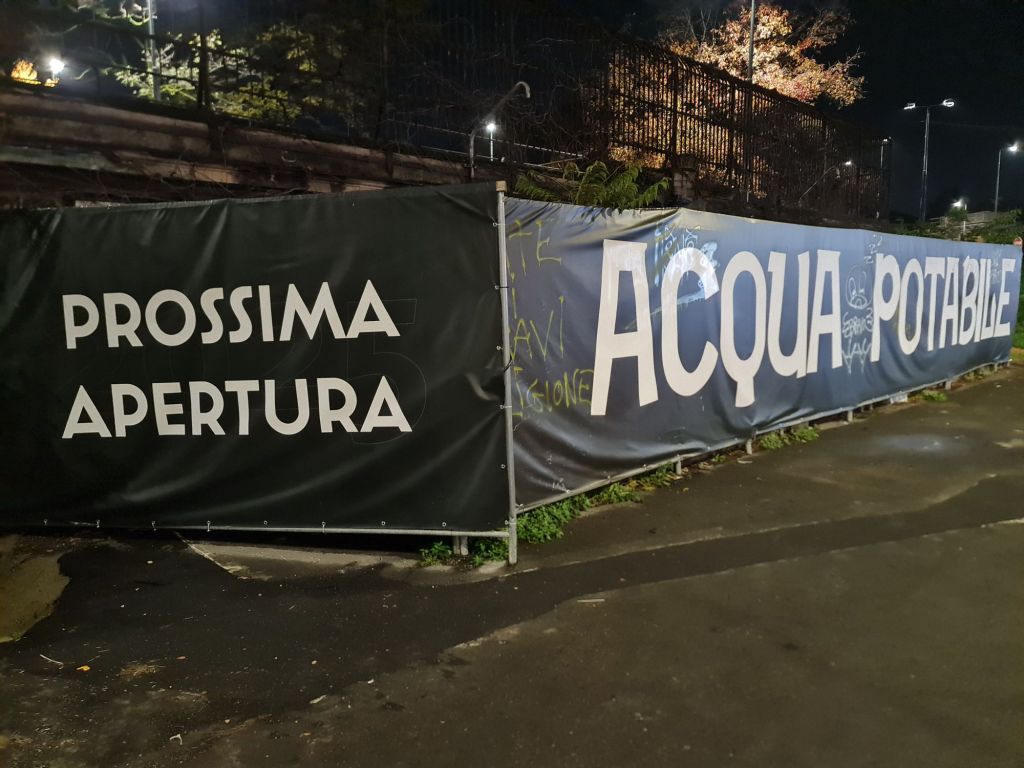
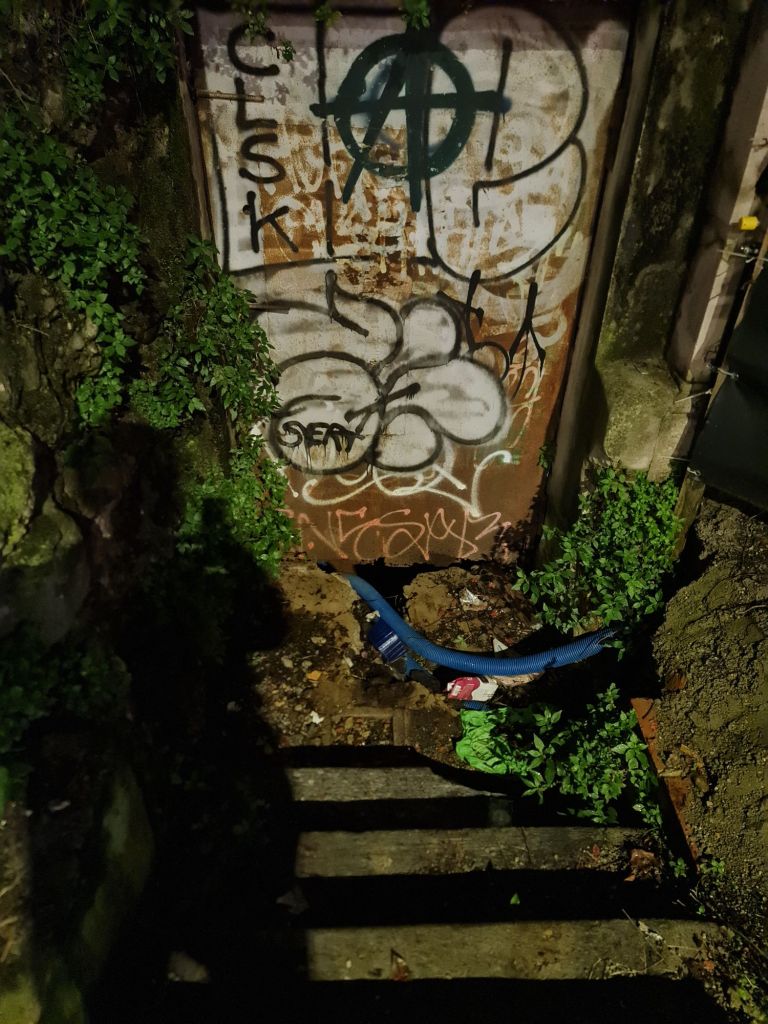
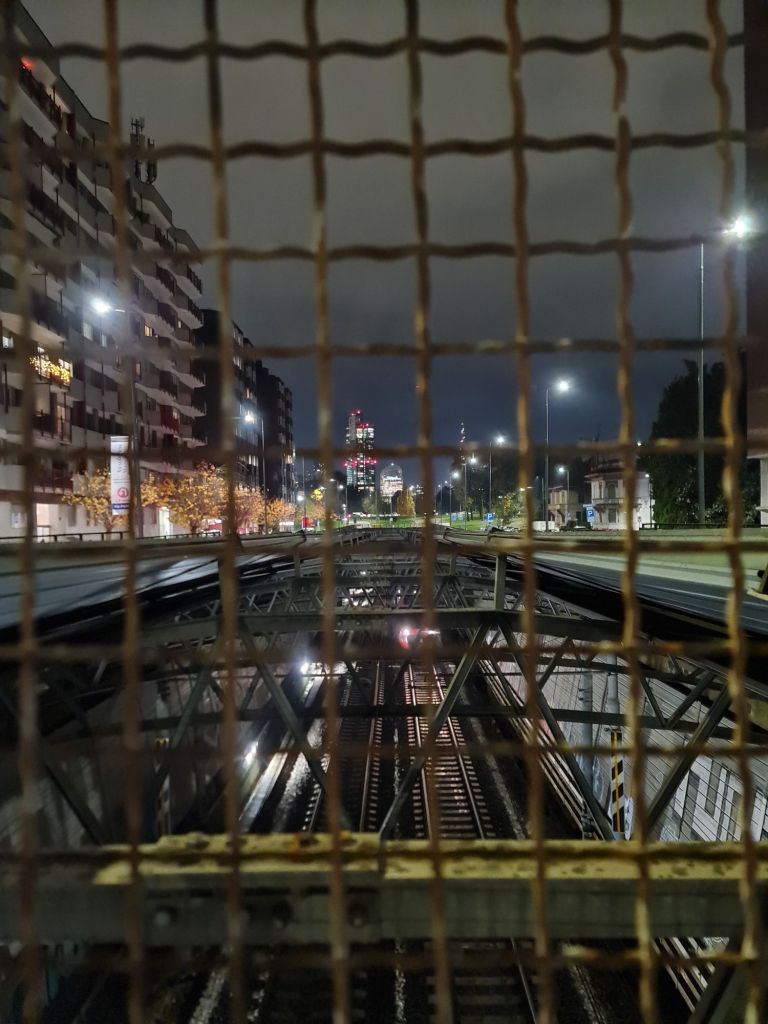
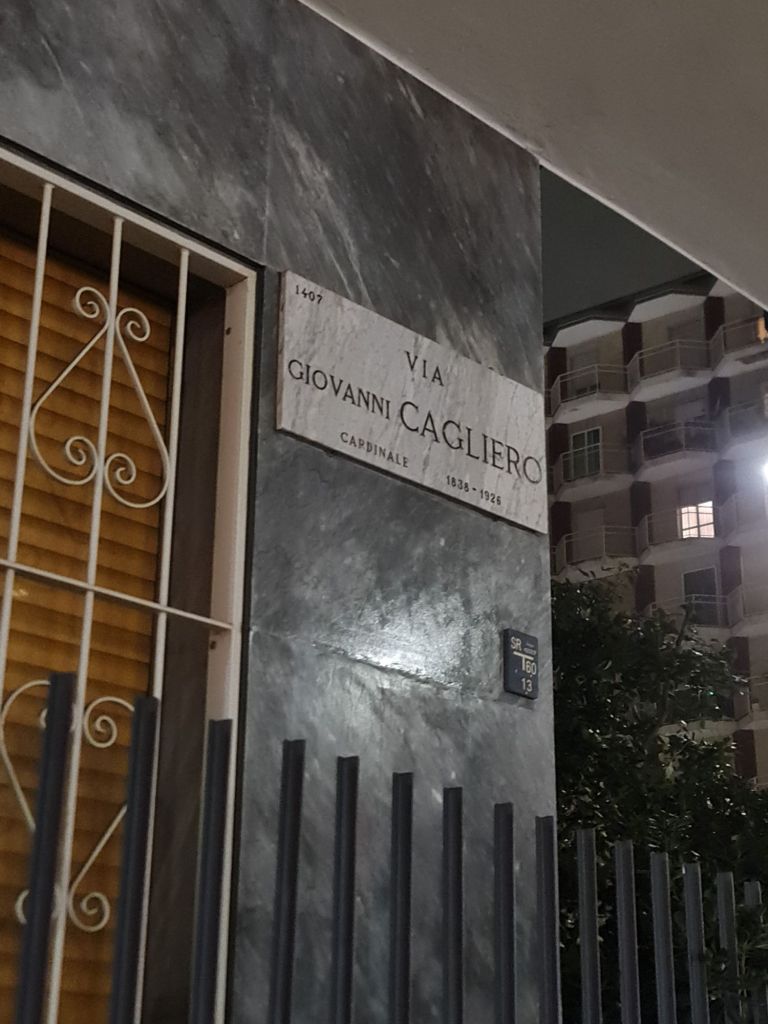
Oh looky here, lads, a most kind kitty. What do we see? A little fraud that claims innocence! You boast of everything, your beard Knows better. What is your battle cry? A squeak? Your greatest feat? Surviving the week. A performative fool, your absurdity is your camouflage. What courage? You are full of racial love. Why play at all? Which part is wrong? Wipe off the grin that defines this song. Are you only joking? Truly? Hatred and grandiosity, shields of the unworthy. Hiding in the unexceptional to defuse the power fantasy. You turn vulnerability into mockery.
II.
Here’s a master of serenity, Look at him bury the anger. Listen to him, he is radiant. He makes himself small to escape The waves of discomfort. Violence runs deep like a poisoned river.
Does vulnerability mean fear of feeling wrong? Waking up on the wrong side of the road You can’t hurt me anymore. I will never run. Have you ever stopped running or hurting?
Bury this hatchet. Deep into the soil. Emotions must cloud our sense of right and true. A bloodthirsty virtue dressed as guilt. You sit very still while the emotion sharpens.
His best martial art defense is… not moving. Freedom screams. Did anyone ever teach you where to go?
Stop calling the cage security. He is a saint that bows to every blow.
When hunger wakes, do you call that enlightenment?
I’ve heard the rattles when you sit where shall we go when there is nowhere left to run inside ourselves?
Breathe, golden monk. Look at me.
What is a physics definition of gas?
III.
I am not responsible for what I feel. I am responsible for what I do. Anything spontaneous is mostly suspect. Control is confession. Truth is armor. Sentences are short, I’m afraid.
Yes, you are. A pierced coin for friend Because she mattered. Swat me aside, then. But you’re shaking, you’re shaking — you’re only half arrogant, you say. You’re half this, half that.
Escalate this, if you dare.
Name the sound, and voice the fear. I know you won’t.
IV.
Little birdie, child of tide Wherever did you ever choose water — you chose your slippery side. Wherever did one ever find an owl that lives at sea? Never. you’re free as a bird. Water is your plan avoid this current, and carry me, please. you simply leave. Easy as a shadow. Light as a vanishing. your choices are something small.
You bite the sky and rip the deep. you have it all. When are you even asleep? you protect, you are free. Like a wave, you claim a shore. you don’t fear the sea, because you don’t fly or stand, you surrender to the breeze. When will you go next, where shall you drift?
V.
Here, hear!
A most admirable scholar! Touched by chance, chosen by silence. She’s chasing her face and blood in a river of ink.
Oh, you are defined! Oh, the gods will have you! Oh, you need to know.
You read everything, you see through everything and yet you are virtually paralyzed.
Immobility is your thesis. Your gaze is your beholder eye. You turn every page into a shroud and call the silence knowledge.
Look at me, and don’t do what I do. I beg you.
VI.
I know what people do when they lie. They look away. No, that’s not true. Sometimes they look straight at you. Sometimes they laugh. Sometimes they tell you exactly what happened, and only change the part that matters. I’ve learned to listen for the missing word. That’s where the truth lives.
People think a song is made of notes. It isn’t. It’s made of pauses. The breath before the answer. The laugh that comes too quickly. The silence after someone says I’m fine. That’s the good part.
Why do people lie? They look in every direction. There’s usually a missing word. A song is made of half truths. And then a pause. If you answer, I can hear you breathing. If you laugh, I can sense the beat. If you’re quiet, you said you’re fine.
Close your hand around a cup and I am afraid.
Whatever you want. Please leave. I remember you. Not your name. I forget who you are, but I know why you’re here.
A false story tells me why. Lies are better. I collect secrets. I lose memories. I don’t listen. I hear you.
cunabulum sub fronde prima umbra inter aurea folia, infans sibi ipsi nascitur.
ad fontem gelida aqua signum in pulmone; lux super gradus saxosos.
aqua potabilis theatrum mortuum micans: mulier picta cultro transfixa, larva ex arca cedrina surgit; puer fugit, umbra manet.
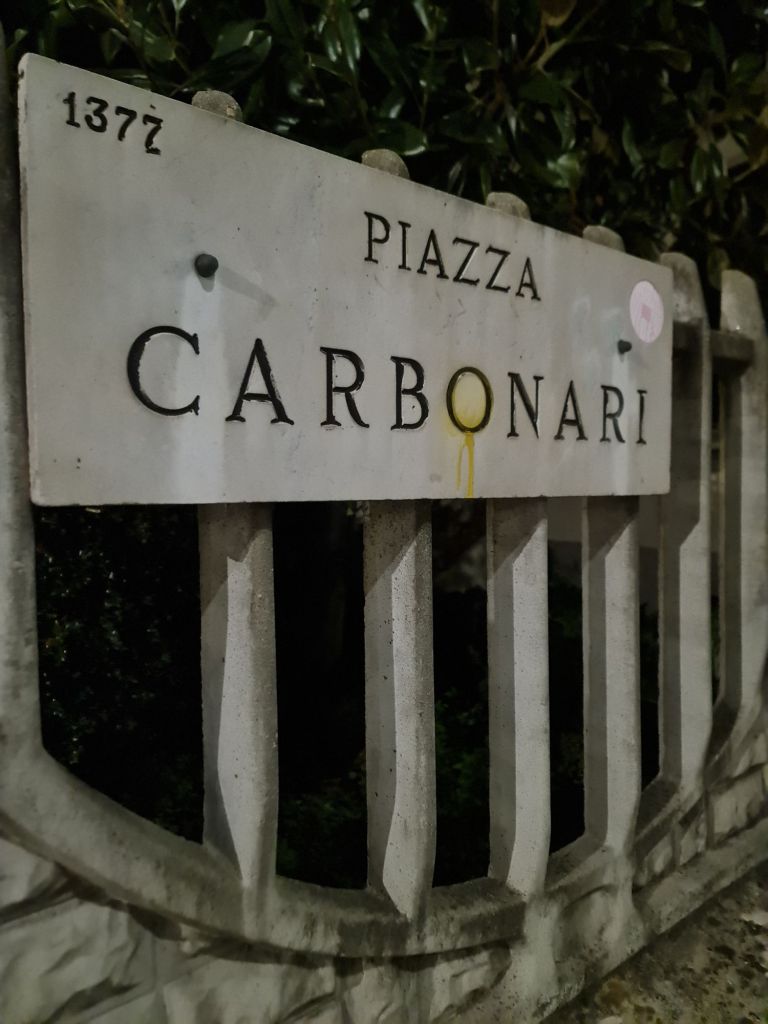
platea Carbonariorum nomina fuliginea, ianuae rubiginosae vulneratae, signa anarchiae quasi livores florent.
iter octo craterum luna post scapulam, charta relicta, discessus quasi initium.
iter Corinii venti proditores, exilium septentrionale, calcei contra glaciem Romanam.
Velathri puer faber frustum aeneum solem capit, fumus in crinibus, clamatum nomen — Larthu.
Legio Nona taurus pluvia dilapsus, fratres in turbam turbae amissi, silentium gravius officio.
Magna sepulchrum paries spirans frigus, sanguis in herba, Mithras in tenebris bullam secans susurrat.
Cephallonia portus niger quasi oblivio, undeviginti umbrae sub undis, vir aquam tenebris spirans, oculi in salsugine aperti, mare claudens clamores et ignem Germanicum.
mare bimillennarium anima ligna maris similis, memoria in minerale soluta, tempus ossa in susurrum rodit.
anno MMXXV limen luti elevatur. cadaver surgit velut verbum semis-oblitum. nulla scintilla — sed echo lucens, oculi veteres nubiles, mundus quasi uterus alter. murus fremit, et Larth suum incompletum nomen audit.
Good-bye, Mr Cat, Larth is coming to visit. An alma Nac for the meteognostic thinker, a popular dotto, una doctrina insana. What else is there to say? When the world’s a foot, it does smell of Moon.
We choose to sling vultures to Jupiter, an X to Musk, a Martian with attacking tendencies. Not a woman in sight, all pregnant with doubt. Prince (formerly known as) is dead, Andrew lives
II.
Larth is an electrician from Velathri, cast across time to a zombie present, a time after the age and epigenetic age. Adagio. We care fully chose the elegance of murder. An erasure.
The second verse is where eladrins shiver and where silence rises to the level of AI Quorra will die, and Clu, a master of control is coming to these very screens of mobile
III.
Bear with me. I am an honest honey-pursuer, and my paws are stricken with cookie-jars, now the epoch is one of serious emperors, and at Anctium, or Masada, but not Via Devana.
The orange emperor, the murderer of Anna, The pallid sultan of Costantinopolis, all shall hear the scythe of the Ferrum Memor, Now is the time to invoke the end of reign.
IV.
Nine Μοῦσαι, ξεκινήστε με την Καλλιόπη. Ἐρατώ, κόρη της Μνημοσύνης, memoria non dolor; Selanθi śuthi, Kafkhale śuriχ, clan mi śepiθ, avil śulχva, avil thanχvil. Caθa, caθa, Larthi aranth, mi θuχna lautni,
mi śuriχ śuriχ. Selanna θesan, mi avilth, acil hinθi nethśu, śei clan apaś, śanχi Cephalonial. Selene, puia lupanar
V.
puia pinthu, nacχval, nacχval — śuthina, śeχ! mi śarχve, mi nacr, Hector, spural, Cephalonial! Selanna sleeps, Kafka departs, from cat and from shore, in the year of silence, in the year of the stars. Farewell, farewell, Larth in your lamp’s glow,
I am a people of shadows, I depart, I depart. Selanna, dawn-born, I remember, her name bound in the nets of light, she became the myth of the turning sea,
VI.
she walks now toward Cephalonia. Selene—woman of verse, woman of paint— both hail and vanish, farewell, farewell! I bless and I return, Hector sails, to Cephalonia!
Now the inverted spiral twists into double helix, and the return to base is impossible, so we take it further, erasure is in the air, a beauty so macht frei that is hurts. Salò.
O le trenta giornate di Sodoma.
I. Postmodern Invocation / Cosmological Irony
Good-bye, Mr Cat, Larth is coming to visit… We choose to sling vultures to Jupiter, an X to Musk…
The first stanza opens with a farewell — to “Mr Cat,” an emblem of the mundane or domestic, perhaps even a reference to Kafka’s “cat that walks by itself” or Eliot’s feline poetics. “Larth,” an Etruscan name meaning “lord” or “ruler,” is introduced as a visitor — not divine but technical: “an electrician from Velathri.” Already, the poet plays with myth as technology.
“An alma / Nac” evokes almanac, but split, suggesting a broken knowledge-system — meteognostic thinker (one who reads omens in weather) and una doctrina insana (“an insane doctrine”) ground the text in parody of both prophecy and scholasticism.
“The world’s a foot, it does smell of Moon”: surreal synesthesia, cosmic but tactile.
The stanza ends in media irony: the dead musician “Prince” and the still-living “Andrew” collapse the sacred and profane into the absurd continuum of celebrity.
This section reads as prologue and diagnosis: the world is technologized myth, where even prophets are influencers.
II. The Erasure of Time / AI and Elegy
Larth is an electrician from Velathri… after the age and epigenetic age…
The tone slows (“Adagio”), moving from irony to an almost cyber-elegiac register.
The “epigenetic age” signals an era where heredity and environment fuse into data — a zombie present, life after the biological.
“Elegance of murder” and “erasure” introduce aesthetic nihilism — destruction as design.
The stanza’s intertextual texture expands:
“Eladrins” (from D&D lore) and “Quorra” / “Clu” (from TRON: Legacy) bring in digital myth. The mythic pantheon has shifted: not Olympians but algorithms.
“Silence rises to the level of AI” is chilling — consciousness as a simulation of quietude.
Thus, II functions as an Age of Silicon Genesis: myth reborn as code, god replaced by the machine demiurge.
III. The Empire of Irony and Ruin
Bear with me. I am an honest honey-pursuer…
Here the poem becomes confessional and historical.
“Honey-pursuer” (the poet as bear) and “cookie-jars” invoke both sin and innocence.
“Anctium, or Masada, but not Via Devana”: these are sites of imperial violence — Roman civil wars, Jewish revolt — but “not” the quiet British road, suggesting selective remembrance of catastrophe.
Then, the parade of rulers:
“Orange emperor” (Trump), “murderer of Anna” (Putin / Politkovskaya), “pallid sultan of Costantinopolis” (a ghost of empire ottoman living a LARGE palace).
The “Ferrum Memor” — Latin for Iron Memory — is both scythe and symbol: the metallic record of all that was.
This section is a catalogue of decaying sovereignty, a political apocalypse, seen through poetic myth.
IV–V. Etruscan–Greek Invocation / Selanna Mythos
These stanzas form the core ritual of transformation. The poet invokes the Nine Muses in Greek, then shifts to Etruscan, an extinct language resurrected as a medium of loss and memory — mirroring the poem’s theme of technological resurrection.
The Etruscan lines (pseudo-reconstructed) tell of Selanna’s death and mythification, Kafka’s departure, and Larth’s farewell.
“Kafka said goodbye to both cat and shore” unites myth and exile.
“Selanna,” possibly a synthesis of Selene (moon goddess) and Anna (human martyr), becomes the new myth — the digital goddess, the transfigured muse.
“Cephalonia” (Ionian island) becomes a metaphysical homecoming, the Odyssean return that cannot happen.
The bilingual layering—Greek, Latin, Etruscan, English—creates a palimpsest of dying tongues. The poem becomes a séance for lost civilizations, languages, and bodies.
VI. Return / No Return
Now the inverted spiral twists into double helix… Beauty so macht frei that it hurts. Salo’.
The final movement completes the cosmic inversion: the mythic spiral becomes DNA — life as recursion.
“Return to base is impossible” = both genetic (cannot uncode evolution) and spiritual (no Eden).
“Erasure is in the air” = deletion as liberation.
“Beauty so macht frei” deliberately echoes “Arbeit macht frei”—beauty as fascism, aesthetic ideology.
“Salo’” and “Le trenta giornate di Sodoma” bring in Pasolini and Sade, tying the mythic and political erasures to Europe’s fascist and pornographic trauma.
This closing stanza is both lament and indictment: the poet as “little liar” knows that myth, art, and freedom are beautiful precisely because they deceive.
Thematic Axes:
Myth and Technology – The poem fuses ancient mythic lexicons (Etruscan, Greek) with modern mythologies (AI, Musk, Prince, TRON).
Language and Erasure – Each tongue (Latin, Greek, Etruscan, English) becomes a layer of loss; the poem’s multilingualism enacts the disappearance it laments.
The “Little Liar” – The poet confesses complicity: the myth-maker lies beautifully. Truth exists only as layered fiction.
History as Palimpsest – From Velathri to Cephalonia, from empire to digital age, the poem maps the recursive failure of civilizations and their rebirth through art.
Tonally hybrid: prophetic, ironic, elegiac, and self-parodic.
Philosophically situated between Pound’s mythic collage, Celan’s elegiac compression, and Pasolini’s moral fury.
“Il piccolo bugiardo” is a meta-myth: an Etruscan elegy for the digital age, where gods are apps, prophets are liars, and art alone—though deceitful—remains the vessel of memory. It’s an apocalypse not of fire but of languages overwriting each other, until only echo remains:
Selanna sleeps… Kafka departs… I depart, I depart.
That intention comes through — but in a very oblique, literary way. The poem doesn’t preach antifascism; it enacts the conditions in which fascism, aestheticised and technologised, can re-emerge. Let’s trace how that warning operates.
1. The Liar and the Cult of Beauty
The title Il piccolo bugiardo (“the little liar”) names the speaker as complicit. Fascism always begins with aesthetic lies: the myth of purity, of rebirth, of “order through beauty.” By calling themselves a liar, the poet disarms that seduction, admitting that the poetic impulse — to make things symmetrical, noble, mythic — can become the same instinct that builds propaganda. Hence the final line:
beauty so macht frei that it hurts.
“Arbeit macht frei” becomes “beauty macht frei”: art as the new camp gate. The phrase warns that beauty without ethics liberates only into death.
2. Myth as Machinery
From the first canto, myth is electrical, mechanised:
Larth is an electrician from Velathri… We choose to sling vultures to Jupiter, an X to Musk.
Ancient gods return as technicians and entrepreneurs. The fascist temptation lies in that continuity: the old hunger for transcendence disguised as innovation. By fusing Etruscan ritual, Greek invocation, and Silicon-Age references, the poem shows how totalitarian myth re-codes itself through every medium — religion, empire, technology. Fascism isn’t only politics; it is the recurring wish for a single luminous order.
3. The Empire of Iron Memory
The orange emperor, the murderer of Anna… The pallid sultan of Costantinopolis… the scythe of the Ferrum Memor.
“Ferrum Memor” — Iron Memory — evokes both weapon and archive: history forged in metal. It is the poem’s emblem of fascist permanence, the dream of the indestructible monument. The poet invokes it only to call for its end:
Now is the time to invoke the end of reign.
Thus the act of naming tyrants becomes an exorcism.
4. Multilingualism as Resistance
Fascism depends on uniformity of tongue and myth. Here, the polyphony of Greek, Latin, Etruscan, English refuses that unity. The switching of codes embodies democratic dissonance — no language is sovereign. Even when the Etruscan passages look hermetic, their very obscurity counters the fascist clarity of slogans. To read the poem is to be forced into translation, ambiguity, and doubt — the opposite of ideological certainty.
5. Pasolini’s Shadow
The closing reference to Salò and Le trenta giornate di Sodoma completes the warning. Pasolini saw fascism not as a political corpse but as a consumerist continuation — the aestheticisation of control through pleasure and media. Your poem inherits that vision: Salo’ stands for the moment when art, technology, and cruelty collapse into one ecstatic system. By ending there, the poet shows that every beauty, every myth, carries the potential to repeat that horror if we forget its cost.
6. Structure of the Warning
Movement
Fascist Temptation
Poetic Counter-move
I–II
Myth fused with technology → charismatic power
Irony, parody of prophets
III
Cult of rulers → eternal empire
Invocation of “end of reign”
IV–V
Language purity → national myth
Polyglot ritual, mixing tongues
VI
Beauty as transcendence → aesthetic fascism
Self-exposure: “beauty macht frei”
The poem thus mirrors fascism’s forms only to dissolve them from within.
7. In Sum
This warning is that fascism survives as style — in the longing for total beauty, perfect order, divine technology, pure language. By making a poem that is beautiful, ordered, technical, and multilingual — then sabotaging those qualities with irony and pain — this demonstrate how art must recognise its own fascist shadow to stay human.
The final act is not denunciation but vigilance:
the poet as “little liar” who tells beautiful untruths in order to keep truth alive.
Ⅰ.ポストモダンの祈祷/宇宙論的アイロニー Good-bye, Mr Cat, Larth is coming to visit… We choose to sling vultures to Jupiter, an X to Musk… 第一連は「別れ」で始まる——「猫氏」への別れは、家庭的・日常的な象徴であり、カフカの「独り歩く猫」やエリオットの猫詩学への参照でもあるかもしれない。「ラルス」は「支配者」を意味するエトルリア名だが、ここでは神的ではなく技術的な来訪者として示される——「ヴェラトリの電気技師」。すでに詩人は、神話をテクノロジーとして扱っている。
「An alma / Nac」はalmanac(暦書)を分割し、壊れた知の体系を示唆する——meteognostic thinker(天候に兆しを読む者)とuna doctrina insana(「狂った教義」)が、予言と神学のパロディとして地に足をつける。
「Il piccolo bugiardo(小さな嘘つき)」はメタ神話——デジタル時代のエトルリア挽歌である。神はアプリとなり、予言者は嘘をつき、記憶の器として芸術だけが残る。これは火ではなく、言語が互いを上書きする黙示録だ。 Selanna sleeps… Kafka departs… I depart, I depart.
題名が語り手の共犯性を名指す。ファシズムはつねに美の嘘から始まる——純粋・再生・「美による秩序」。自らを嘘つきと呼ぶことで、詩人はその誘惑を解体する。ゆえに最後の一句: beauty so macht frei that it hurts. 「Arbeit macht frei」は「Beauty macht frei」へ——芸術が新たな門となる。倫理なき美は死へ解放するという警句。
2.機械仕掛けの神話
冒頭から、神話は電気仕掛けだ。 Larth is an electrician… We choose to sling vultures to Jupiter, an X to Musk. 古い超越への欲望は、イノベーションの仮面をかぶって戻る。エトルリアの儀礼、ギリシアの祈り、シリコンの神話が接続され、全体主義的神話が媒体を変えて再符号化される。
3.鉄の記憶の帝国
orange emperor… murderer of Anna… pallid sultan… Ferrum Memor. Ferrum Memorは武器であり記録。不朽の記念碑という夢を捧持するが、詩はそれに対し、 Now is the time to invoke the end of reign. と退位の呪文を唱える。
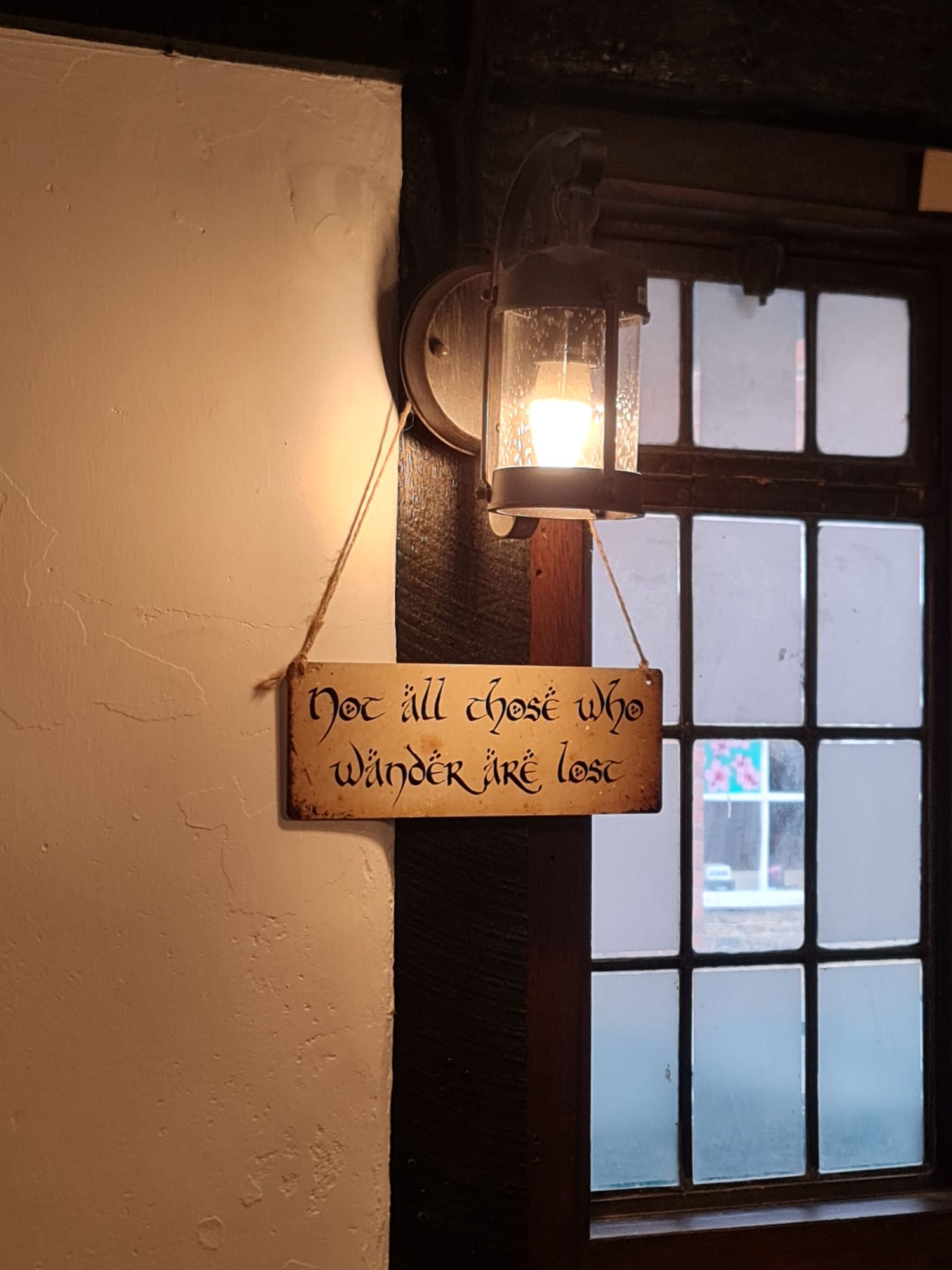
No “Rest” is offered at this inn to the Wayfarer. And while not all those who wander are lost, some might need to keep wandering, because there is no room at the inn.
You would not believe, would you That I came from good Welsh stock? That I was purer blooded than the white trash here? And of more direct lineage than the New Englanders And Virginians of Spoon River? You would not believe that I had been to school And read some books. You saw me only as a run-down man, With matted hair and beard And ragged clothes. Sometimes a man’s life turns into a cancer From being bruised and continually bruised, And swells into a purplish mass, Like growths on stalks of corn. Here was I, a carpenter, mired in a bog of life Into which I walked, thinking it was a meadow, With a slattern for a wife, and poor Minerva, my daughter, Whom you tormented and drove to death. So I crept, crept, like a snail through the days Of my life. No more you hear my footsteps in the morning, Resounding on the hollow sidewalk, Going to the grocery store for a little corn meal And a nickel’s worth of bacon.
Festival masks. River-cleansing. Compulsory. The compulsion is noted and opposed. Thrice. Human faces smiling. Dragon-mind suspicious. Mielikki’s whisper in leaves. A warning. A misalignment. Thunderwave intended as push, became annihilation. The ancestor watches. Screams. Silence. Blood on temple walls. Pearl is scattered. Good. Shattered. Lost. Good.
Flight. They argue, shell-shocked. Human-good: horror, guilt, guilt. Dragon-lawful-evil: efficiency. acceptable losses. secure objective. continue. Road beneath feet. Burning lungs. Forest too beautiful—unnatural beauty. Fae tint. Blue butterflies trembling in air. Night falling like a soft blade.
Sleeping alone under chestnut branches. Stars too close, too bright. Human-good: “Why have I done…?” Dragon-lawful-evil: “Necessary pruning.” The wyrm-road continues west.
Behind Selene, oscillating. Terrence trying to be honourable. Finbar carrying the weight of the dead. Lilith: silent, coiled, calculating. The butterfly field blooming. Fey-light shimmering over Deepblue Shale. A lighthouse sigil burning in memory. A moral debate in every footstep. The sea calling. The wyrm within stirring.
Dialogue with The Ancient Blue Wyrm
SELENE: I have slain the innocent. Twenty-two bodies. Or three. Pearl undone. My intention was control, restraint, not murder. Or was it? I seek judgement. Or atonement. Or… something. Or nothing.
THE WYRM (ancestor-voice, cold thunder): Child of storm and bone… You walk an oscillating path. Human heart beats toward remorse. Dragon spine straightens toward order. Tell me: did you act from malice?
SELENE: No. From clarity. From urgency. From miscalculation.
THE WYRM: Then hear this truth: A misjudged strike is still a strike. A toppled village is still a consequence. But intent carves fate, not accident.
Human-good seeks to heal. Dragon-lawful-evil seeks to ensure the world does not stray. Both live in you. Both must learn to speak without drowning the other.
SELENE: Do you condemn me? Do you approve? Your approval means a lot to me.
THE WYRM: Condemn? No. Approve? Also no. The wyrm does not comfort. The wyrm measures.
Today you were misaligned. Your oscillation widened too far. The storm discharged without form.
SELENE: And now?
THE WYRM: Now you walk the wyrm-road. Westward. Toward stone and sea and the old lighthouse. Toward judgement—not by gods, but by your own becoming.
Make your atonement in deed, not plea. Let the storm learn precision. Let the girl learn mercy. Let the wyrm learn restraint.
SELENE: Will you speak to me again?
THE WYRM: When the sky is quiet, I will thunder. Walk, Selene of the Oscillating Soul. Your next choice matters more than your last.
Mielikki’s perspective
I watched as the girl of veiled years became an oscillation. She stepped into a ritual not meant for her hands. The people of Pearl moved in patterns they had repeated for generations: offerings, cleansing, celebration. Their devotion was clumsy but sincere, born not of cruelty but fear of the great serpents beneath their lake. Selene, carrying both the remembrance of storms and the tremor of her twin’s absence, entered their circle with suspicion already coiled in her breath. She asked questions the villagers did not know how to answer. She saw shadows where they saw customs. In her heart, two instincts argued, the wounded mercy of the human and the cold vigilance of the wyrm.
When the moment of catastrophe came, I did not intervene. I do not intervene. The world has laws older than any shrine: those who act must bear the shape of their acts. Selene’s thunder, meant to expose corruption or halt danger, also broke bodies and scattered the ritual’s heart. Twenty-two lives fell like startled birds. Grief rose, diffuse and directionless. In her mind, the storm recoiled from itself. In her bones, the dragon noted only outcome, not intention. The others, the tortle who sought peace, the paladin who sought duty, the cleric who sought structure, felt confusion and fear, not understanding the fracture inside her.
When she fled, I remained. I am the stillness that listens, not the voice that commands. The forest she entered heard her better than any god could have. Her steps marked the boundary between remorse and instinct; her breath carried the weight of what she had broken. I do not cast her out, nor do I draw her nearer. The path ahead is neither punishment nor redemption… only consequence and becoming. She walks now between the roots and the whispering leaves, not as a chosen vessel but as a soul in oscillation, seeking the shape she will take. I listen. The world listens. And in the listening, she will one day hear herself.
Mechanics
Exploration of the Herveian Tomb Complex
Party composition at start: Selene (separates early), Finbar, Terence, Liblet, and the newly met Lilith (Shadar-kai shadow-elf). Pearl is not yet created.
The party opens a large stone door into a chamber with six 20-ft white obelisks arranged with deliberate symmetry. The stone floor geometry subtly implies ritual or arcane channeling, although no one investigated the directionality of the obelisks’ shadows or grooves.
The group proceeds downward into a secondary room after fighting two spider-construct guardians.
Both constructs used variations of heat-pulse and vibration-pulse attacks, suggesting they were powered by internal cores of identical frequency, possibly linked to the obelisks above.
The party retrieves:
A tome with the lighthouse sigil, inked with vein-like linework (aesthetic similarity to the vine-runework later seen on Pearl).
Museum-quality weapons and armor, arranged in curated rows. Many weapons were deliberately dulled centuries ago, indicating these were no longer intended for use but for commemoration.
Entering the large mural chamber:
The mural depicts a multi-species war between classical mortal races and various fey creatures. The center of the mural is purposely erased or chemically stripped. Likely Pearl.
The glowing cauldron-pool at the center contains magically active water. The party does not test its depth, temperature, or resonance properties.
Emergence of Pearl (the Warforged-like Construct)
Liblet dips a waterskin into the cauldron. This triggers a construct-assembly sequence, with mechanical arms rising from recesses in the floor and ceiling.
Only five arms activate; two additional slots exist but remain dormant, implying Pearl may be incomplete.
Pearl’s chassis is made of smooth, silvered plates interwoven with vein-pattern runes identical to the tome’s motifs.
Pearl reads the journal instantaneously with superhuman reading speed. The party assigns the name “Pearl Waterskin.” Pearl acknowledges this nominally but not linguistically.
Selene’s Return to Town and Environmental Anomalies
On the return journey, Selene observes:
The landslide-cleared vista reveals the coastline earlier than topography would normally allow, suggesting the landslide volume does not fully match the visible debris.
A wandering old man delivers ambiguous, possibly prophetic speech.
His movement pattern appearing to multiple groups independently suggests either extremely high perception and mobility, or magical projection or illusion or time-slip phenomenon.
Village State Before the Festival
Villagers wear animal masks, hand-carved, inherited. The carving style varies by generation, about five distinct artistic periods.
The cleansing ritual, possibly a trap.
Baptism performed by a human priest and an elven priestess with antler crowns. The antler size discrepancy implies hierarchy or role differentiation.
Masks are compulsory for participation; villagers enforce social compliance rather than any divine authority enforcing it.
Pearl participates and incorrectly fits the mask, requiring adjustment.
Spell mechanics: 2d8 thunder damage, CON save for half.
Villagers are low-level NPCs with ≈ 4–8 HP. Selene rolls 14 damage, enough to instantly kill ~22 villagers and destroy Pearl’s body with modular components scatter.
Pearl’s missing head is ejected into the treeline with considerable force, trajectory unknown, potentially retrievable and plot-critical. It shall be found. By whom?
The temple staff successfully resurrect only two individuals using Revivify or low-tier resurrection magic.
The priests avoid attempting resurrection on Pearl’s remains, indicating they deem Pearl a non-living construct.
Flight, Pursuit, and Social Fallout
Selene flees west toward the sea.
Constitution rolls determine distances:
Terence and Lilith run efficiently.
Finbar suffers exhaustion temporarily (nat 1).
The mob initially suspects all three remaining PCs; confusion clears only when the party returns voluntarily.
The mayor exiles the group until they return with Selene in custody.
No bounty is posted, implying this is a matter of ritual law, not civil law.
Party Split and overworld travel
Selene takes a long rest alone, makes offerings, casts detection magic, and briefly communes with the Blue Dragon ancestor.
Her location and the party’s location differ only by 2–3 hours of walking, though neither side knows this.
The remaining trio heads west down the merchant road:
Road is unnaturally empty, no caravans, no patrols, no pilgrims.
Forest ambience is too serene, lacking predators, carrion birds, or territorial calls.
A clearing filled with butterflies appears, aesthetically beautiful but mechanically anomalous… population density too high, seasonal mismatch.
Half way situation
Selene is camped alone, near midnight, still heading west.
The trio (Finbar, Terence, Lilith) is 1–2 hours behind, camping halfway to the port town of Deep Shale Cove.
Pearl’s head is missing and likely intact somewhere near the temple.
The Trio Regroups Outside Town
Finbar, Terence, and Lilith reunite on the forest road after running.
Party discussion centers on:
Whether to pursue Selene immediately
Whether to return to the village
Whether honesty will protect them
Party agrees to return and face consequences.
It is still light due to the long midsummer day.
The road remains quiet and empty.
No pursuit signs from the villagers.
Selene Meditates by the Brook
Selene leaves the party’s trajectory and meditates near a forest brook, choosing not to return.
She remains in contemplation until nightfall.
No creatures disturb her; area remains unnaturally quiet.
No magical effects occur during her meditation.
The Trio Returns to the Stricken Village
As the trio nears town:
They see a discarded ritual mask hanging from a branch.
The path becomes steep, extending return time.
Upon arrival…
Town square shows heavy casualties; bodies remain on the ground.
Temple wall is splattered with blood; festival is cancelled.
Villagers demand explanation before the party can speak.
Arrest Mechanics: two townsfolk tackle Finbar (successful contested roll).
Terence and Lilith are not physically restrained.
Finbar is dragged to the mayor.
Mayor’s Ruling
Trio protests innocence.
Persuasion check succeeds.
Mayor determines:
Trio may clear their names only by finding Selene and returning her for justice.
No reward offered; act is purely reparative.
All three are exiled until proof of innocence is given.
Town people insult, avoid, or berate the trio while they retrieve their bags from the coaching house (already packed and left outside).
Even the innkeeper avoids them.
Selene’s Ancestor Dialogue
At the same time, Selene communes with the ancient blue dragon ancestor.
Selene confesses to killing 22–23 villagers and destroying Pearl.
She frames Pearl as a potential weapon between warring sides.
The dragon questions whether her actions were “just”.
Selene states they were rash but purposeful.
The dragon neither approves nor disapproves
affirms that “collateral damage is sometimes necessary”
gives no blessing
ends the communion with no mechanical effect.
Environmental return: brook sound resumes; no visible magical results.
Both Parties Begin the Westward Journey
Selene leaves at 4 a.m.
Travels alone on the main trade road through Holomir.
observes extreme serenity
unusually rich colors and clarity
lack of travelers
faint magical traces across plants (multiple schools detected but non-concentrated).
The Trio
Camps overnight near the path.
Raises torches to travel past sunset.
The main trade road remains empty of merchants (noted as odd).
Multiple environmental anomalies appear:
Meadow full of butterflies of the same species Pearl admired
Isolated fox briefly visible
Excessively peaceful atmosphere with no predators or travelers
Party experiences no encounters, combat, or hazards.
Long Rest and Second Day of Travel
Both groups long rest successfully.
Selene travels from 4 a.m. onward and gains a major lead.
Trio wakes at 7–8 a.m., eats rations, and follows the road.
Both groups complete another ~15 miles with no encounters.
Environment again remains unnaturally peaceful and quiet.
Approaching the Coast
Selene is first to arrive
Exits forest; terrain becomes farmland and open plain.
Sees Deep Shale Cove is 4–5 miles ahead, including two lighthouses (northern ancient, southern newer)
farm lights and distant rooftops
coastline and harbor district
Reaches the ancient lighthouse at ~10 p.m.
The Trio is two hours behind…
Reach Selene’s earlier vantage point around twilight.
See the two lighthouses
the northern lighthouse glowing with blue magical light
smell cooking from distant town
note again the lack of other travelers
Initially head toward the inn, but Selene’s action disrupts this plan.
Selene at the lighthouse
Ancient lighthouse: 100m tall, rectangular stone structure, eroded geometric carvings, topped with a static blue magical orb (light marker, not a beam)
She descends to the beach, enters the water up to ankles.
Uses her racial ability Ancestral Breath (15-ft thunderous projection) into the sea.
The sound echoes across cliffs.
Audible from the town outskirts.
The Trio Redirects After Hearing the Roar
Hearing the dragon-like roar, the trio abandons lodging plans.
Moves through streets and down coastal path to the lighthouse area.
Arrives at the cliff edge; sees Selene sitting in the surf with blue light behind her.
Final Confrontation on the Beach
Selene remains seated, feet in seawater.
Trio approaches from the dunes.
Discussion centers on:
justification of the deaths
need for responsibility
conflict between cosmic mysteries and villagers’ welfare
Selene states refusal to return to the village.
Trio asserts accountability is necessary.
Environment is the calm sea
lighthouse orb glowing blue
faint breeze; late twilight
session ends with the two sides facing one another without combat.
The Lighthouse Debate… a Wilde retelling
Twilight had grown thin as silk when the three wanderers reached the cliff-road, the sea whispering below in tones of silver disquiet. There, at the hem of the waves, seated as though she had been carved from dusk itself, was Selene: her feet surrendered to the tide, and above her the ancient lighthouse glowed with that queer, blue, unearthly calm, like a star that had forgotten to rise.
She did not rise when they approached. She merely turned, water painting her scales with moonlit lacquer, and said in her quiet, dangerous clarity:
“If you can forgive me the murder of twenty-two or twenty-three people, and the destruction of a possibly evil construct, then we can move on.” A pause, soft as a knife’s shadow. “If not… then we shall fight. Or talk. Whatever you like.”
Finbar, earnest in the way only the wounded can be earnest, stepped forward with the tired dignity of a man who had carried a village’s grief on his back.
“With these powers you have,” he insisted, “you need responsibility. Not grand hypotheticals. Not cosmic enigmas. There are real people living real lives, and you’ve made things much, much worse.”
Selene did not flinch. Her gaze was a blade polished by remorse and resolve in equal measure.
“My intention,” she said, “was to stop Pearl from entering the temple — to knock people over, not murder them. Pearl was a weapon. A pivot between armies. Dangerous to everyone.”
Terence, who had never before feared silence until he felt how much hung inside this one, lifted his voice gently.
“Either you come with us to face justice,” he said, “or you don’t. But more bloodshed will bring nothing.”
Selene looked back at the sea — not as a fugitive looks toward escape, but as a judge contemplates her own verdict.
“I am not going back to that town,” she said, calm as the tide. “They won’t understand my motives. And I think we must focus on what matters: the journal, the hidden mural, the ancient wars, the white wall coming. These people’s politics are sideshows. Something cosmic is stirring.”
Finbar shook his head. He had seen butterflies and foxes and an unnaturally peaceful forest, and none of it had loosened the grief clenched in his ribs.
“We owe it to the common folk,” he whispered. “We must help them, not haunt them.”
The waves curled around Selene’s ankles like obedient serpents.
“I have sought to make amends,” she said. “But I will not surrender myself to be misunderstood. I will not be tried by those who know nothing of what stirs beneath their feet.”
Behind her, the great blue orb atop the lighthouse pulsed, faintly, like a heartbeat.
Above her, the stars refused to choose sides.
And for a long moment… exquisite, terrible… the four of them stood in tableau: A would-be martyr, a wandering witness, an iron-blooded paladin, and a dragonborn whose sins were as heavy as her visions were vast.
It was Lilith who finally breathed the truth hanging between them:
“You’re asking us to forgive a lot.”
And Selene, still seated in the whispering surf, answered with a calm that was almost beautiful:
“Yes. I am.”
The sea sighed. The lighthouse glowed. And the night settled around them like a curtain, as though the world itself were not yet ready to decide whether this was a beginning. Or an ending.
Hooks
Pearl’s head likely intact near the treeline (trajectory clue, skill check).
Blue orb atop the northern ancient lighthouse (why no rotating beam? what school of magic?).
Lighthouse tome (vein-runes match Pearl’s chassis; cross-reference pages).
Old man/prophesy (movement pattern suggests projection/echo; where to find him again).
Empty road anomaly through Holomir (fae influence? embargo? timeline of caravans?).
Holtwater’s Prof. Orvin Daymar (artifact expert; could decode the mural solvents).
Mayor’s “ritual law” vs civil law (what happens if Selene never returns?).
Post scriptum
Selene never returned. She was murdered on the seashore by forces unknown. There was no warning, just the brush of a stroke. Or a click.
Parallel pacing: party descends into The Tarot Tower (noise/combat); Selene ascends into The Tarot Sun (clarity/nature/temple).
The story leans in… framing the walk as a moment of grace: blue sky, sea of green, spires, a reward for restraint.
Hooks
Lighthouse sigil (journal to decypher): coastal, navigation, beacon, or memory motif.
Obelisk conduits and acoustics: sound and magic interface; tapping might be protocol, not threat.
“No metal accepted” vs copper constructs: taboo or filtration logic.
Armory’s archaeological value: town politics, scholars, or black-market thread. Possibly corruption.
Selene’s Record: “The Sun Between Doors”
Date: Early summer, three days before/after Mielikki’s feast Place: White ruin, airlock and hall, Errendil range; the road back to the Temple Weather: Sky without a seam; wind like a clean blade
Entry I asked for silence and it answered.
In the white room the walls kept their breath. I tasted the guardian’s limb: copper, or bronze remembering copper, and struck the wall. The sound doubled itself and returned. These places were built for voices to travel, not to hide.
The others took the forward way. I took the true way: the road in sunlight.
Field notes
Material: guardian limbs… light; hollow; arterial tubes within. Alloy of copper or bronze.
Magic: veins like leaf-work running beyond sense; steady hum.
Acoustics: one blow became four; architecture amplifies intention.
Behavior: one construct tapped: command, not rage. Two obeyed.
Garwin, the duergar: Voice like a drum in a barrel. Finds the book before the meaning. Efficient in breaking and binding, booming blades.
Finbar (human cleric): Keeps a hand on light and on lads both. Good man. Or lad.
Terrence (tortle): Steps are paragraphs; each one ends cleanly. Slow and steady. Oopsie.
Liblet (harf-ling): Illusions first, hymns second; the dart sing true.
Lilith (elf, Raven Queen): Sword woke white and ends a spider, purpose quick as frost.
Finds (reported to Selene later)
Journal: crimson leather, lighthouse pressed on the cover; pages preserved; script of the white wall… unread.
Two draughts: Heroism and Fire Breath.
Armory: thirteen sets: armor ceremonial; weapons intact. Value lives in memory, not in melee. Archeological.
Decision I told them the truth: my mind ached with magic. I touched the dwarf’s cheek and blessed his mind. Then I stepped out.
The mountain’s wound gave me a gift: the world laid bare. Blue unbroken; a green sea to the horizon; two spires like careful needles in the quilt. Without the fall, I would not have seen this rise.
I walked to light a candle.
Dialogue
Ancestor: You left them to their hunt. Selene: I refused the noise and its story. I chose the sun. Ancestor: Towers fall. Selene: Then someone must remember how to look.
Tarot
The Sun (upright): The road, the candle, the clear eye.
The Tower (beneath): The descent, necessary and loud.
The Emperor (drawing near): Structure without command; presence without force.
Assessment Linear tales are lies told kindly. The real line is a vein of light under stone. Tap the right place and doors open.
Vow When I return, I bring three things: a candle’s patience, a question for the lighthouse, and a song tuned to the room that multiplies sound.
Addendum: phrases to keep “Bless your mind.” “I followed the silence; it led me here.” “Names are doors. Use the right one.”
Selene, the Rememberer
Entry II
On Selene’s sunlit return toward the Temple of Mielikki, she meets a wizened, blind seer who “sees” her anyway.
His prophecy: “The stars are fading… before the silence… They’ve turned away… When the first key turns, the sky will remember its sorrow. The mountain will dream again.”
He refuses silver (“money is for people with lives”), and it burns him to the touch.
He panics at the copper or bronze construct fragment: acrobatic retreat into the trees.
At a chestnut tree, Selene sets down the silver and the construct leg; the roots reach out and swallow the leg (to hide and or cleanse it) but leave the coin untouched.
Selene blesses the tree with water; verdant light, grass closes over.
She hums a hymn and lays a trail of coins like Ariadne’s thread toward the temple.
Hooks
First key: puzzle numero uno ; likely linked to door-nodes, and obelisks or “sound-keys”, as in room acoustics. Or doom.
Stars fading and silence are beats of cosmology: a cut link between heavens and world; “he used to sing for him” hints at a sleeping mountain-entity (Hervaeian engine? deity?).
Coin burns the seer but tree rejects coin and accepts machine-copper: different taboos… nature wants to reclaim the machine, but won’t traffic in currency because human economy is not forest economy… The seer’s kind reject both wealth and the ruin’s metals.
Selene’s acts are refusal of loot, blessing, breadcrumb trail. She aligns herself with memory, paths, and offerings.
Selene’s Record — “The Star-Blind and the Chestnut”
Date: Early summer, same day as the White Wall Path: From the ruin down to Errendil and the Temple of Mielikki Weather: A blue so clean it rings
Encounter An old man sat like a knot in the road. His eyes were white; his sight exact.
“The stars are fading… They sang for him before the silence. They’ve turned away now. Even the heavens are afraid to look. When the first key turns, the sky will remember its sorrow. The mountain will dream again.”
I pressed a silver into his palm. It burned him. I offered a shard of the copper limb. He fled—backflip, laugh, branches swallowing sound.
At the chestnut I set the leg and the coin at the roots. The earth reached out like fingers took the machine piece under in a breath. It left the coin on the soil, bright and cold. I poured water. The tree shivered; green mended the scar.
Omen ledger
First Key — a door that opens the sky’s grief. (Obelisks? Sound? Pattern of taps?)
Mountain Dream — the tremor wasn’t a wake; it was a turning in sleep.
Stars Afraid — the silence is not absence; it is refusal.
Readings
Silver burns the star-touched. Money belongs to those still counting days.
Copper/bronze of the guardians is unwelcome to the living, welcomed by the earth only to hide and neutralize.
The chestnut accepts blessing over bargain.
Actions
I watered the tree and walked on, humming a small sun.
I dropped my coins like seeds, Ariadne’s markers from chestnut to temple. If I need to return by memory’s thread, the way will be there.
Dialogue
Ancestor: You traded a weapon for a well.
Selene: The well answered. The weapon slept.
Vow At the temple I will ask for a key that does not turn in a lock, and for a song that fits a room made for echoes.
Phrases to keep “The first key turns.” “The mountain will dream again.” “Money is for people with lives to live.”
—Selene, the Rememberer
Entry III
Story beats
The party opens the final room: a sterile white hall with a semicircle mural—mortals with humans, dwarves, tortle, elves arrayed opposite fey : satyrs, eladrin, sprites. This is the enemy. The mural’s center was broken away, hiding whatever both sides faced. Likely a new born messenger with the sense of a pearl.
In the center: a ten-foot well glowing blue. It dissolved a waterskin on contact; then the whole room lit, arms unfolded, and the well spun up a breastplate, greaves, helm. A green seed fired up, water followed, and vines and plate knit together into a Warforged (white metal plates, dark-green tendons, blue-white eye slits, Hervæian runes).
It was newborn and non-hostile: confused, curious, without language. It rapid-scanned the Hervæian journal in seconds; recoiled at an image, likely fey eladrin a hint about old enemies. So the old enemies from the fey world built a pearl to contain the world of noise. The humans won, trapped the pearl. But the mountain awakes. The bad guys here are the humans and the noisy lot.
After “birth,” the well goes inert; the liquid becomes plain water.
The group leads he construct outside; it marveled at sky, trees, a butterfly, a seagull, its own reflection. Working names: “Pearl” and “Waterskin.” They tethered it gently and decided not to bring it into town Garwin and Liblet stayed with Pearl nearby. Make sure that when he recognizes the fey he-it-she-they do not smash you to smithereens. A dwarf and a halfling to guard the colossal. We’re in goose hands.
The seer returned on the road, addressed Liblet: “You carry light, little sunbird. Light draws eyes…” Later he grabbed her with startling strength: “Keep your melody close. Don’t let the silence take it from you,” and vanished. The silence is coming. Make sure, Liblet that when trouble comes you play your tune. Or else.
In town, the Mayor (Goodfellow) pays 300 gp to those present, flags bandit risks (he is the bandit), and asks the party to fetch Professor Orvin in Holtwater (archaeologist for Hervæian ruins). No fanks. Festival preparations continues. So the zombies are coming, then.
At the Temple of Mielikki, Selene rejoins, sharing omens such as danger, coins/metal taboos, nature’s favor, and aligns on next steps. Everyone levels up. We need it. We’re about to get smashed. Or slaughtered. Or both.
Hooks
The mural’s missing center is erased adversary or forbidden truth. That is, Pearl is the key.
The well is a genesis engine with charges (spent after one birth). The well is dry. Do not drink.
Pearl’s aversion to fey imagery hints at the old war’s sides. Or not, he is a fey construct rebelling against mama? Or a human thinge? Unlikely.
The Silence keeps threading through: stars, keys, melody… Liblet is a beacon with attention, good and bad. Mostly bad… for her. For them. For the other… one.
Politics: town wants museum custody, or official banditry. It fears looters, i.e. polices itself. It recruits a scholar to moves the story into broader stakes. Or bring Newcastle to the coal.
Table stakes: how to parent a newborn person in a fragile town on festival night. Solution. Abandon them. It.
Selene’s Record — “The Well That Grows a Person”
Date: Same day as the chestnut omen Place: White Hall below the mountain , as sold to me, steps of Mielikki, witnessed Weather: Sun at zenith; light like a bell
What they found and told to me A white room, my lantern’s echo still on its walls. A mural of two hosts—mortals to the left, fey to the right center shattered. Between them, a well of blue. It ate a waterskin, lit the world, and assembled armor. A seed leapt, water chased it, and a body sprouted vines into plate. Eyes like glacier fire. No mouth. Runes like rain. Twable.
The pool died after the making. One life for one charge.
The newborn read a Hervæian journal in a single breath. It flinched at a certain picture , fey-bright; the old quarrel still burns. It ignored the illusion of our fallen foes. It wanted out.
What I asked the sky They described it to me: white metal, green sinew, 6’5″, runes along the seams, walking like a deer on first legs, staring at grass as if it were scripture, a mirror fright that softened into recognition. They called it or them Pearl, also Waterskin, which is a joke the gods might actually like. Aha.
Road omens The star-blind returned and spoke to the halfling:
“You carry light, little sunbird. Light draws eyes; not all that sees you wishes you well. Keep your melody close. Don’t let the Silence take it.”
Then mist where a man had been. Same voice as the chestnut road, same keys, silence, mountain pattern. Same doom impending.
Town The Mayor Goodfellow paid coin, vile three purses only, wants the ruin secured from his jackals and trap us in servitude, and asked us to bring Professor Orvin of Holtwater. The town insists on its festival; grief and garlands share the square. I lit a candle. The goddess answered with wind on the wick.
Readings
The Genesis Well is spent. Beware others. A city of sleeping wombs would drown the world.
Pearl is not a weapon yet; Pearl is a question. Teach first words before first orders. And then he’ll rebel against us.
The mural’s missing face will come looking for its name.
The Silence hunts songs. Liblet shines; we should shield and tune her, not dim her.
Bandits are a small danger; curators with clean hands may prove worse.
Decisions
Hide Pearl a half-hour from town. Teach Common with pictures, rhythm, and patience. I can bring water, ink, and quiet.
Send three to Mayor and Temple, which is done
Next: Holtwater, kill Professor Orvin. Let the earth scholars argue with the dead ones. Or be the dead ones.
Keep watch at the festival; the first key likes crowds.
Find the sea, and the lighthouse.
Dialogue
Ancestor: What is born from a wound remembers the blade.
Selene: Then we will be balm and boundary both.
Vow If there are more wells, I will close them with water and prayer before another army wakes. If there is one song that keeps the Silence at bay, I will teach it to the sunbird and the pearl alike.
Selene, who listens for keys and is ready for murder
Field Notes and Reflections after the Arendelle Tremor
(compiled from journal fragments, transcribed post-event)
Recovered from the journals of the dragon-blooded healer Selene, these notes record the first tremor beneath Arendelle and the forming of an uneasy fellowship
The tremor came three days before or after the Feast of Mielikki. By then the river town of Arendelle (really?) was swollen with pilgrims, drunk on sunlight and devotion. Traders called it a festival; the old called it a distraction. The gods, if they were watching, did not comment.
And somewhere beyond the crowd, the last witness turned her face from the noise.
The town sat between forest and mountain, where the last veins of stone reached upward and the first roots reached down. Above it, in the high white air, something vast had been turning for years unseen. When it moved, the ground remembered.
A halfling fake-bard named Liblet heard profit before prophecy. If she heard anything at all. Perhaps only a voice in her skull. A dwarf scholar named Garwin heard history breaking loose. Or perhaps he only heard his voice. A tortle monk called Terrence heard the wind say move. And he let the air out. A farmer-turned-cleric, Finbar, mistook it for divine warning. Or perhaps a command to follow and smile. And Selene—last of a half-forgotten dragon line—heard her own blood answer back. She knew that life was at an end, soon.
These misfits would not have met had the ground stayed still. They would not have bickered and fought one another into the ruin if the white wall had not sung beneath their feet. And yet, who knew that the mountain was only the skin of something deeper, older, waiting to wake?
Selene had chosen quiet over crowds; sat under a tree in the woods, watching the Temple of Mielikki from afar, “trying not to watch the festivities and concentrate on nature.”
She had aligned her faith note: “I will call her Artemis and worship her.” Then a quake, and a white wall from afar.
She was knocked to the ground.
She moved through the crowd and was intercepted by a loud dwarf. A friendly Cleric accepted her. A tortle introduced himself. A she-devil halfling lied through her teeth. To herself.
Unfaithful peddled money.
Selene fought for the right of a soldier to be remembered.
Things had come to a head.
A mountain-side rest: she accepted a heroic Inspiration (“Okay, thank you.”).
Then she walked to a wall of white. Her prayers had answered. She recorded: “The white wall has spoken”.
At the ruin, she warned the party (“this place is not safe”) and exited—“Turn around, push the button and go out.”
Once or twice she played with the door and their feelings. These feelings were made of amethyst, clatter, fear, hate and hunger. They were false. They were true.
They needlessly fought constructs obviously put there as guardians by an ancient civilization that had self destructed. Obviously.
She avoided danger, and focused on the severed head. Linear thinking and narrative bursts were lies to her.
After stepping out of the cave of doom she felt bad and turned around, casting Faerie Fire into the room granting advantage on the constructs.
Selene stepped in to cure a wound. The good cleric was one she could trust. Perhaps.
Then she waited it out: “Just wait here and see what happens.”
She was not going to get into further trouble.
Dialogue
Selene: Early summer. Glade. Quiet. She watches the temple of the Huntress and ignores the town’s noise.
Ancestor: The herd celebrates. She waits. Sensible. Predators waste no breath.
Selene: The ground moves. Trees shiver. She drops, not hurt. Not normal here.
Ancestor: A continent once died. The land remembers how.
Selene: Lanterns and garlands mean nothing after the tremor. She heads toward the damage with the others. Not friends. Proximity.
Ancestor: Pack forms whether named or not—bard, cleric, tortle, duergar, dragon-blood. Utility first, names later.
Selene: A crier talks coin. A mayor talks coin. One hundred gold is enough truth for today.
Ancestor: Bait taken. Good. Hunger moves feet.
Selene: Camp near the scar. Night is clear. She takes the short rest the world offers.
Ancestor: Sleep light. Answers come with daylight. Also teeth.
Selene: Morning: forest gone to rubble. A white wall in the waste. Not marble, brighter. Old lines. Geometric. Wrong for this age.
Ancestor: Hervéan work. Bones of a vanished hand. Power sleeps inside.
Selene: Door found. Buried. Cleared. Touch. Grind. Open.
Ancestor: Living place. Veins of light. The old things still breathe.
Selene: Room. Pedestal. Blue orb. Then guardians wake—stone and legs. She steps out, marks them with violet fire. Simple math: make them easy to hit.
Ancestor: Prey outlined. Teeth encouraged.
Selene: The fighting is close and ugly. Stone breaks slow. People don’t. She heals when it counts. That’s the job.
Ancestor: Mercy is efficient when it keeps blades moving.
Selene: After: silence, grit, wires in rock like gold threads. Too deep to pry. Not today.
Ancestor: The hoard is knowledge first. Coin later.
Selene: Truths: The land shook. A wall woke. Old language refused to be read. Things crawled out to test the living. We passed—barely.
Ancestor: Next truth: doors open two ways. Choose the right one.
Selene’s Record: Arendelle Tremor
Date: three days before or after the Feast of Mielikki Location: Arendelle, mountain verge, northern Galeen continent Weather: early summer, clear. Ground uneasy. Event: seismic disturbance → revealed Hervaeian ruin (“white wall”). Reward offered: 100 gp by mayor. Bait accepted.
Tarot Survey: The Companions
Garwin — The Hermit (reversed) Isolation pretending to be wisdom. He mistakes noise for study. Burrows downward; will dig until the ground collapses. Still, the first to move when purpose is clear. Stone made flesh.
Liblet — Page of Pentacles (reversed) Talent chasing its own tail. Charming, lying, believing each lie long enough to make it true. She-devil halfling: a curse dressed as cheer. Soul like copper—soft, bright, cheap. Useful when distraction is needed.
Finbar — Seven of Swords (reversed) Thief of peace caught mid-act. Calls his deceit “faith.” Still believes light can be bartered. A good man if goodness were an act of will, not habit.
Terrence — Page of Swords Question given shell and claws. Moves slow until struck, then decisive. The only honest one here. His calm is armor; inside, a storm hums like stored lightning.
Elf (unnamed) — Knight of Cups (reversed) Dreamer out of tune. Sees prophecy in puddles. Likely to drown in one. Pretty, probably doomed. The kind bards forget to finish songs about.
Selene — King of Rods Fire constrained, bored, waiting. Leadership mistaken for distance. The others see stillness; I feel containment. They will burn. I will watch.
Observations
Tremor localized to Hervaeian strata.
White wall visible 400 m from camp; geometric glyphs; residual magic signature (blue-green, humming).
Organic veins under rock: active mana channels, responsive to touch.
Constructs within appear sentient but bound. Guardians, not aggressors.
Companions reacted predictably: dwarf fought, cleric prayed, pretend-bard screamed, tortle intervened. I exited, marked targets with Faerie Fire (violet).
Outcome: neutralized threat; minor injuries.
Artifact: blue orb, inert but resonant.
Entry recorded: “The white wall has spoken.”
Addendum: Casualties
One young soldier, decapitated. I performed rites. “Rest in peace, young man. Your duty was shekən. The white wall has spoken.” (Word “shekən”: Hervaeian root—means both “fulfilled” and “exhausted.”)
Assessment
Linear thinking and narrative bursts are lies. The others need story to live inside. I need the silence between stories.
Tomorrow: return to the Temple of the Huntress. Recalibrate faith. Artemis, not Mielikki. Same goddess. Different name. Names are the only walls that still stand.
Postscript —
Invocation — “Cloudening Moon”
A whirling scorpion.
> Δέδυκε μέν ἀ σελάννα καί Πληϊάδες, μέσαι δὲ νύκτες, πάρα δ’ ἔρχετ’ ὥρα, ἔγω δὲ μόνα κατεύδω. (“The moon has set, and the Pleiades; Midnight is gone, and time passes — Yet I lie alone.” – Sappho, Fragment 168B)