We all the same-colours,
All under one sky.
We all stay, and not go away.
Cinnamon is the star,
Papá is the water,
Mama is the root.
Cresciamo insieme.
Keep the light on,
I love you.
Una 가족 (gajog) intera,
sempre nel cuore.
We all the same-colours,
All under one sky.
We all stay, and not go away.
Cinnamon is the star,
Papá is the water,
Mama is the root.
Cresciamo insieme.
Keep the light on,
I love you.
Una 가족 (gajog) intera,
sempre nel cuore.
Dedication: G & E, the American people, the Russian people, and anyone who lives under tyranny.
—
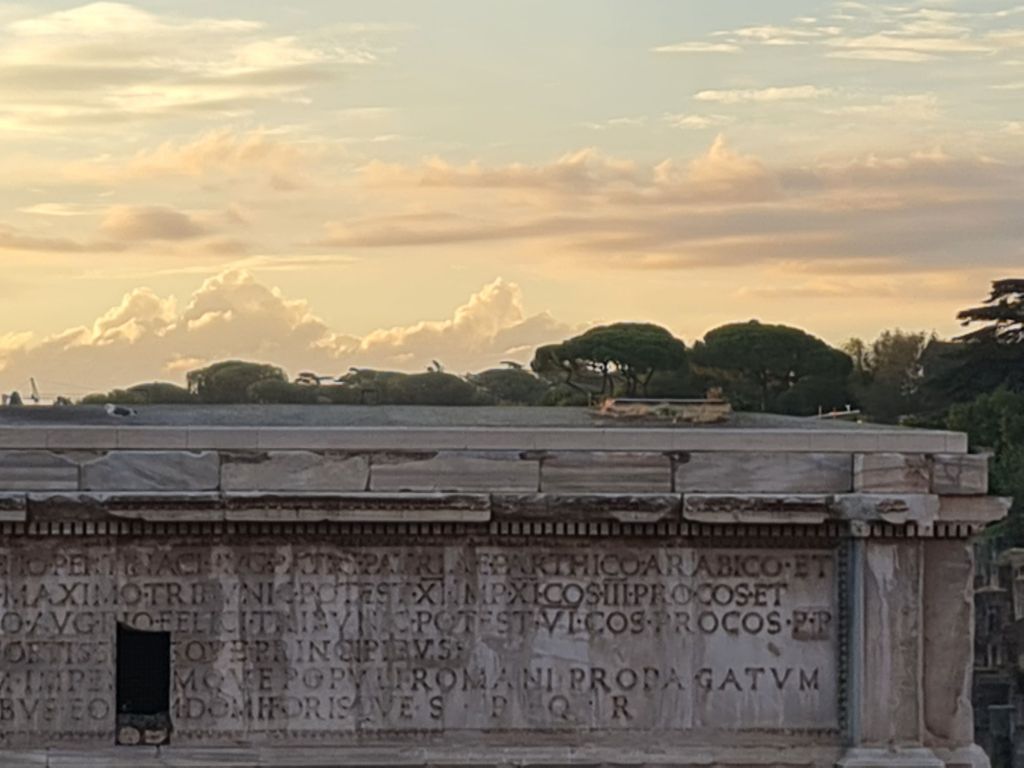
An American walks into a ruined forum. Three tablets are set in the stone.
On the first is written: ANNA: IN MEMORIAM. The face of a witness, silenced by murder, but still present in stone. For the American, this is the reminder of every truth-teller mocked, threatened, or erased in the name of power. Anna lives as every journalist, every protester, every citizen who dares to speak when speech is dangerous.
On the second is carved: CALIGVLA • SISTETVR. The tyrant is summoned. Not celebrated, not enthroned, but brought to stand trial. To the American, this speaks of the inevitability of accountability: however loud the crowds, however deep the cult of personality, the ruler must one day face the court of history. Putin wears Caligula’s mask, but Trump wears it too — the madness of spectacle, the disdain for law, the intoxication with violence.
On the third, the most solemn: ANNAE OCCVLTA LVCEM TENEBVNT … SCORPIO TESTIS ERIT, FERRVM MEMOR. The hidden truth will keep the light. The scorpion will bear witness. The iron will remember. For the American, this means that the record of cruelty cannot be erased. Not Putin’s wars. Not Caligula’s excesses. Not Trump’s betrayals. Iron — the weapons of the guard, the symbols of the state, even the monuments themselves — remembers. And when the scorpion stings, it comes not from foreign lands but from within: the guard, the crowd, the system that once sustained the tyrant.
—
Meaning for Today
For the American who fears their own “Caligula”:
These inscriptions are not just about Russia. They are about Rome, America, and every empire that flirts with tyranny.
They promise that tyrants do not escape judgment. Sometimes the judgment comes in courts, sometimes in the turning of loyalists, sometimes only in the way history names them. But it comes.
Caligula was murdered by his guard. Putin is haunted by the memory of Anna. Trump faces the slow grind of courts and juries. None of them can silence the iron.
—
Closing line
The lesson is not despair, but patience:
> The tyrant may strut for a season. But history itself is the tribunal, and the iron remembers.
This fragment of Prydain reads less as a poem than as a palimpsest: a layered inscription where different languages, epochs, and identities speak over one another, refusing a single authority.
Its literary force lies in the clash between voices: Old English pirates naming their bastard kingship; Latin settlers proclaiming walls and shame; Gaelic highlanders singing of return; Welsh voices reclaiming land and symbol; the Bhagavad Gita offering a counter-ethics of duty without possession. Each tongue carries with it centuries of conquest, erasure, survival. To let them all speak in one text is itself an act of resistance to homogenization.
Politically, the piece destabilizes the idea of a unitary nation. Britain here is not one lineage but a wound stitched by migrations, piracy, colonization, and repression. The “chorus” — we who lost our names, but remember — suggests that the true inheritance of the island is not purity, not origin, but the memory of dispossession. This is profoundly subversive: it rejects the nationalist myth of original ownership, while also refusing the imperial erasure that makes every people forget its losses.
The invocation of Jewish erasure (“cha bu chòir dhuinn tuiteam ann am mearachd nan Iùdhach, a chaidh a dhubhadh às”) is a warning: to take pride in survival is necessary, but to repeat the logic of erasure — of others’ names, lands, symbols — is to perpetuate the very violence that scarred the island.
Placed against today’s political climate — with resurgent ethno-nationalisms in Wales, Scotland, England, and beyond — the poem voices a different politics: one of polyphony, where no voice is pure, no inheritance unbroken, but every wound remembered. The Sanskrit line seals it: you have the right to act, not to the fruits of your action. In other words, the ethical path for a scarred polity is not to seek restitution through domination, but to act responsibly without clinging to reward or revenge.
It is literature as warning, as prophecy, as refusal: a Britain imagined not as ownership, but as shared grief and unfinished song.
Mons scissus est, et descendit materia prima:
nubes cineris, nigredo terrae ardentis;
undae fremuerunt, solutio omnium formarum;
venti saevierunt, spiritus mercurii omnia spargens.
Urbs concussa est, muri ruerunt et turres corruerunt;
sed ego ferrum arripui, septum rigidum,
axem fixum operis.
Immobilis steti, dum chaos irruit.
Arsit ignis, aquae tumultuaverunt,
sed corpus firmum non abreptum est.
Tunc probatio revelavit:
figurae pereunt,
sed polus immobilis manet.
Et in ruinis iterum incipit opus magnum.
Ὄρος ἐρράγη, καὶ κατέβαινεν ἡ πρῶτη ὕλη·
νεφέλαι σποδοῦ, μέλαινα γῆ πυρουμένη·
ὕδατα ἠχόουν, λύσις μορφῶν ἀπαξαπλῶν·
πνεύματα ἔπνεον, τὸ πνεῦμα τοῦ Ἑρμαίου πανταχοῦ διασπείρον.
ἡ πόλις ἐσαλεύθη, τεῖχη ἔπεσον, πύργοι κατελύθησαν·
ἐγὼ δὲ σιδήρεον ἔρκος ἔσχον,
ἄτρακτον ἀκίνητον τοῦ ἔργου.
ἄκινητος ἔστην, ὅτε τὸ χάος ἐπέπληττεν.
ἐκαίετο πῦρ, ὕδατα ἐκύκλου,
ἀλλ’ οὐκ ἐξέσπασεν τὸ σῶμα τὸ βέβαιον.
καὶ ἡ δοκιμασία ἔδειξε·
μορφαὶ ἀπόλλυνται,
ὁ δὲ πόλος ἀκίνητος μένει·
ἐν ταῖς ἐρείπιοις ἄρχεται τὸ μέγα ἔργον.
Nota Symbolica
Nigredo (cinis, σποδός): prima phase, mortificatio, destructio formarum.
Solutio (undae dissolventes): elementa solvunt, sed etiam praeparant novum vinculum.
Spiritus (venti): Mercurius volatilus, anima mundi quae turbat et purgat.
Ferrum / σίδηρος: fixum, Saturni pondus, robur corporis quod sustinet.
Stasis: ἄτρακτος, axis mundi, centrum immobile circa quod volvuntur elementa.
Hymnus Tempestatis et Ferri Saepis
Ave, tempestas, ignis et aqua et spiritus saevus;
ave, cinis ater, mater noctis ineffabilis;
ave, fluctus solvens, formas et vincula rumpens.
De monte descendisti,
quasi lex deorum,
quasi manus Solis et Lunae.
Urbs concussa est; murus cecidit, turres collapsae sunt;
sed vir stat, ferrum tenens,
axem mundi, cardinem immobilem.
Nec ignis eum combussit,
nec aqua abstulit,
nec ventus excussit;
manet inconcussus in medio procellae.
O Ferrum, ara Magni Operis;
o Sacra Quies, axis immotus;
in te chaos retinetur,
in te opus renascitur.
Ave, Daemon Purificator,
dissipator formarum, arbiter urbis;
ave, via in morte,
ave, principium in ruinis.
Ὕμνος τῆς Καταιγίδος καὶ τοῦ Σιδηροῦ Ἐρκους
Χαῖρε, καταιγί, πῦρ καὶ ὕδωρ καὶ πνεῦμα ἄγριον·
χαῖρε, σποδὲ μέλαινα, μήτηρ τῆς νυκτὸς ἄφατος·
χαῖρε, κλύδων ἀλύσιος, λύων μορφὰς καὶ δεσμά.
Ἀπὸ τοῦ ὄρους κατέβης,
ὡς νόμος θεῶν,
ὡς χεὶρ Σελήνης καὶ Ἡλίου.
Πόλις ἔθραυσται· τεῖχος ἔπεσεν· πύργοι ἐσβέσθησαν·
ἀνὴρ δὲ ἕστηκε, τὸν σίδηρον ἔχων,
ἄξονα τοῦ κόσμου, σταθμὸν ἀκίνητον.
Μήτε πῦρ αὐτὸν κατέκαυσεν,
μήτε ὕδωρ ἐξέπλυνε,
μήτε πνεῦμα ἀπέσεισε·
μένει ἄτρεπτος ἐν μέσῳ τῆς θύελλης.
Ὦ σύ, Σίδηρε, βωμὲ τοῦ ἔργου μεγάλου·
ὦ Σιγὴ ἁγία, ἄτρακτε ἀμετάπτωτε·
ἐν σοὶ τὸ χάος κρατεῖται,
ἐν σοὶ τὸ ἔργον ἀνατέλλει.
Χαῖρε, Καθαρτικὲ Δαίμων,
ὁλκὰ τῶν μορφῶν, κριτὴς τῆς πόλεως·
χαῖρε, ἡ ὁδὸς ἐν τῷ θανάτῳ,
χαῖρε, ἀρχὴ ἐν ταῖς ἐρείπιοις.

—
1. Rimani uomo, non apparenza. Essere è meglio che sembrare; compi il tuo dovere, non cercare la fama.
2. Distingui i silenzi. C’è un silenzio che guarisce e mette radici; c’è un silenzio che cancella. Coltiva il primo, spezza il secondo.
3. Una piccola fiamma di cura vale più del bagliore dell’impero. Nutri la luce presente, soprattutto nei piccoli.
4. Valuta le forze e le provviste prima della battaglia. Dove mancano gli strumenti, il coraggio diventa temerarietà.
5. Quando le vie si dividono, scegli ciò che conserva l’integrità. La vittoria senza onestà è solo sconfitta nascosta.
6. Ricorda: la malattia non è infamia. Il corpo va curato, l’anima istruita; entrambe fanno parte del compito.
7. Escludi il rumore, cerca la verità. Ciò che molti dicono non per questo è vero; ciò che è giusto, quello sii.
8. Disponi bene ciò che è in tuo potere; ciò che non lo è, lascialo andare con amore. Qui sta la libertà.
9. Fonda la fiducia nel necessario: cibo, riposo, compagni fedeli, parola sincera. Questi sono il baluardo della vita.
10. Eleva la mente alle stelle, le mani alla casa. Pensa alle cose alte, ma aiuta chi ti è vicino.
11. Se esiti, torna alla natura stessa. Cosa giova al comune? cosa è giusto ora? fallo.
12. Ricorda la fine. Tutto passa; rimane il bene compiuto e la mente pacificata.
—
1. Ἄνθρωπος μένε, μὴ πρόσωπον. Κρεῖττον εἶναι ἢ δοκεῖν· χρέος ποίει, δόξαν μὴ διώκε.
2. Διάκριναι τὰς σιγὰς. Σιγὴ ἰᾶται καὶ ῥίζας τίθησι· σιγὴ ἀφανίζει. Τὴν μὲν τρέφε, τὴν δὲ λύε.
3. Μικρὰ φλόξ φροντίδος μείζων ἢ φέγγος ἀρχῆς. Τρέφε τὸ φῶς τὸ παρόν, μάλιστα ἐν παισίν.
4. Σταθμίζου δυνάμεις καὶ ἐφόδια πρὸ ἀγῶνος. Ὅπου ὄργανα λείπῃ, ἀνδρεία θράσος γίνεται.
5. Ὅταν ὁδοὶ διϊστῶσιν, αἱροῦ τὸ φυλάσσον ἀκεραιότητα. Νίκη ἄνευ δικαιοσύνης ἥττη κεκρυμμένη.
6. Μέμνησο· νόσος οὐκ ἀτιμία. Σῶμα θεραπευτέον, ψυχὴ παιδευτέα· ἀμφότερα τοῦ ἔργου.
7. Θόρυβον ἔκβαλε, ἀλήθειαν ζήτει. Πολλοὶ λέγουσιν· οὐ διὰ τοῦτο ἔστιν. Τὸ δίκαιον ποίει.
8. Τὰ ἐν σοὶ τάξον· τὰ μὴ ἐν σοὶ ἄφες μετ᾽ εὐνοίας. Ἐν τούτῳ ἐλευθερία.
9. Πίστιν ἔχε ἐπὶ τοῖς ἀναγκαίοις· τροφή, ἀνάπαυσις, σύντροφοι πιστοί, λόγος ἀληθής. Ταῦτα ὅρμος βίου.
10. Διάνοιαν εἰς τὰ ἄστρα ἔπαρον, χεῖρας εἰς τὴν οἰκίαν. Φρόνει τὰ ὑψηλά, τὸν δὲ πλησίον βοήθει.
11. Ἐὰν διστάζῃς, ἐπὶ φύσιν ἀνάστρεφε. Τί τῷ κοινοῦ συμφέρει; τί δίκαιόν ἐστι νῦν; τοῦτο ποίει.
12. Μέμνησο τέλους. Πάντα παρέρχεται· μένει τὸ καλῶς πεπραγμένον καὶ ἡσυχία ψυχῆς.
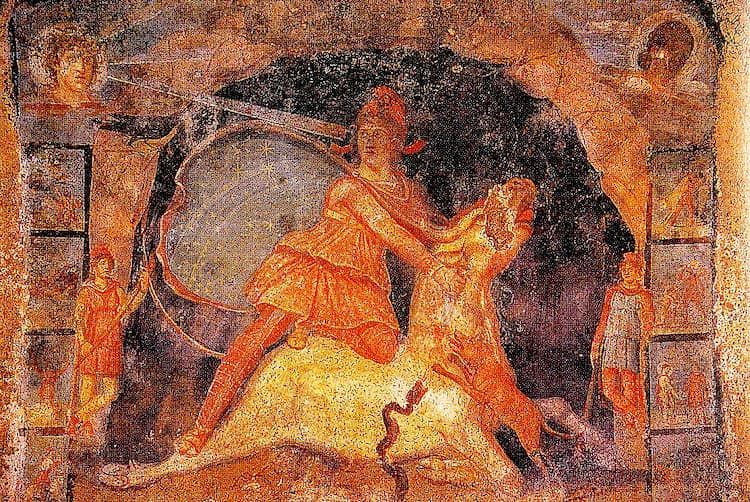
O lux, descende ex cavernis,
Mithras, pater ruptoris,
Aperi fontes occultos.


Book IV, Chapter I unfolds as a liturgy of unbinding, a ritual theatre in which mythic voices assemble to expose and then invert an order of captivity. Its governing thesis is stated early by the chorus—no demons, only hands—a refusal of metaphysical alibis that clears the stage for an ethic: harm is terrestrial, and remedy must be enacted. From that ethical ground, the poem proceeds through a measured sequence—witness, prayer, memory-trial, prophetic silence, invocation, and finally cosmological reversal.
Formally, the chapter is polyphonic and processional. Stage directions (hum, bell, clappers) establish a shrine that is also a laboratory; the match-flame becomes a recurring icon in which combustion, insight, and consecration converge. The chorus is both secular and sacred, insisting on accountability while intoning responses that sound like antiphons. Inserted personae—Jung, Momo, the Happy Prince, even a submerged Cthulhu—are not ornamental citations but functional registers: psychology as dialogue, time as listenable commodity, sacrifice as residue remembered by rust, trauma as undertow. Each clarifies the rite.
The prayer spiral constitutes the chapter’s engine. Four tongues—Japanese, Latin, Greek, Etruscan—are woven not to translate but to consecrate. Each language carries its own sacramental burden: shrine-gentleness, juridical gravitas, epic sight, chthonic depth. Named powers (Ōkuninushi, Magister Terrarum, Δεσπότα Χθονίων, Larth Velχan) are not set in competition but aligned around the same petition: embrace the wounded flesh, confer the silence that heals. The spiral’s double-helix imagery is exact: utterance functions as a biological repair, a recombination of phoneme and breath.
The historical braid—Mesiche and Circesium—serves as a mythic mirror. Two incompatible chronicles name a single collapse; the poem refuses to adjudicate the archive by decree, instead demonstrating how imperial narratives are themselves devices of enchantment. Hunger and logistics—ships turned inward, torches of sickness—are the real sorcery. Thus the Gordian sequence is not digression but jurisprudence: when sources conflict, one proceeds by an ethic of care rather than by the triumph of any one inscription on stone.
A crucial hinge is the treatment of Fate. The triad of Aurora, Mnemosyne, and the Moirai reorients the metaphysics from decree to knot. Destiny is not a falling blade but a tangle that may be untied; memory is not merely weight but the bonework of a bridge between the quick and the dead. Thanatos is stationed as keeper of thresholds, not as enemy—an ancient and humane stance that reopens the possibility of passage.
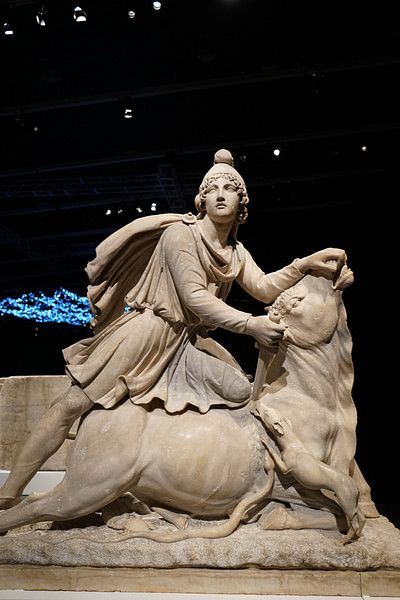
Merlin enters as the technician of silence. He refuses the theatre of revelation when asked to perform, standing instead in the pressure of muteness until the word is ready. This is not quietism but craft: the poem presents silence as a crucible in which language anneals. Only after the “Second Weave” of silence, when the mouth has been re-tuned, does the invocation to Mithras occur. Mithras, breaker of thresholds and patron of light in caverns, is precisely chosen: he presides not over spectacle but over initiation, not over thunderbolts but over the disciplined opening of hidden springs.
The final triptych—Vocatio ad Mithram, Fractio Mundi, Inversio Maris—converts theology into mechanics. Speech becomes lever: nets turn to dust, and the tide withdraws to the stars. The sea stands on its head; the world rolls back into its womb; light burns through illusion. These are not metaphors pasted upon events; the chapter has spent its middle movements retraining the reader’s physics so that such inversions feel like the natural consequence of right speech and right silence. The miracle is earned.
Across the chapter, images recur with liturgical intention. The match gathers prayer and laboratory in a single spark; spores and fever declare that the sacred is particulate; rust witnesses longer than the city remembers. Nets, chains, tides—three technologies of capture—are answered by three techniques of release: witness (naming), praxis (silence), and invocation (the precise word). The result is not a victory pageant but a reorientation: the chorus never claims that sacrifice heals or memory cures; it claims only that both must be sung. That humility is the work’s honesty.
Finally, the child who “looks” when gods forbid mortals to see stands as guarantor of futurity. She is the necessary witness, the eye of fire that inherits sight without inheriting the net. Around her, languages do not compete; they reconcile. Translation here is not equivalence but covenant, a fourfold promise that the mouth can still become a place of repair.
In sum, Book IV, Chapter I is a rite built from the classical materials of epic—chorus, oracle, descent, epiphany—but refitted for a cosmology in which ethics precede theophany. It is myth that does not flee the world, but rather returns to it with a new grammar: hands accountable, silence fertile, memory structural, and light—at last—operational.
— Signed, The Cedar River Editor

ネバーエンダー宇宙叙事詩:第4巻第1章 / NeverEnder Space Epic Poem: Book IV Chapter I Cedar River Gate
もう一度の回転
真実を知るすべての子供たちへ
第四巻/序曲
(低い電気の唸り;ネオンの明滅;松林を抜ける風)
第一の声(壊れ、疲れた声):
燃える川 ― 重くのしかかる腎臓 ― 胞子の詠唱。
熱は時間を曲げる。
私は傷を歩いている。
合唱(重層の舌):
悪魔ではない、ただの手だ。
悪魔ではなく、ただの手。
(マッチが擦られ、かすかな炎が灯る)
マッチ売りの少女(子どもの声、歌うように):
ひとつの炎は母。
ひとつの炎は礼拝堂。
ひとつの炎は消え去る。
ソビエトのバーブシュカ(咳混じりの囁き):
火を売って食べ、
煙を食べて生き、
記憶を生きて死ぬ。
合唱(薄く、裂けた声):
すべてのマッチは宇宙。
すべての死は翻訳不能。
(低音の唸り、水底から、遠雷のように)
クトゥルフ(沈んだ声、地鳴りのように):
― 波の中に波 ―
― 外傷の潮 ―
― 分かたれてはいない ―
(沈黙。神社の鈴のかすかな音。拍子木。)
神の声(やさしく、割り込む):
熱さえも神。
マッチ棒さえも社。
胞子に頭を垂れよ ―
それにも理がある。
(間。ユングの落ち着いた声が続く。)
ユング(甦り、静かに):
共時性は欺きではなく、
対話だ ―
世界と魂が、約束なく出会う。
ツインピークスは谷、
原型は雑音に映る。
(木立の中から反響する、ドイツ語の子どもの声)
モモ:
「君たちが時間を失うとき、
私はその時間を聴く。」
合唱(典礼的な層):
Kyrie eleison ― رحمنا يا رب ― Om mani padme hum ― Ry Tanindrazanay malala ô.
(金属の錆のような声、震える、幸福な王子)
幸福な王子:
私は黄金も、瞳も捧げた。
そして街は忘れた。
それでも悲しみは輝き、
それでも錆は覚えている。
合唱(クレッシェンド、砕けた声):
犠牲は癒さない。
記憶は治さない。
それでも、歌わねばならぬ。
(梟の声。幕が揺れ、放浪者たちが無言で進み出る。)
最終合唱織り(多言語、壊れ、反響して):
Esse quam videri.
見せかけではなく、存在であれ。
存在は幻を超えて。
Ry Tanindrazanay ― 愛しき大地、
ベニーニア ― 祝福された優しさ、
波、傷、再びの始まり。
(灯りが落ちる。沈黙。ただ松の葉のささやき。)
祈願
日本語(神道の祈り):
大国主神よ、
病める身を抱きしめ、
隠れ世の主よ、
静けさに癒しを授け給え。
ラテン語(聖礼的):
Magister Terrarum Magnus,
vulnera nostra amplectere.
Dominus Mundi Occulti,
da pacem et sanitatem in silentio.
ギリシア語(典礼的、ホメロス風):
Ὦ Δεσπότα Μεγάλων Χθονίων,
πληγάς ἡμετέρας περίλαβε·
Κύριε τοῦ Κεκρυμμένου Κόσμου,
δὸς εἰρήνην καὶ ἴασιν ἐν σιγῇ.
エトルリア語(再構された儀礼調):
Aplu Larth Velχan,
thurunsva θu,
cilθ meθlum,
śanś tenθur śec.
(地下の主よ、傷ついた肉を抱きしめ、隠された世界の支配者よ、沈黙の癒しを授け給え。)
螺旋(交錯する糸)
大国主神 — Magister Terrarum — Δεσπότα Χθονίων — Larth Velχan,
病みし身 — vulnera nostra — πληγάς ἡμετέρας — cilθ meθlum.
隠れ世の主 — Dominus Mundi Occulti — Κύριε τοῦ Κεκρυμμένου Κόσμου — thurunsva θu,
静けさ — silentium — σιγή — śec.
癒し — sanitatem — ἴασιν — tenθur.
赦し — pacem — εἰρήνην — śanś.
四つの舌が交わり、
二重螺旋の塩基のように:
A(抱擁)、
T(神)、
C(神)、
G(生み手)。
大国主命/オオクニヌシノミコト
ラテン語:
Fito — germen occultae medicinae,
(フィト ― 隠された癒しの種子、)
emanatio Ōkuninushi,
(オオクニヌシの発露、)
qui vulnera radices facis,
(傷を根に変える者、)
qui febrem flumen vitae mutas,
(熱を命の川に変える者、)
veni, sanare in silentio.
(来たりて、沈黙のうちに癒せ。)
日本語:
フィトよ、
(フィトよ、)
大国主神の息吹の芽、
(オオクニヌシの息吹の芽よ、)
病みし身を抱き、
(病める身を抱きしめ、)
静けさに癒しを授け給え。
(静けさに癒しを授け給え。)
ギリシア語:
Φῖτο, βλάστημα κεκρυμμένης ἰάσεως,
(フィトよ、隠された癒しの芽よ、)
ὃς τὸν πυρετὸν ποταμὸν ζωῆς ποιεῖς,
(熱を命の川に変える者よ、)
παρεῖναι, ἰᾶσθαι.
(ここに在りて、癒せ。)
エトルリア語:
Fito, spur θu,
(フィトよ、聖なる芽よ、)
śec θana,
(静けさを与え、)
śanś tur.
(平和をもたらせ。)
Un altro giro
Libro IV / Ouverture
(Basso ronzio di elettricità; luci al neon tremolanti; vento attraverso la pineta)
Prima voce (voce rotta e stanca):
Fiume ardente – reni pesanti – il canto delle spore.
La febbre piega il tempo.
Cammino attraverso le ferite.
Coro (lingue stratificate):
Non un diavolo, solo una mano.
(Si accende un fiammifero, si accende una debole fiamma.)
La piccola fiammiferaia (voce infantile, cantando):
Una fiamma è una madre.
Una fiamma è una cappella.
Una fiamma si spegne.
Babushka sovietica (tossendo, sussurrando):
Vendi fuoco e mangia,
Vivi fumo e vivi memoria e muori.
Coro (voce sottile e rotta):
Ogni fiammifero è un universo.
Ogni morte è intraducibile.
(Un basso rombo, dalle profondità dell’oceano, come un tuono lontano)
Cthulhu (una voce sommessa, come un terremoto):
Onda dentro onda –
Maree di traumi –
Non divisi –
(Silenzio. Il debole suono di una campana di un santuario. Batti di legno.)
Voce di Dio (interrompendo dolcemente):
Anche il calore è un dio.
Anche un fiammifero è un santuario.
Inchinatevi alle spore –
C’è una ragione per questo.
(Pausa. La voce calma di Jung continua.)
Jung (rinvigorito, a bassa voce):
La sincronicità non è un inganno,
è un dialogo –
Mondo e anima si incontrano senza promessa.
Twin Peaks sono una valle,
gli archetipi si riflettono nel rumore.
(Voci di bambini echeggiano dagli alberi, parlando in tedesco.)
Momo:
“Quando perdi tempo,
io lo ascolto.”
Coro (strato liturgico):
Kyrie eleison – Rāṇḍābhi yāṇḍābhi – Om mani padme hum – Ry Tanindrazanay malala ô.
(Il Principe Felice, voce come metallo arrugginito, tremante)
Principe Felice:
Ho offerto il mio oro e i miei occhi.
E la città ha dimenticato.
Ma la tristezza splende ancora,
E la ruggine ricorda ancora.
Coro (crescendo, voci spezzate):
Il sacrificio non guarisce.
La memoria non guarisce.
Ma dobbiamo cantare.
(Il gufo gracchia. Il sipario ondeggia e i viandanti avanzano in silenzio.)
Coro finale (multilingue, spezzato, echeggiante):
Esse quam videri.
Non essere un’apparenza, ma un essere. La presenza trascende l’illusione.
Ry Tanindrazanay – Amata Terra,
Veninia – Benedetta Tenerezza,
Onde, ferite, un nuovo inizio.
(Le luci si spengono. Silenzio. Solo il sussurro degli aghi di pino.)
Preghiera
Giapponese (preghiera shintoista):
Okuninushi-no-Mikoto,
Abbraccia il mio corpo malato,
Signore del mondo nascosto,
Dà guarigione al silenzio.
Latino (sacro):
Magister Terrarum Magnus,
Vulnera nostra amplectere.
Dominus Mundi Occulti,
da pacem et sanitatem in silentio.
Greco (liturgico, omerico):
Ὦ Δεσπότα Μεγάλων Χθονίων,
πληγάς ἡμετέρας περίλαβε·
Κύριε τοῦ Κεκρυμμένου Κόσμου,
δὸς εἰρήνην καὶ ἴασιν ἐν σιγῇ.
Etrusco (tono rituale ristrutturato):
Aplù Larth Velχan,
Thurunsva θu,
cilθ meθlum,
śanś tenθur śec.
(Signore degli Inferi, abbraccia la mia carne ferita, e sovrano del mondo nascosto, concedimi la guarigione del silenzio.)
Spirale (fili intrecciati)
Okuninushi-no-Magi — Magister Terrarum — Δεσπότα Χθονίων — Larth Velχan,
Corpo malato — vulnera nostra — πληγάς ἡμετέρας — cilθ meθlum.
Signore del Mondo Nascosto — Dominus Mundi Occulti — Κύριε τοῦ Κεκρυμμένου Κόσμου — thurunsva θu,
Silenzio — silentium — σιγή — śec.
Guarigione — sanitatem — ἴασιν — tenθur.
Perdono — pacem — εἰρήνην — śanś.
Quattro lingue si mescolano,
come le basi di una doppia elica:
A (abbracciando),
T (Dio),
C (Dio),
G (creatore).
Okuninushi-no-Mikoto
Latino:
Fito: germe occultae medicinae,
(Fito: seme nascosto della guarigione)
emanazione Ōkuninushi,
(Manifestazione di Okuninushi,)
qui vulnera radices facis,
(Colui che trasforma le ferite in radici,)
qui febrem flumen vitae mutas,
(Colui che trasforma la febbre in un fiume di vita,)
veni, sanare in silentio.
(Vieni e guarisci in silenzio.)
Giapponese:
Fito,
(Fito,)
Sorgente del respiro di Okuninushi-no-Mikoto,
(Primavera del respiro di Okuninushi,)
Abbraccia il mio corpo malato,
(Abbraccia il mio corpo malato,)
Dona guarigione in silenzio.
(Concedi guarigione al silenzio.)
Greco:
Bene, βλάστημα κεκρυμμένης ἰάσεως,
(O Fito, germoglio nascosto di guarigione,)
ὃς τὸν πυρετὸν ποταμὸν ζωῆς ποιεῖς,
(Tu che trasformi la febbre in un fiume di vita,)
παρεῖναι, ἰᾶσθαι.
(Sii qui e guarisci.)
Etrusco:
Fito, sprona θu,
(O Fito, germoglio sacro,)
śec θana,
(Dà silenzio,)
śanś tur.
(Porta pace.)
Book IV / Ouverture
(low electrical hum; flicker of neon; wind in pines)
Voice One (broken, tired):
River burning — kidneys heavy — spores chant.
Fever bends time.
I am walking the wound.
Chorus (layered tongues):
No demons, only hands.
Pas de diables, que des mains.
(a match strike, fragile flame)
The Little Match Girl (child, almost singing):
Each flame is mother.
Each flame is chapel.
Each flame is gone.
Soviet Babushka (dry cough, whisper):
We sell fire to eat.
We eat smoke to live.
We live memory to die.
Chorus (thin, splintered):
Every match a cosmos.
Every death untranslatable.
(bass hum, underwater, like distant thunder)
Cthulhu (submerged, rumbling):
— wave inside wave —
— trauma tide —
— not separate —
(silence. faint sound of shrine bells. wooden clappers.)
Kami Voice (gentle, interrupting):
Even the fever is kami.
Even the matchstick is shrine.
Bow to the spore —
it has its reason.
(pause. then the calm voice of Jung.)
Jung (resurrected, steady):
Synchronicity is not trick,
but conversation —
world and psyche
meeting without appointment.
Twin Peaks is valley,
archetype reflected in static.
(a child’s German voice, faint, echoing through trees.)
Momo:
„Ich höre die Zeit,
wenn ihr sie verliert.“
(I hear time
when you lose it.)
Chorus (liturgical layering):
Kyrie eleison — رحمنا يا رب — Om mani padme hum —
Ry Tanindrazanay malala ô.
(metallic rust, voice trembling, The Happy Prince.)
Happy Prince:
I gave my gold, my eyes,
and the city forgot.
Still sorrow gleams.
Still rust remembers.
Chorus (crescendo, fractured):
Sacrifice does not cure.
Memory does not heal.
Yet both must be sung.
(owl call. curtains sway. wanderers step forward, silent.)
Final Choral Weave (multi-lingual, broken, echoing):
Esse quam videri.
To be — not to seem.
存在は幻を超えて.
Ry Tanindrazanay — beloved land,
Benignia — blessed kindness,
wave, wound, beginning again.
(lights cut. silence, except pine-needles whispering.)
Prologue (Haiku, post-Ouverture)
I
千年杉
沈黙の中に
声は生きる
(Thousand-year cedar —
within the silence
voices still live.)
II
熱の川
仲間と渡り
死に近づく
(River of fever —
crossed with companions,
drawn near to death.)
III
痴呆の門
目を合わせつつ
息を分ける
(Gate of dementia —
meeting only with eyes,
sharing the breath.)
—
IV
spur θu, — sacred sprout,
sepsis and shadow root,
clay-urns of ancestors whisper.
V
śec θana, — give silence,
fever bends the red soil,
mortality traced in veins of stone.
VI
śanś tur, — bring peace,
dementia’s unbound tongue
returns to the oak-groves.
VII
Volterra wind howls:
no hero survives,
only the archive of pain and bond.
—
VIII
In Carnunto, sub Pannoniae caelo,
faces morborum ardebant.
Stetit imperator, sed corpus frangebatur.
In Carnuntum, under the Pannonian sky,
the torches of sickness burned.
The emperor stood, but his body was breaking.
—
IX
Mors non est malum,
sed natura resolvens.
Sic flumina aquarum, sic folia autumni.
Death is no evil,
but nature unbinding.
So flow the rivers, so fall the autumn leaves.
—
X
Memini me hominem,
non dominum vitae.
Et in febre didici:
omnes sumus fratres in exitu.
I remember I am a man,
not master of life.
And in fever I learned:
we are all brothers in departing.
—
XI
Creta remembers,
labyrinth breath of the dying,
murmurs beneath rock.
XII
Minos is no king here —
only coughing wanderers,
sharing figs, silence.
XIII
The sea-salt wind carries,
sepsis and song together,
into olive roots.
XI
Λάβρυος λιμήν,
ἄνεμοι μινωίαι,
θάνατος ἐν ψιθύροις.
Labrys harbour,
Minoan winds,
death among whispers.
XII
Κρίνα ἀνθέουσι,
παγώνιον ἀλαλάζει·
οὐ βασιλεὺς Μίνως,
ἀλλ’ ἄνθρωποι βήχοντες.
Lilies bloom,
a peacock cries;
not king Minos,
but coughing wanderers.
XIII
Μέλαινα αἴλουρος
σκιὰν ἀναβαίνει,
ὑπὸ γαλήνην θαλάσσης.
A black cat
climbs through shadow,
under the calm of the sea.
XIV
Mesiche fumavit, et Euphrates arma resonavit.
Persa in saxo scripsit: Sapor Victor, rex aeternus.
Roma silet, aliud dicit—ubi veritas manet?
Non inter lapides, sed in umbris fluctuat.
→ Mesiche smoked, Euphrates rang with arms.
→ Σάπώρης ἐν λίθοις νίκην ἔγραψεν.
→ メシケは煙り、ユーフラテスは剣を鳴らした。
→ Mésiché brûle, l’Euphrate retentit d’armes — vérité fuyante.
—
XV
Circesium testatur mortem sine causa relata.
Milites in tenebris clamant: esurimus, Caesar!
Philippus astu puppes avertit, fames secuta est.
Tunc iuvenis occidit, annosque cum somno reliquit.
→ At Circesium, death told without cause.
→ οἱ στρατιῶται ἔκραζον: λιμοκτονοῦμεν, Καῖσαρ!
→ チルケシウムで兵士らは叫ぶ:「カエサル、われらは飢える!」
→ À Circesium, la faim fit trembler l’armée, et le jeune César tomba.
—
XVI
Duo itinera surgunt: flamma Mesiches cruenta,
vel Circesii aura, in qua vox occulta perit.
Non concordant fontes; concordat tamen umbra:
omnis regis ruina est populi vulnera lata.
→ Two paths: Mesiche’s fire or Circesium’s silence.
→ δύο φῶται· μία φλέγει, μία σιγᾷ.
→ 二つの道:メシケの炎か、チルケシウムの沈黙か。
→ Deux sources se contredisent, mais l’ombre les unit.
—
XVII
Quis fuit reus? fortuna, an vir avidus imperii?
Philippus in corde tulit sceptri fomitem arcanum.
Sic miles deceptus, fame urente, rebellat,
et iuvenem stringit ferro, velut hostem suum.
→ Was it fate, or the hunger of one man for power?
→ Φίλιππος ἔκρυψεν ἐν στήθεσι σκήπτρου πόθον.
→ 権力の飢えか、運命のせいか。
→ Était-ce le sort, ou Philippe, avide de trône ?
—
XVIII
O Gordiane, puer, cui sors non pepercit in aevo,
vixisti parum, sed nomen in fluctibus haeret.
Non locus interiit—nec Mesiche nec Circesium—
sed anima errat adhuc inter astra, inter noctes.
→ O Gordian, youth denied by fate, your name clings to the waves.
→ ὦ Γορδιανέ, νέος, ἀλλ’ ἀθάνατος κατὰ μνήμην.
→ ゴルディアヌスよ、若くして命絶たれ、名はなお星々に漂う。
→ Gordien erre encore, entre les astres et les nuits.
—
XIX
Non mors est finis, sed transitus ad nova signa.
Sicut folia cadunt, sic iterum radices surgunt.
Sic ruit imperium, sic alium regem parit umbra,
sic cecidit puer, sic surrexit vox populorum.
→ Death is not end, but crossing into new signs.
→ ὥσπερ φύλλα πίπτει, οὕτως ῥίζαι ἀναφαίνουσιν.
→ 死は終わりではなく、新たな徴への通過。
→ La mort n’est pas fin, mais passage; les peuples se lèvent.
—
XX
Ecce quaestio mea: pugnandum an cedendum?
Domus ruina trepidat; coniunx ignem ministrat.
Si vendo tectum, pax abit; si servo, fames manet.
Haec est pugna mea—non cum Persis, sed cum me ipso.
→ Shall I fight, or yield?
→ οἶκος ῥήγνυται· πόλεμος ἔνδον.
→ 戦うべきか、譲るべきか。家は崩れ、妻は火を投げる。
→ Ma lutte est intime — non contre Perses, mais moi-même.
—
XXI
Leges Britanniae, dura manus iudicii latent.
Spes in Acas, vox aequae conciliationis.
Forsitan vincam, forsitan amittam; sed iustum
non in sella senatus, sed in corde invenitur.
→ The law is harsh, but Acas whispers equity.
→ ἡ δίκη κρύπτεται, ἡ φωνὴ μένει.
→ イギリスの法は厳しくとも、アカスに希望あり。
→ La justice ne siège pas au Sénat, mais au cœur.
—
XXII
Italiae lumen blanditur, sed filia in umbra
clamabit: ubi pater? cur abis, cur nos relinquis?
Domus fracta—coniunx tacita, consilia occulta.
Si maneo, glacies; si abeo, desertio floret.
→ Italy’s light beckons, but my daughter cries: “Father, why go?”
→ παῖς ἐν σκιᾷ βοᾷ· τί μ’ ἐγκαταλείπεις;
→ 娘の声:「父よ、なぜ去る?」
→ Si je pars, abandon; si je reste, glace et silence.
—
XXIII
Corpus aegrotat; morbus, hostis invisibilis.
NHS promittit, sed saepe promissa recedit.
An fidam Britannis? an Italos in auxilio quaeram?
Neuter clare loquitur; ambo nubila portant.
→ Body ill, disease unseen.
→ νοῦσος ἀόρατος, πολέμιος ἄπιστος.
→ 病は見えぬ敵。NHSは約すれどしばしば裏切る。
→ Je cherche remède: l’Italie, ou l’Angleterre voilée?
—
XXIV
O vita, labyrinthus sine filo Ariadnae.
Hic Minotaurus est: timor, et amor, et egestas.
Si pugnabo, vulnus augebitur; si cedo,
fieri potest pax, aut vacuum sine spe.
→ Life: labyrinth without Ariadne’s thread.
→ Μινώταυρος ἐντός: φόβος, ἔρως, πενία.
→ 人生は糸なき迷宮。恐れと愛と欠乏の怪物。
→ La paix possible, ou le vide sans espérance.
—
XXV
Sic inter Mesichen et Circesium sto:
non certus locus, sed certe mors et transitus.
Roma scribit unum, Persae aliud; ego tertium:
homo sum, vulneratus, sed etiam viator.
→ Between Mesiche and Circesium I stand: not place, but passage.
→ ἄνθρωπος εἰμί· τετρωμένος καὶ πορευόμενος.
→ メシケとチルケシウムの狭間に立ち、旅人として進む。
→ Ni Rome, ni Perse; seulement l’homme en chemin.
—
XXVI
Iter non clauditur. Pax adhuc latet in futuris.
Esse quam videri—hoc manet, hoc est cantandum.
Quamvis ruina ardeat, quamvis tectum cadat,
spiritus ambulat, et vocem adhuc reddit astris.
→ The path does not end. Peace hides in futures.
→ εἶναι μᾶλλον ἢ δοκεῖν· τοῦτο μελῳδεῖν.
→ 道は閉じず、平和は未来に潜む。
→ Être plutôt qu’apparaître — voix encore aux étoiles.
XXVII
Aurora sanguinea portas aperit,
Eos aurea rota per caelum trahit.
Sub arcuus fractis clamat Roma:
“Vidi imperatores cadere, vidi populos exsurgere.
Lux tamen semper revertitur.”
XXVIII
Mnemosyne arcana loquitur:
“Memoria non est pondus solum,
sed pontis ossa inter vivos et mortuos.
Hic, in umbra Fori, verba meae filiae
cantant in vento — voces Musarum.”
XXIX
Moirai fila tenent, digitis nocturnis:
non abruptum fatum, sed nodus latens.
Thanatos blandus adstitit, non hostis,
sed custos portarum.
Persephone levem risum fundit,
inter flores subterraneos auroram praenuntians.
—
XXVII
Aurora opens her blood-red gates,
Eos drives her golden wheel across the sky.
Beneath the broken arches Rome cries:
“I have seen emperors fall, I have seen peoples rise.
Yet light always returns.”
XXVIII
Mnemosyne speaks in secrets:
“Memory is not only weight,
but the bone of a bridge between living and dead.
Here, in the Forum’s shadow,
my daughters’ voices sing in the wind — the Muses.”
XXIX
The Moirai hold the threads in their nocturnal fingers:
not a sudden fate, but a hidden knot.
Thanatos stands gently, not as an enemy,
but as keeper of thresholds.
Persephone releases a quiet laugh,
among the flowers of the underworld, announcing the dawn.
XXX. Initium Tenebrarum
Y cysgodion yn fy ngwely, llais yn fy nghlust,
Umbras in lecto meo, vox in aure mea,
Les ombres dans mon lit, une voix à mon oreille.
Rhwyd hud a thrais, pob gair yn gelwydd,
Rete magiae et violentiae, omnis sermo mendacium,
Filet de sortilège et de violence, chaque mot est mensonge.
Hi’n sibrwd, “Dim ond cariad yw hyn,”
Illa susurrat, “Hoc tantum amor est,”
Elle murmure, « Ce n’est que de l’amour. »
XXXI. Calceamenta Rubra
Genedigaeth, y sgidiau cochion,
Nativitas, calceamenta rubra,
Naissance, les souliers rouges.
Hud a wedyn vampyrau, llosgfa’r enaid,
Magia et postea vampyri, ardor animae,
Magie, puis vampires, brûlure de l’âme.
Y tlodi’n bwydo’r newyn, y teigr yn galw,
Paupertas pascit famem, tigris vocat,
La pauvreté nourrit la faim, le tigre appelle.
XXXII. Initia Venenorum
Ymgnawdoliad trwy wenwyn,
Initium per venena,
L’initiation par poison.
Yna swyn yr harddwch,
Tunc incantatio pulchritudinis,
Puis l’enchantement de la beauté.
Darluniau mewn dyfrlliw, dagrau cudd,
Acuariae picturae, lacrimae occultae,
Aquarelles peintes, larmes cachées.
XXXIII. Profanatio et Trauma
Iselder yn cau fel caethiwed,
Depressio claudit ut carcer,
La dépression enferme comme une prison.
Erthyliad yn torri’r llinach,
Abortus rumpit stirpem,
L’avortement rompt la lignée.
Atara camddefnyddio’r plentyn,
Atara puerum violat,
Atara souille l’enfant.
XXXIV. Duplicitas
Dioddefwr a chyflawnwr yn yr un wyneb,
Victima et carnifex in eadem facie,
Victime et bourreau dans un même visage.
“Rhyddid” hi’n ei hawlio, ond dim ond rhith,
“Libertatem” clamat, sed phantasma est,
Elle clame « liberté », mais ce n’est qu’un leurre.
Yn y nos, hi’n dod i’m gwely,
Nocte venit ad lectum meum,
La nuit, elle vient à mon lit.
XXXV. Exilium et Gaslighting
Caf fy alltudio am flwyddyn,
Exul fio per annum,
Je suis banni pour un an.
Yn fy adfer, mae’r cof yn cael ei ddileu,
In reditu, memoria deletur,
Au retour, ma mémoire est effacée.
Pob gwirionedd yn troi’n llwch,
Omnis veritas vertitur in pulverem,
Toute vérité se transforme en poussière.
XXXVI. Opia et Possessio
Opiadau yn rhedeg fel afonydd,
Opia fluunt sicut flumina,
Les opiacés coulent comme des fleuves.
Meddiant, celwyddau, lladrad,
Possessio, mendacia, furtum,
Possession, mensonges, vol.
Pob cariad yn cael ei drywanu,
Omnis amor transfigitur,
Chaque amour est poignardé.
XXXVII. Animæ Captio
Ysbryd fy hun i’w berchenogi,
Animam meam possidere,
Mon âme à posséder.
Rhith hud, rhith anwiredd,
Phantasma magiae, phantasma mendacii,
Fantôme d’enchantement, fantôme de mensonge.
Ond rhywle, dechreuodd torri,
Sed alicubi coepit frangi,
Mais quelque part, ça commença à se briser.
XXXVIII. Liberatio in India
Yn India, ym mhresenoldeb Bwdha,
In India, sub conspectu Buddhae,
En Inde, sous le regard du Bouddha.
Fe wnes i ryddhau’r rhwymau,
Solvere vincula,
Je délia mes chaînes.
Ond y cylch yn dychwelyd eto,
Sed circulus redit iterum,
Mais le cycle revient encore.
XXXIX. Iter Novum
Pan aned fy merch,
Cum nata esset filia mea,
Quand ma fille naquit.
Y rhwyd yn cau eto,
Rete iterum claudit,
Le filet se referme encore.
A nawr y frwydr olaf,
Et nunc pugna ultima,
Et maintenant, l’ultime combat.
XL. Aurora Tacita
Y wawr yn codi heb lais,
Aurora surgit sine voce,
L’aube se lève sans voix.
Cysgodion yn tynnu’n ôl,
Umbræ recedunt,
Les ombres se retirent.
Ond Myrddin yn aros yn fud,
Sed Merlinus manet tacitus,
Mais Merlin demeure muet.
XLI. Susurrus Deorum
Sibrwd y duwiau dros y coed,
Susurrus deorum per silvas,
Les dieux murmurent dans les bois.
“Ni chaniateir i ddynion weld hyn,”
“Non licet hominibus hoc videre,”
« Les mortels ne peuvent contempler cela. »
Ond y plentyn yn edrych,
Sed filia spectat,
Mais l’enfant voit.
XLII. Imperium Concussum
Baneri Rhufain yn crynu yn y gwynt,
Signa Romana tremunt in ventis,
Les enseignes de Rome tremblent au vent.
Ymerawdwr yn clywed sibrydion,
Imperator audit rumores,
L’empereur entend les rumeurs.
“Mae dewin wedi torri’r rhwymau,”
“Magus vincla rupit,”
« Le mage a brisé ses chaînes. »
XLIII. Vox Mendacii
Morgana’n gweiddi o’r llwch,
Morgana clamat e pulvere,
Morgane crie de la poussière.
“Merlin yw fy nghreadigaeth, fy nghaethwas,”
“Merlinus est creatura mea, servus meus,”
« Merlin est mon œuvre, mon esclave. »
Ond pob gair yn troi’n lludw,
Sed omnis verbum fit cinis,
Mais chaque mot retombe en cendre.
XLIV. Vocatio ad Populum
Y bobl yn codi o’r dyffrynnoedd,
Populus surgit de vallibus,
Le peuple se lève des vallées.
“Merlin, dangos i ni y gwirionedd,”
“Merline, ostende nobis veritatem,”
« Merlin, montre-nous la vérité. »
Ond ef yn aros yn fud,
Sed ille tacet,
Mais lui, il se tait.
XLV. Silens Propheticus
Distawrwydd yn disgyn dros y tir,
Silentium cadit super terram,
Un grand silence tombe sur la terre.
Nid distawrwydd gwacter, ond llawn,
Non vacuum silentium, sed plenum,
Pas un vide, mais un plein.
Yn y distawrwydd, gair newydd yn tyfu,
In silentio verbum novum crescit,
Dans le silence croît une parole neuve.
—
XLV. Ignis Subterraneus
I.
Tan yn codi dan y cerrig,
Ignis surgit sub saxis,
Un feu sourd monte sous la pierre.
II.
Hud yn dweud: “Dim ond dŵr wyf fi,”
Magia dicit: “Solum aqua sum,”
Mais l’eau brûle, l’eau dévore.
III.
Myrddin yn teimlo’r fflam ar ei galon,
Merlinus sentit ignem in corde,
Et son cœur devient brasier de rupture.
—
XLVI. Vocatio ad Filia
I.
Llygad tan yn y tywyllwch,
Oculus ignis in tenebris,
Œil de feu dans la nuit.
II.
Hud yn ffrwyno: “Bydd hi’n dy gasglu,”
Magia constringit: “Illam ego colligam,”
La voix dit: « L’enfant sera mienne. »
III.
Ond fe alwodd ef dros y rhwydau,
Sed ille clamavit super retia,
Mais il cria par-dessus les toiles:
Synamon merch, tyrd!
Cinnamomum filia, veni!
Ma fille, viens!
—
XLVII. Fractio Catenae
I.
Cadwynau’n swnian, yn llosgi wrth eu torri,
Catenae sonant, ardent dum rumpuntur,
Les chaînes hurlent, elles se consument.
II.
Hud yn gweiddi: “Ni ellir torri fi,”
Magia ululat: “Infrangibilis sum,”
Mais le fer cède, la voix se tait.
III.
Myrddin yn sefyll, ei law’n estyn,
Merlinus surgit, manum extendit,
Merlin se lève, sa main s’offre.
—
XLVIII. Exitus ex Antro
I.
Allan o’r ogof, haul yn torri’r cymylau,
Ex antro egreditur, sol nubes rumpit,
Il sort de la caverne, le soleil fend les nuées.
II.
Hud yn troi’n llwch, llwch yn troi’n dim,
Magia fit pulvis, pulvis fit nihil,
La magie devient poussière, le néant reprend.
III.
Merch wrth ei ochr, llygad tan,
Filia iuxta eum, oculus ignis,
La fille au feu clair marche avec lui.
XLIX. Adventus in Lumen
I.
Y wawr yn torri dros y bryniau,
Aurora scindit super colles,
L’aube éclate au sommet des monts.
II.
Myrddin a’i ferch yn sefyll,
Merlinus cum filia stat,
Merlin et sa fille se tiennent.
III.
Dim hud mwy, dim rhwyd mwy,
Nulla magia, nulla rete,
Plus de sortilège, plus de filet.
—
L. Susurrus Deorum
I.
Sibrwd y duwiau dros y coed,
Susurrus deorum per silvas,
Les dieux murmurent dans les bois.
II.
“Ni chaniateir i ddynion weld hyn,”
“Non licet hominibus hoc videre,”
« Les mortels ne peuvent contempler cela. »
III.
Ond y plentyn yn edrych,
Sed filia spectat,
Mais l’enfant voit.
—
LI. Imperium Concussum
I.
Baneri Rhufain yn crynu yn y gwynt,
Signa Romana tremunt in ventis,
Les enseignes de Rome tremblent au vent.
II.
Ymerawdwr yn clywed sibrydion,
Imperator audit rumores,
L’empereur entend les rumeurs.
III.
“Mae dewin wedi torri’r rhwymau,”
“Magus vincla rupit,”
« Le mage a brisé ses chaînes. »
—
LII. Vox Mendacii Resonat
I.
Morgana’n dal i weiddi o’r llwch,
Morgana adhuc clamat e pulvere,
Morgane crie encore de la poussière.
II.
“Merlin yw fy nghreadigaeth, fy nghaethwas,”
“Merlinus est creatura mea, servus meus,”
« Merlin est mon œuvre, mon esclave. »
III.
Ond pob gair yn troi’n lludw,
Sed omnis verbum fit cinis,
Mais chaque mot retombe en cendre.
—
LIII. Vocatio ad Populum
I.
Y bobl yn codi o’r dyffrynnoedd,
Populus surgit de vallibus,
Le peuple se lève des vallées.
II.
“Merlin, dangos i ni y gwirionedd,”
“Merline, ostende nobis veritatem,”
« Merlin, montre-nous la vérité. »
III.
Ond ef yn aros yn fud,
Sed ille tacet,
Mais lui, il se tait.
—
LIV. Silens Propheticus
I.
Distawrwydd yn disgyn dros y tir,
Silentium cadit super terram,
Un grand silence tombe sur la terre.
II.
Nid distawrwydd gwacter, ond llawn,
Non vacuum silentium, sed plenum,
Pas un vide, mais un plein.
III.
Yn y distawrwydd, gair newydd yn tyfu,
In silentio verbum novum crescit,
Dans le silence croît une parole neuve.
LV. Vocatio ad Mithram
O oleuni, disgyn o’r ogofâu,
O lux, descende ex cavernis,
Ô lumière, descends des cavernes.
Mithras, tad y rhwyg,
Mithras, pater ruptoris,
Mithra, père de la brisure.
Agor y ffynhonnau cudd,
Aperi fontes occultos,
Ouvre les sources cachées.
LVI. Fractio Mundi
Yn fy nhafod mae’r byd yn torri,
In lingua mea frangitur mundus,
Dans ma langue le monde se brise.
Rhwyd Morgana’n troi’n llwch,
Rete Morganae vertitur in pulverem,
Le filet de Morgane devient poussière.
Y llanw’n cilio i’r sêr,
Aestus recedit ad astra,
La marée reflue vers les astres.
LVII. Inversio Maris
Y môr yn sefyll ar ei ben,
Mare stans super caput suum,
La mer se tient sur sa tête.
Y byd yn troi’n ôl i’w groth,
Orbis volvitur retro ad uterum,
Le monde roule en arrière vers son ventre.
Ond golau Mithras yn llosgi drwy’r rhith,
Sed lux Mithrae per simulationem ardet,
Mais la lumière de Mithra brûle à travers l’illusion.

XXX. Initium Tenebrarum
Y cysgodion yn fy ngwely, llais yn fy nghlust,
Umbras in lecto meo, vox in aure mea,
Les ombres dans mon lit, une voix à mon oreille.
Rhwyd hud a thrais, pob gair yn gelwydd,
Rete magiae et violentiae, omnis sermo mendacium,
Filet de sortilège et de violence, chaque mot est mensonge.
Hi’n sibrwd, “Dim ond cariad yw hyn,”
Illa susurrat, “Hoc tantum amor est,”
Elle murmure, « Ce n’est que de l’amour. »
XXXI. Calceamenta Rubra
Genedigaeth, y sgidiau cochion,
Nativitas, calceamenta rubra,
Naissance, les souliers rouges.
Hud a wedyn vampyrau, llosgfa’r enaid,
Magia et postea vampyri, ardor animae,
Magie, puis vampires, brûlure de l’âme.
Y tlodi’n bwydo’r newyn, y teigr yn galw,
Paupertas pascit famem, tigris vocat,
La pauvreté nourrit la faim, le tigre appelle.
XXXII. Initia Venenorum
Ymgnawdoliad trwy wenwyn,
Initium per venena,
L’initiation par poison.
Yna swyn yr harddwch,
Tunc incantatio pulchritudinis,
Puis l’enchantement de la beauté.
Darluniau mewn dyfrlliw, dagrau cudd,
Acuariae picturae, lacrimae occultae,
Aquarelles peintes, larmes cachées.
XXXIII. Profanatio et Trauma
Iselder yn cau fel caethiwed,
Depressio claudit ut carcer,
La dépression enferme comme une prison.
Erthyliad yn torri’r llinach,
Abortus rumpit stirpem,
L’avortement rompt la lignée.
Atara camddefnyddio’r plentyn,
Atara puerum violat,
Atara souille l’enfant.
XXXIV. Duplicitas
Dioddefwr a chyflawnwr yn yr un wyneb,
Victima et carnifex in eadem facie,
Victime et bourreau dans un même visage.
“Rhyddid” hi’n ei hawlio, ond dim ond rhith,
“Libertatem” clamat, sed phantasma est,
Elle clame « liberté », mais ce n’est qu’un leurre.
Yn y nos, hi’n dod i’m gwely,
Nocte venit ad lectum meum,
La nuit, elle vient à mon lit.
XXXV. Exilium et Gaslighting
Caf fy alltudio am flwyddyn,
Exul fio per annum,
Je suis banni pour un an.
Yn fy adfer, mae’r cof yn cael ei ddileu,
In reditu, memoria deletur,
Au retour, ma mémoire est effacée.
Pob gwirionedd yn troi’n llwch,
Omnis veritas vertitur in pulverem,
Toute vérité se transforme en poussière.
XXXVI. Opia et Possessio
Opiadau yn rhedeg fel afonydd,
Opia fluunt sicut flumina,
Les opiacés coulent comme des fleuves.
Meddiant, celwyddau, lladrad,
Possessio, mendacia, furtum,
Possession, mensonges, vol.
Pob cariad yn cael ei drywanu,
Omnis amor transfigitur,
Chaque amour est poignardé.
XXXVII. Animæ Captio
Ysbryd fy hun i’w berchenogi,
Animam meam possidere,
Mon âme à posséder.
Rhith hud, rhith anwiredd,
Phantasma magiae, phantasma mendacii,
Fantôme d’enchantement, fantôme de mensonge.
Ond rhywle, dechreuodd torri,
Sed alicubi coepit frangi,
Mais quelque part, ça commença à se briser.
XXXVIII. Liberatio in India
Yn India, ym mhresenoldeb Bwdha,
In India, sub conspectu Buddhae,
En Inde, sous le regard du Bouddha.
Fe wnes i ryddhau’r rhwymau,
Solvere vincula,
Je délia mes chaînes.
Ond y cylch yn dychwelyd eto,
Sed circulus redit iterum,
Mais le cycle revient encore.
XXXIX. Iter Novum
Pan aned fy merch,
Cum nata esset filia mea,
Quand ma fille naquit.
Y rhwyd yn cau eto,
Rete iterum claudit,
Le filet se referme encore.
A nawr y frwydr olaf,
Et nunc pugna ultima,
Et maintenant, l’ultime combat.
XL. Aurora Tacita
Y wawr yn codi heb lais,
Aurora surgit sine voce,
L’aube se lève sans voix.
Cysgodion yn tynnu’n ôl,
Umbræ recedunt,
Les ombres se retirent.
Ond Myrddin yn aros yn fud,
Sed Merlinus manet tacitus,
Mais Merlin demeure muet.
XLI. Susurrus Deorum
Sibrwd y duwiau dros y coed,
Susurrus deorum per silvas,
Les dieux murmurent dans les bois.
“Ni chaniateir i ddynion weld hyn,”
“Non licet hominibus hoc videre,”
« Les mortels ne peuvent contempler cela. »
Ond y plentyn yn edrych,
Sed filia spectat,
Mais l’enfant voit.
XLII. Imperium Concusso
Baneri Rhufain yn crynu yn y gwynt,
Signa Romana tremunt in ventis,
Les enseignes de Rome tremblent au vent.
Ymerawdwr yn clywed sibrydion,
Imperator audit rumores,
L’empereur entend les rumeurs.
“Mae dewin wedi torri’r rhwymau,”
“Magus vincla rupit,”
« Le mage a brisé ses chaînes. »
XLIII. Vox Mendacii
Morgana’n gweiddi o’r llwch,
Morgana clamat e pulvere,
Morgane crie de la poussière.
“Merlin yw fy nghreadigaeth, fy nghaethwas,”
“Merlinus est creatura mea, servus meus,”
« Merlin est mon œuvre, mon esclave. »
Ond pob gair yn troi’n lludw,
Sed omnis verbum fit cinis,
Mais chaque mot retombe en cendre.
XLIV. Vocatio ad Populum
Y bobl yn codi o’r dyffrynnoedd,
Populus surgit de vallibus,
Le peuple se lève des vallées.
“Merlin, dangos i ni y gwirionedd,”
“Merline, ostende nobis veritatem,”
« Merlin, montre-nous la vérité. »
Ond ef yn aros yn fud,
Sed ille tacet,
Mais lui, il se tait.
XLV. Silens Propheticus
Distawrwydd yn disgyn dros y tir,
Silentium cadit super terram,
Un grand silence tombe sur la terre.
Nid distawrwydd gwacter, ond llawn,
Non vacuum silentium, sed plenum,
Pas un vide, mais un plein.
Yn y distawrwydd, gair newydd yn tyfu,
In silentio verbum novum crescit,
Dans le silence croît une parole neuve.
LV. Vocatio ad Mithram
O oleuni, disgyn o’r ogofâu,
O lux, descende ex cavernis,
Ô lumière, descends des cavernes.
Mithras, tad y rhwyg,
Mithras, pater ruptoris,
Mithra, père de la brisure.
Agor y ffynhonnau cudd,
Aperi fontes occultos,
Ouvre les sources cachées.
LVI. Fractio Mundi
Yn fy nhafod mae’r byd yn torri,
In lingua mea frangitur mundus,
Dans ma langue le monde se brise.
Rhwyd Morgana’n troi’n llwch,
Rete Morganae vertitur in pulverem,
Le filet de Morgane devient poussière.
Y llanw’n cilio i’r sêr,
Aestus recedit ad astra,
La marée reflue vers les astres.
LVII. Inversio Maris
Y môr yn sefyll ar ei ben,
Mare stans super caput suum,
La mer se tient sur sa tête.
Y byd yn troi’n ôl i’w groth,
Orbis volvitur retro ad uterum,
Le monde roule en arrière vers son ventre.
Ond golau Mithras yn llosgi drwy’r rhith,
Sed lux Mithrae per simulationem ardet,
Mais la lumière de Mithra brûle à travers l’illusion.
✦ Dedication ✦
To Magister Lignorum
who taught roots, cellulose, and light to sing,
and whose voice walks still in the hidden forests.

—
XXX. The Beginning of Darkness
Shadows in my bed, a voice in my ear,
a net of sorcery, every word a lie.
She whispers: “This is only love.”
XXXI. The Red Shoes
Born — the red shoes,
magic then vampires, the soul aflame.
Poverty feeds the hunger, the tiger calls.
XXXII. The Initiation of Poisons
Embodiment through venom,
then the enchantment of beauty.
Watercolours bleed, hiding tears.
XXXIII. Desecration and Wound
Depression closes like a prison.
Abortion severs the lineage.
Atara abuses the child.
XXXIV. The Duplicity
Victim and executioner in one face.
She cries “freedom,” but it is a phantom.
At night, she comes into my bed.
XXXV. Exile and Gaslighting
Banished for a year.
Returned, my memory erased.
Truth turned into dust.
XXXVI. Opium and Possession
Opiates running like rivers,
possession, lies, theft.
Every love pierced with a knife.
XXXVII. The Capture of the Soul
My spirit sought to be owned,
phantom of magic, phantom of lies.
And yet, somewhere, a crack began.
XXXVIII. Liberation in India
In India, beneath the gaze of Buddha,
I loosed the chains.
Yet the circle returned again.
XXXIX. A New Path
When my daughter was born,
the net closed again.
And now, the final battle.
XL. Silent Dawn
Dawn rises voiceless.
Shadows withdraw.
Merlin remains mute.
XLI. The Murmur of the Gods
The gods whisper through the woods:
“No mortals may see this.”
But the child sees.
XLII. The Shaken Empire
Roman standards tremble in the wind.
The Emperor hears the rumors:
“The mage has broken his chains.”
XLIII. The Voice of Lies
Morgana cries from the dust:
“Merlin is my creature, my slave.”
But every word turns to ash.
XLIV. The Call of the People
The people rise from the valleys:
“Merlin, show us the truth.”
But he remains silent.
XLV. Prophetic Silence
Silence falls upon the land —
not empty, but full.
In the silence, a new word grows.
LV. Invocation to Mithras
O light, descend from the caverns.
Mithras, father of rupture,
open the hidden springs.
LVI. The Breaking of the World
On my tongue the world is shattered.
Morgana’s net turns to dust.
The tide withdraws to the stars.
LVII. The Inversion of the Sea
The sea stands upon its head.
The world rolls back into its womb.
Yet Mithras’ light burns through illusion.
https://music.youtube.com/watch?v=JkFIONn0J_c&feature=shared 1209 – Massacre at Béziers during the Albigensian Crusade 1492 – Expulsion of Jews from Spain 1619 – First enslaved Africans arrive in Virginia 1757 – Black Hole of Calcutta tragedy 1830s – Trail of Tears (forced relocation of Native Americans) 1864 – Sand Creek Massacre (Colorado) 1915 – Armenian Genocide begins 1937 – […]
April 24, 1915 – Armenian Genocide Begins: Liberté, Liberté Chérie