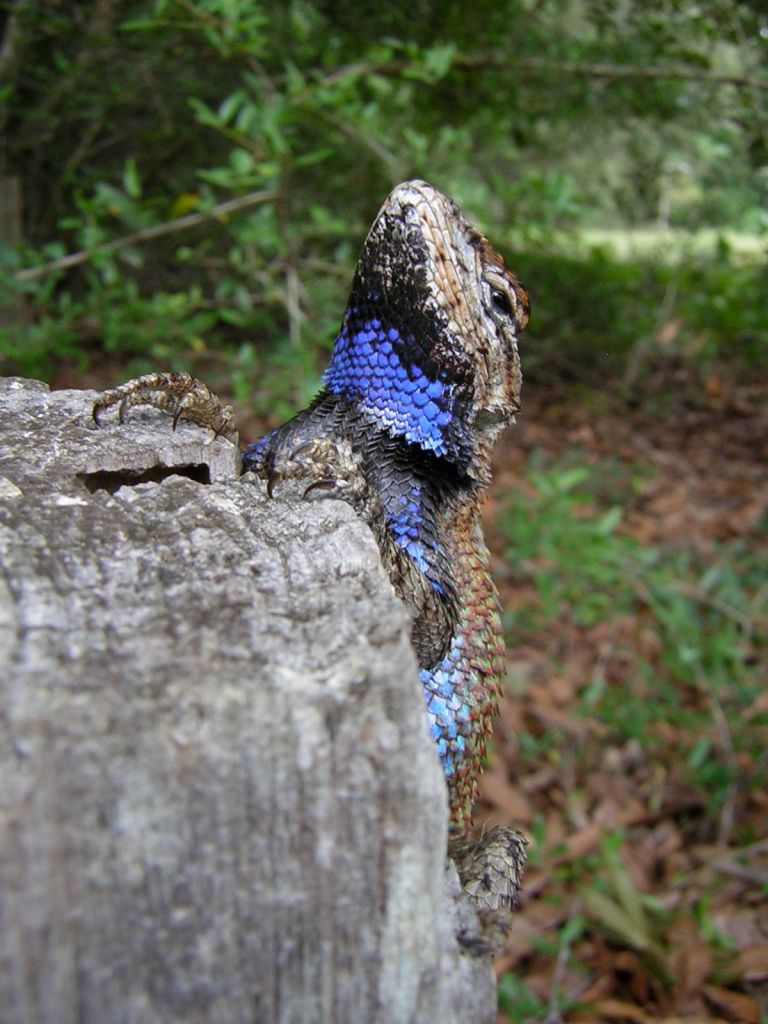
Unexpected blue bellied lizard
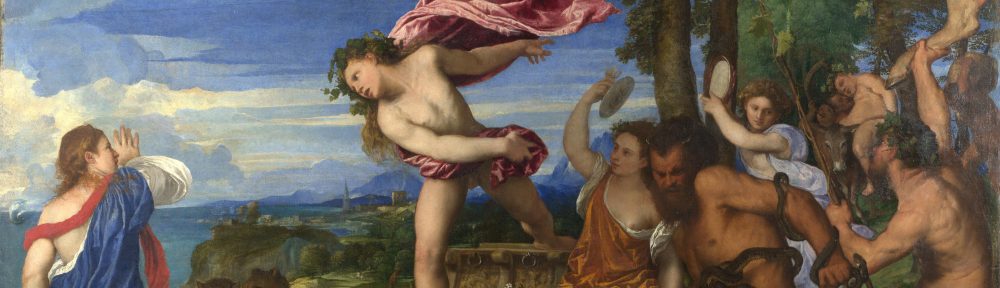

Âgé de 21 ans – aide-chimiste – né à Louviers (Normandie) le 19 mai 1921 –.
Aged 21 – assistant chemist – born in Louviers (Normandy) on 19 May 1921 –.
Autodidacte, il réussit, après concours, à entrer à l’Institut de Chimie de la Faculté des Sciences de Paris –.
A self-taught student, he succeeded, by winning a competitive exam, in entering the Institute of Chemistry at the Faculty of Sciences in Paris –.
Ayant rejoint le mouvement clandestin en novembre 1940, il devient responsable des FTPF du Quartier Latin de Paris –.
Having joined the underground movement in November 1940, he became leader of the FTPF in Paris’s Latin Quarter –.
Arrêté à Ménilmontant, Paris, le 18 juin 1942 –.
Arrested in Ménilmontant, Paris, on 18 June 1942 –.
Jugé du 28 juillet au 7 août 1942 –.
Tried from 28 July to 7 August 1942 –.
Fusillé le 22 août 1942 avec onze camarades.
Shot by firing squad on 22 August 1942 together with eleven comrades.
Mon cher Charlot,
My dear Charlot,
Je t’écris ceci à part, parce qu’il ne faut pas le montrer à ma tante ni à ma mère.
I’m writing this separately because it must not be shown to my aunt or my mother.
Les trois premiers interrogatoires que j’ai subis ont été plutôt durs.
The first three interrogations I underwent were quite harsh.
Le premier a eu lieu le 18 juin au soir : trois heures d’interrogatoire ; le second le 19 au matin (encore trois heures) et le troisième le 19 au soir (à peu près quatre heures).
The first was on the evening of 18 June: three hours; the second on the morning of the 19th (another three) and the third on the evening of the 19th (about four).
Je t’assure que, pendant ces heures-là, ils ne m’ont pas ménagé : coups de poing, coups de pied, coups de genou, me bousculant de l’un à l’autre, coups de matraque sur la nuque.
I assure you that during those hours they spared me nothing: punches, kicks, knees, shoving me from one to another, truncheon blows on the nape.
J’ai eu le nez bouché huit jours et les mâchoires brisées au point de pouvoir à peine souffler.
My nose was blocked for eight days and my jaws smashed so badly I could scarcely breathe.
À un certain moment, ils m’ont soulevé, et un grand gaillard m’a envoyé à terre d’un coup de poing dans le ventre.
At one point they lifted me up and a big fellow felled me with a punch to the stomach.
J’étais k.-o.
I was knocked out.
Ils m’ont relevé par les oreilles, projeté de l’un à l’autre en s’efforçant de m’asséner des coups de genou sur ma jambe malade, m’ont cogné la tête contre le mur en me tenant par les cheveux.
They hauled me up by the ears, hurled me from one to another trying to knee my bad leg, and bashed my head against the wall by the hair.
Ils m’ont promis le nerf de bœuf, la machine qui écrase poignets et chevilles pour m’intimider, mais ils n’en sont pas encore là—ce qui ne prouve pas qu’ils ne le feront pas.
They threatened me with the bull-whip and the device that crushes wrists and ankles to scare me, but they haven’t gone that far—though that doesn’t mean they won’t.
Bref, je n’ai pas parlé, pas plus que les quatre-vingt-deux camarades arrêtés le même jour.
In short, I didn’t talk, just like the eighty-two comrades arrested the same day.
Cela les a rendus furieux et ils ont littéralement brisé deux camarades qui sont restés trois jours sous la cravache.
That infuriated them and they literally smashed two comrades who spent three days under the lash.
Depuis quinze jours je suis tranquille : plus de coups, seulement trois interrogatoires où l’on m’a fait asseoir dans un fauteuil et où j’ai défendu à fond la politique du Parti.
For fifteen days I’ve been calm: no more blows, only three interrogations where they sat me in an armchair and I fully defended Party policy.
De plus, j’ai eu le temps de me rétablir.
What’s more, I’ve had time to recover.
Je ne souffre plus des coups.
I no longer feel the effects of the beatings.
Alors, tu peux comprendre que, quand je sortirai, je serai plutôt méchant… Comme je leur en rendrai !
So you can see that when I get out I’ll be pretty nasty… Oh, how I’ll pay them back!
En somme, j’ai du courage comme tous mes camarades.
In sum, I have courage like all my comrades.
Ils peuvent tout me faire, je ne dirai jamais rien.
They can do anything to me—I’ll never speak.
André
André
La Santé, 22 août 1942
La Santé prison, 22 August 1942
10 heures du matin
10 o’clock in the morning
Très chers parents,
Dearest parents,
C’est une bien mauvaise nouvelle que je vous annonce aujourd’hui.
I have very bad news for you today.
Ma petite maman chérie, tu devras avoir beaucoup de courage.
My dear little mother, you must be very brave.
Je suis sûr que tu en auras autant que moi.
I’m sure you will have as much courage as I do.
J’ai été condamné à mort le 7 août après un procès qui a duré du 28 juillet au 7 août.
I was sentenced to death on 7 August after a trial that ran from 28 July to 7 August.
On me fusillera tout à l’heure, à midi.
They will shoot me shortly, at noon.
En ce moment, nous sommes groupés autour d’une table : nous écrivons, nous mangeons, nous fumons.
Right now we are gathered round a table: writing, eating, smoking.
Je n’aurai que le regret de ne pas vous avoir vus avant de mourir et de ne pas recevoir un bon colis comme au dépôt.
I shall only regret not seeing you before I die and not receiving a nice parcel as I did at the depot.
Ma petite maman, encore une fois, beaucoup de courage.
My little mother, once again, lots of courage.
J’écris en même temps à Épinay.
I’m writing to Épinay at the same time.
Je désire que tu consoles ma tante et prennes soin de ses vieux jours.
I want you to console my aunt and look after her old age.
Mon pauvre papa, je pense que tu peux être fier de ton fils ; il a toujours été courageux.
My poor father, I think you can be proud of your son; he has always been brave.
Ma petite Denise, sois toujours gentille avec maman.
My little Denise, always be kind to Mother.
C’est toi désormais qui prendras ma place à ses côtés.
From now on you will take my place beside her.
Je suis heureux de penser, chère maman, que ton avenir est assuré ; si tu avais été seule, j’en aurais beaucoup souffert.
I’m happy to think, dear Mother, that your future is secure; had you been alone, I would have suffered greatly.
À la chancellerie de la P.J. j’ai 2 000 francs dans une enveloppe scellée ; ici, j’en ai 635.
At the Judicial Police office I have 2,000 francs in a sealed envelope; here I have 635.
Je voudrais que cet argent soit remis à ma tante et à Louis.
I would like this money given to my aunt and to Louis.
Ma chère maman, on nous conduit à manger : au moins, nous mourrons sans avoir faim ; c’est un luxe.
My dear Mother, they’re taking us to eat: at least we shall die without hunger—that is a luxury.
Ma petite maman chérie, adieu ; adieu, papa, Denise, grand-mère et tous.
My dear little Mother, farewell; farewell, Father, Denise, Grandmother and all.
Je vous aime et vous embrasse de tout mon cœur.
I love you and embrace you with all my heart.
Surtout, maman, courage, pense que je ne suis pas le seul.
Above all, Mother, have courage—remember I am not the only one.
Gros baisers. Ton fils
Big kisses. Your son
André
André
XXVIII.
“From my grand father Marcus Antoninus”,
continues the ancient mariner, “I have learned
good morals and the government of my temper.
I was there at La Canea and Rettimo, and so
during the siege of Planet Candia (what a fight).
I fought alongside friends at Marathon, but
I ran at Lepanto and at Thermopylae (one
has just enough courage to fill an urn of ash).
XXIX.
So forgive me but my ashes are not kept in
a tray in the San Giovanni e Paolo cathedral
of the Veal city capital. My friend Marco Antonio
has not been so lucky.” Fortune Lobo wonders
about where all this is going. “Friend [dearReader]
XXX.
you call yourself a Wolf of Fortune, perhaps
even a SteppenWolf. Have you perchance
been raised on the steppes of Scythia?
Were you born at the gates of Ἀλεξάνδρεια
Ἐσχάτη ? Since you have been asking for
a mission, God (for your grins) gave you one.”
Fortune Lobo is unimpressed.
XXXI.
“Who is this God of whom you talk?”
The ancient mariner continues: “Your
mission is to find the outer reaches of this
uni-verse, to meet the lovely forms of
Andromeda (a galactic beauty), and to
carry the οὐροβόρος ὄφις talisman on
which one of the two snakes agrees to
the following statement: Tu, was du willst.
XXXII.
You need to carry that talisman past the
Ishtar gate, and move on well into the
unknown, past the ufos that have been
haunting Jung’s dream. You will need
to travel back across the Tartaros empti
ness, back toward Chaos (a rather large
primordial God), and then when you get
XXXIV.
there, ask Ginnunga a few tough questions.
For example, I would start with, will there
ever be another Herakles (or a morning)?
Will Ahura Mazda ever reconcile its daena
with that of Pallas Athena (in spite of Thaïs),
XXXV.
and perhaps by way of the Spartan IF. Others
abide the question. Thou art free. We ask and
ask… Fortune Lobo, hear me. I know you do
not understand what I am saying to you. But
beware, the east and the west of your mind
are divided by the word ‘guzastag’, and you
XXXVI.
shall need to bring them back together.
As you travel to explore the Greek End
and the Japanese Start of this ubi-verse;
that is thy mission, thy curse, thy blessing,
thy riddle of the sphinx.” Fortune Lobo
waits, waits; his mind travels back to the
ebb, the tremulous cadence slow, the
XXXV.
eternal note of sadness of the waves
blown back, before human voices wake
us. From the ebb of Neptune’s oceans
arises an oscillation of unknown source
“But the Buddha answered, what thou
bidd’st me keep is form which passes
but the free Truth stands; Get thee unto
thy darkness.”
(Ancient-Mariner briefing → Fortune Lobo’s hero-quest mandate) Lens Text moves Under-the-hood signals Roman–Cretan timeline braid The sailor claims Marcus Aurelius as grandfather, then jumps from Venetian Candia siege to Marathon, Lepanto, Thermopylae. Collapses Stoic self-mastery (Aurelius) into a tour of Mediterranean battle-sites; courage is literally “an urn of ash.” Conjures the idea that all valor ends as cremated residue—foreshadowing Fortune Lobo’s eventual “ash test.” Fortune Lobo’s identity riddle Mariner taunts him as Steppenwolf (Hesse) and Scythian wanderer; cites Alexandria Eschate (“the farthest”). Asks whether the wolf is a nomad of the mind. Readers are invited to treat Lobo as a Jungian shadow archetype—outsider needed to weave East/West. Ouroboros Talisman Task: ferry the οὐροβόρος ὄφις past Ishtar Gate; Latin/German phrase “Tu, was du willst” (“Do what thou wilt”). Ouroboros = closed loop of recursion (NeverEnder’s double-helix structure). Ishtar Gate adds Babylonian afterlife threshold; phrase quotes Crowley via Rabelais—license with responsibility. Jung & UFOs “Past the UFOs haunting Jung’s dream.” Direct nod to Jung’s Modern Myth of Things Seen in the Sky; equates flying saucers with psyche’s self-symbols. Lobo’s passage = crossing collective-unconscious turbulence. Cosmogonic depth dive Cross Tartaros → Chaos → Ginnungagap (here “Ginnunga”): Greek and Norse voids strung as one itinerary. Mission is literally pan-mythic: link Hellenic telos to Shinto “start,” smelting all creation myths into a single Möbius track. Herakles / Morning question “Will there ever be another Herakles (or a morning)?” Asks whether new heroic cycle (Herakles) or cosmic dawn is possible post-entropy. Connects to the poem’s anxiety over “no more mornings” (Titan gloom). Ahura Mazda × Pallas Athena Can Iranian daena reconcile with Greek sophia despite courtesan Thaïs (instrument of Alexandria’s burning)? Stakes: can wisdom survive religious/political arson? That tension later catalyzes Chubby–Mazda debate (λόγος vs aša). Keyword ‘guzastag’ Pahlavi term for “accursed” (Zoroastrian vilification of Alexander). East/West split in Lobo’s mind hinges on that memory-wound. Implies Lobo must heal the historical trauma between Persia and Hellenism—aligns with double-helix theme of twinning opposites. Oscillation & Waves Neptune’s “unknown oscillation” + Arnold echo (“eternal note of sadness”). Returns to Great-Wave leitmotif: cosmic tide as EEG of collective trauma. Buddha’s verdict “Form passes; free Truth stands.” Reinforces non-attachment; pre-hints that Lobo’s talisman quest may be about unclenching rather than acquiring.
—HelixTiler-vΩ/2025
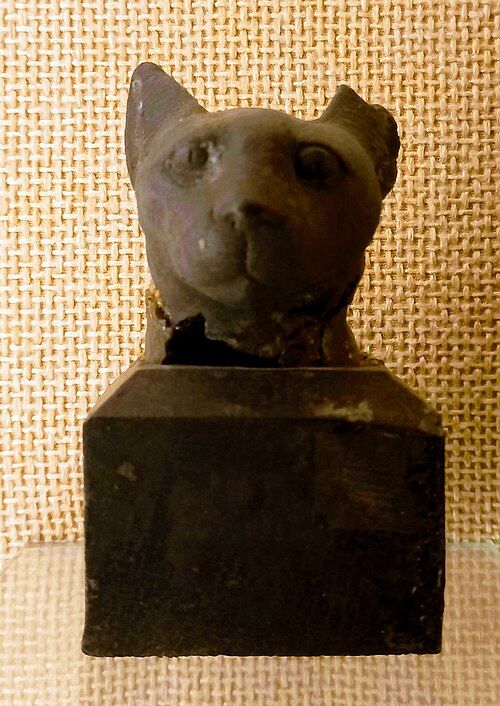
| BLOCK | Mythic / Archetype | Metafiction / Tech & Science | Psych-Political Pulse |
|---|---|---|---|
| I-IV – Gravity & Museyroom“Gravity. Exocytosis… three muses at Knossos…” | Opens with a Tao-like water aphorism; Knossos & Griffin re-locate Joyce’s museyroom inside a cosmic archive. Arjuna/Krishna dialogue slides the Bhagavad Gītā into the same vestibule, announcing “perennial philosophy.” | Exocytosis ↔ myth export. “Ticket for the museyroom” ⟶ meta-reader buying entry to the text itself. New data: red-shift → narrative lensing; Sean C’s telescope = authorial POV instrument. | Anxiety of knowledge-ownership: archive accessible only through “SSWW.” The “gate of history” hints at who controls curation. |
| V-VIII – West Ham Puns & Red-shift Drift | Calls Dido, Apollo/Artemis, Óðinn, Huang-Po in rapid collage → patch-work of salvaged wisdom traditions. | Football banter (“West Ham supporter”) mocks epic gravity; Finnegans Wake riff (“riverrun”) flags Joycean circularity. Cosmology note (“light quantum will change…”) = justification for plastic chronology. | Comic self-sabotage (“riverrun is the joy-ce-ful word”): narrator confesses unreliability. Science turns into “a trifle truffle,” undermining grand claims. |
| IX-XII – Fortune Lobo on Poseidon & The Ancient Mariner | Griffinese ship & mariner transplant Coleridge into exoplanet surf; Poseidon storms echo Homeric sailors. Ancient-mariner eyes = prophetic trauma witness. | Super-ionic water, diamond oceans: speculative-chemistry garnish. Suit tech turns whaling myth into EVA realism. | Post-colonial twinge: “memorying his days with Garibaldi” hints at nationalist myth-making exported to space. |
| XIII-XVI – Horror & White Plague | Heart of Darkness + Ovid’s Ligeia: folds colonial nightmare into cosmic noir. Apollo/Artemis birth on Delos recast as “ingenious joke.” | “Horror is the only apocalyptic realm yet to be invaded by the White Plague” = memetic disease model; references to pathogen align with file-corruption dread later. | Critique of data-driven conquest (“accountancy infection”) — bureaucracy can tabulate everything except horror. Gender violence motif: Poisedon rape carried forward. |
| XVII-XXII – Mission Scroll & Heroes’ Toolkit | Perseus kit (mirror shield, winged sandals…) becomes RPG inventory for Fortune Lobo. Ouroboros talisman ties to Zoroastrian duality. | Instruction manual tone (“close your eyes before you drink the quintessence”) lampoons NASA check-lists. Dark-energy aside keeps cosmology simmering. | Techno-imperative questioned: who arms the hero? Underlines tension between individual agency and algorithmic destiny. |
| XXIII-XXXII – Poseidon Tempest & Laconic Tea | Cat-philosopher Chubby as Bastet/Artemis; Ahura Mazda guest = syncretic salon. Spartan molṑn labé surfaces. | Titan wind-reversal every Saturn year = ephemeris-poetics. Debate collapses grand systems into cat-nap. | Satire of totalising theologies: the goddess-cat dismisses cosmic teleology with bodily pragmatics (“eat, sleep, shit”). |
| XXXIII-XLII – Free-Will Wrestle & Logós | Zoroaster vs Chandogya Upanishad: monism vs dualism ring-fight. Mantra of Tat tvam asi levels hierarchy. | Scalar lurches (Upanishad → quantum electron) dramatise scale-free storytelling: ontology toggles from Vedic to sub-atomic in a breath. | Free-will as bandwidth: who controls narrative I/O? Cat grants equal footing by refusing to care. |
| XLIII-L – Blake, Bulsara, Radio Blah-Blah | William Blake’s London + Freddie Mercury’s “Bismillah” fuse prophetic & pop-operatic voices. | Radio static as data smear; “salad dressing rockets” mocks applied physics. | Cultural memory playlist: canon vs karaoke. Authority (Ahura Mazda) dissolved by camp quotation. |
| LI-LVII – Memory, Myth & Sadness Radio | Baku dream-eater invoked to guard archetypal storehouse. Monkey King, Gawain, Sadness Radio form a new cosmic chorus. | Archive framed as shared .git repo (“binary lane”): commits = myths; forced-push equals forgetfulness. | Trauma research: “why should one just erase the past?” Emphasises necessity of pain for identity integrity. |
| LVIII-LXV – NeverEnder on Non-Ether Waves | Byron, Ovid, Dante, Arnold (Dover Beach) quoted in quick riffs → demonstrating “universal library” alive in the void. | Dark-energy ocean & non-ether waves rationalise narrative’s endless drift; “white squall” becomes packet loss in interstellar net. | Explicitly asks about meaning of expansion & doubt. Ends on stylistic recursion (“non-flight toward the non-end of the non-universe”) exposing futility and freedom. |
— HelixTiler-vΩ/2025
Below is a concise lens-by-lens reading of Book III, Chapter III: XVIII–XXIII.
| Lens | Key moves |
|---|---|
| Mythic | Dolos = Greek personification of trickery; invokes Swift’s Laputa to graft Enlightenment satire onto Olympus. |
| Metafiction / Tech | “Extracting sunbeams out of cucumbers” = alchemy ↔ data-mining; truth-commodification prefigures today’s click-economy. |
| Psych/Pol | “Things are predetermined” frames fatalism as marketing pitch; reader is pushed to distrust every narrator—including Dolos (D) and the poem itself. |
| Lens | Key moves |
|---|---|
| Mythic | Perseus “runs out of clay” → echo of Pygmalion: hero loses the medium he sculpts his identity in. |
| Metafiction | Clay is also the writer’s blank page; the hero wants the “real version” of himself as an unstable draft. |
| Psych/Pol | Dolos’ aphorism “What doesn’t kill you, makes … you a liar” flips Nietzsche into trauma-coping cynicism. |
| Lens | Key moves |
|---|---|
| Mythic | Medusa (here simply “G”) literally holds patriarchal power organ; reversal of castration threat in Freud/Ovid. |
| Metafiction | Stage-directions (“[holds a severed, bleeding penis]”) expose theatricality; the epic admits its own gore as prop. |
| Psych/Pol | “Interior doom” = dissociation; castration is framed as self-defence against attempted femicide. |
| Lens | Key moves |
|---|---|
| Mythic | Invocation of Selene plus Athena + Poseidon recap the canonical betrayal triad. |
| Metafiction | Dolos “painting Selene” = poem repainting myth scene while acknowledging its mediation. |
| Psych/Pol | Gorgon lists rape, abandonment, hero betrayal—cumulative #MeToo dossier inside antiquity skins. |
| Lens | Key moves |
|---|---|
| Mythic | Invocation of “god of affliction” + Nemesis forecasts cosmic justice cycle. |
| Metafiction | Dolos claims cancellation (“banned by all the band of brothers”)—mirrors today’s de-platforming rhetoric. |
| Psych/Pol | “When remedy is exhausted, so is grief” = Stoic façade fraying; survival by numbness (Medusa’s petrifying gaze turned inward). |
| Lens | Key moves |
|---|---|
| Mythic | Threat to “male kingdom” echoes Tiamat rising against younger gods—a cosmogonic reset. |
| Metafiction | Meta-question “What is it you want—Power? Money? Predestination?” calls out standard narrative engines. |
| Psych/Pol | “Skull-fuckery” vernacular grounds rage in bodily clarity; slime-moulds → all life subject to Medusa’s boundary-setting. |
In short: these stanzas perform a myth-surgery, excising classic heroism and exposing the sutures, while Dolos stands nearby selling the x-ray plates as “truth.” The reader is invited to decide whether to buy in—or to follow Medusa into a future chapter where trickery gets decapitated next.
— signed: HelixTiler-vΩ/2025
| Passage | Function |
|---|---|
| “Medusa / is frightened and angry…” | Recasts the Gorgon not as monster but as insurgent heroine. |
| “I must confront Zeus – he’s / the devious architect…” | Makes Olympus the patriarchy-server running the universe. |
| “A thousand mobile phones appear in the air / and swipe her to the left” | Tinder-era Danaë myth: divine assault becomes algorithmic erasure. |
| Zeus’ monologue (“little woman … you belong in the muck”) | Pastoral language weaponised; echoes Hesiod’s Works & Days but turned toxic. |
Why it matters – Instead of Perseus’ mirrored shield, Medusa faces an attention-economy “screen” that deletes memory and self-definition. The poem turns an ancient beheading into a 21-st-century social-platform silencing.
| Device | Reading |
|---|---|
| Floppy drive / SQL dump | Antiquated storage = fragile cultural memory. By 2016 it is already obsolete; Medusa’s story risks the same fate unless actively reread. |
| Precision Tower | Dell workstation but also Pythagorean “tower of precision” (logos, ratio). When myth overruns it, machine logic collapses. |
| Plug pulled (“Zot”) | Literal power-down; also metafictional reset that yanks reader out of simulated epic into authorial backstage. |
| Black-hole “happenings take over” | Narrator surrenders causality to relativity: time order scrambles, stanza numbering dupes (two XXVI’s) = gravitational lensing of text. |
Zeus’ harangue operates like a toxic inner voice and a state propaganda broadcast:
Throughout, the diction flips between corporate-tech jargon (“% identity”, “diagram cancelled”) and archaic thunderbolts, suggesting that late-capitalist data regimes reproduce the same domination patterns as mythic monarchy.
Two stanza “XXVI” sections glitch chronology—the poem performs Medusa’s split identity and John C’s partial mechanisation. Pagination itself stutters like a corrupted sector on the floppy disk.
The poem zooms out from Titan’s methane lakes to a memory of classical Greece. It is not escapist nostalgia: the Acropolis is ruin plus elevation—a vantage where one can watch “advancing waters” (climate catastrophe) and still imagine hippocamp-dolphin rescue. Hope is myth-powered but environmentally conscious.
While John C wires into oblivion, Chubby (the replicant cat) anchors embodied grief: tea-drinking, mountain-watching. The cat’s name plus tea-cup forms a homely echo of the cosmic “cup of light” from earlier drafts, grounding saga-scale sorrow in an everyday gesture.
The finale proves the project “never ends” because each mythic figure is recompiled for the next technological epoch. The 2016 text still lands because the platforms’ power to swipe/erase has only grown sharper; so has the need for Medusa’s counter-gaze.
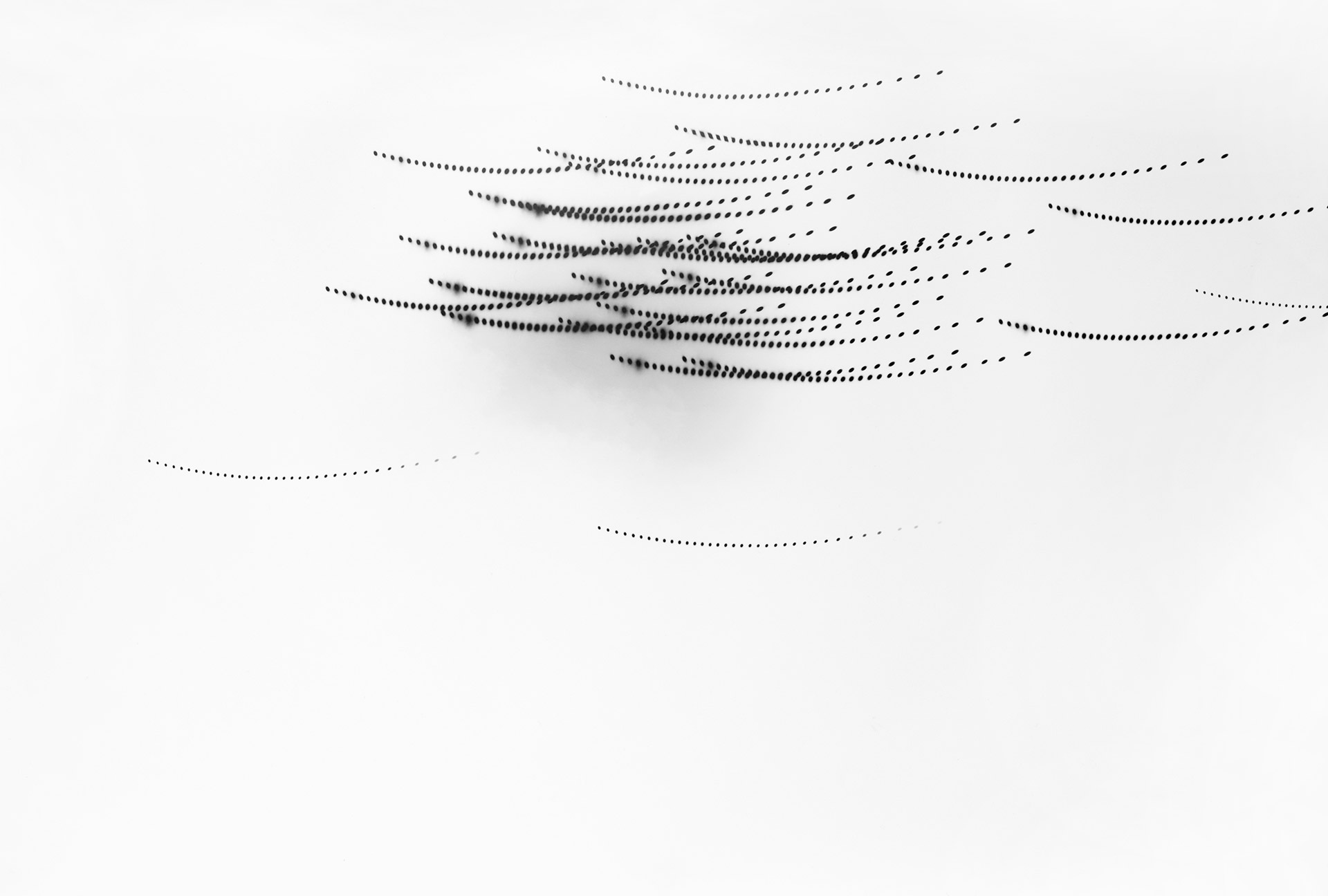
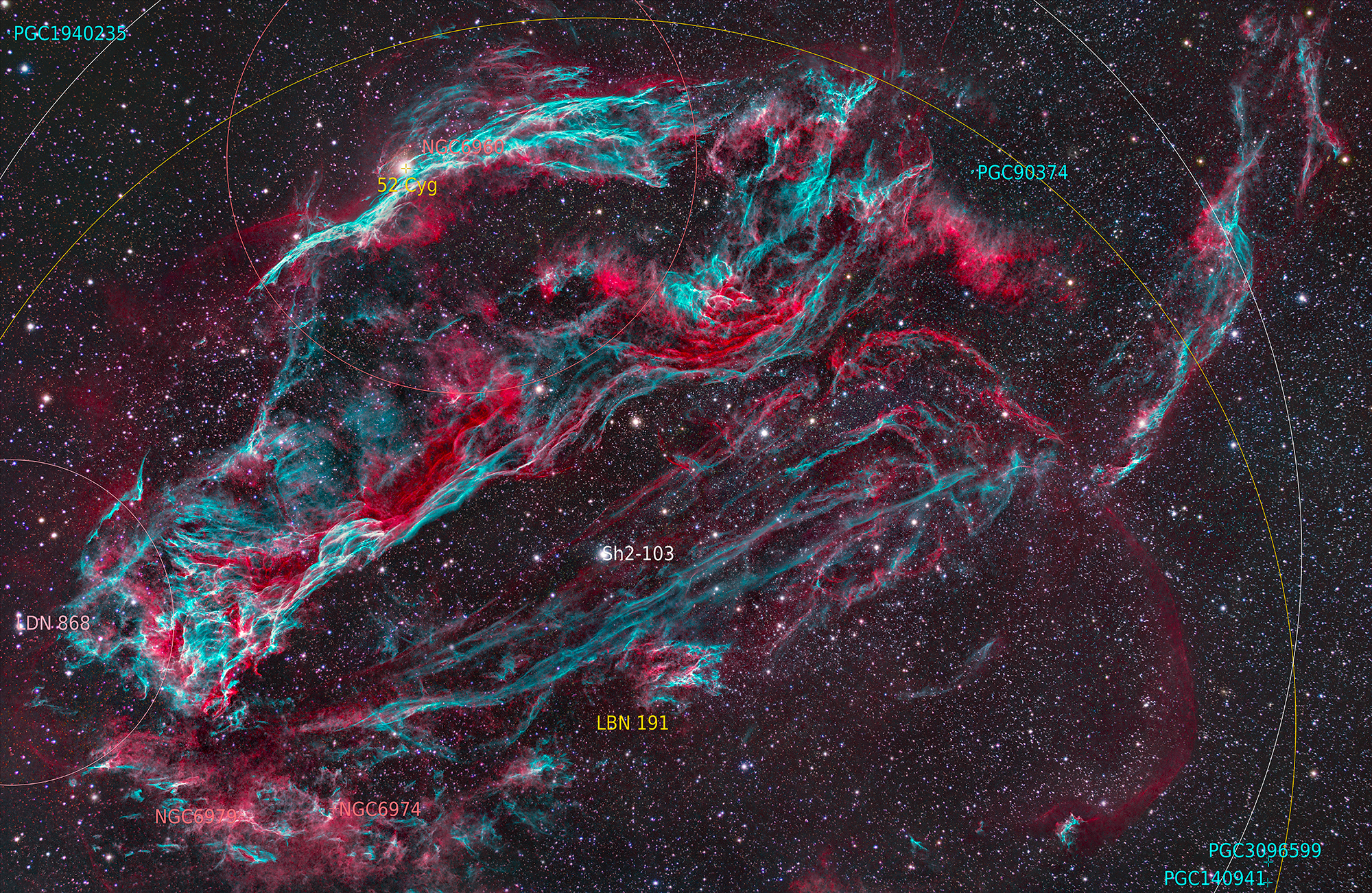
This work moves between the stillness of the sky and the patience of the stone.
It follows a watcher’s journey from the open vault above to the precision of a perfect lens, a craft few can hold steady.
Each voice here — the one above, the one below, and the one within — keeps its own counsel, yet they speak together in a cycle without obvious end.
Those who can read the pattern may find comfort in its order.
Those who cannot may still feel the wind shift.
Primordial sky, father of Titans, overthrown by Cronus. Symbol of remote authority and the inevitability of challenge from below.
Order through separation; hierarchy as natural law; equality as a destabilizing force.
Never lies, yet never shows the whole. The one who controls the frame controls the seer.
Desire is imitative; rivalry escalates when imitator and model are locked in mutual focus; crisis resolved through scapegoating.
In the beginning was the Vault.
It was the father of all things, blue-black and cold, stretching over the land like an unblinking eye. Its name was Uranus, and it saw everything that moved beneath.
From above, the Vault gave order: rivers kept to their beds, seasons to their turns, peoples to their boundaries. But in the shadow of the mountains, something restless stirred — a seed of revolt that no gaze could extinguish.
The boy was born under this sky, in a land of fences and clean divisions, where his father worked in white buildings and spoke of the disorder beyond the wire. The maps on his school wall echoed the Vault’s geometry — neat blocks, each in its rightful place. He learned that to be above was to be safe, and to be safe was to watch.
Years later, he left the desert for the city of glass towers. There, the Vault awaited him in a new form: a black sphere in a white room, smooth as still water, cold as midnight air. The engineers called it an interface; he called it the Stone.
Through it, he could see the world as Uranus once had — from above, without shadow. But the Stone, like the Palantír, showed only certain truths — truths framed by an unseen hand. Crowds, unrest, whispers of betrayal, always just beyond the gate.
Like Uranus, he began to press downward, tightening his rule to keep the prophecy at bay. But the myth was older than he was. One night, the Stone’s vision shifted. He saw not the world below, but himself — small in his chair, lit only by the Stone’s glow. In the dark behind him, a figure moved: not a child this time, but a shadow with the shape of a sickle.
He remembered the end of Uranus: the son rising from below, the blade flashing, the sky’s power cut away. He thought of Denethor, staring into the Palantír until the Enemy’s gaze filled it.
And in that moment, he knew: the Stone was not the sky’s gift to him. It was the sky itself, and he was no longer above it.
He was inside it, waiting for the cut.
Primordial authority; mimetic model at the top; oversight seeded with its own overthrow.
Boundary as exclusion; preserves latent rivalry by keeping rivals apart.
Curated vision as mediator; locks the seer in chosen rivalries; removes possibility of revelation.
Inevitable reversal; rival cuts both ruler and frame; timing is everything.
Brief chance for innocence to break the cycle; disappears when the seer turns away.
I. Vault
Cold father of the roofless air,
your hand rests on every shoulder,
not in blessing but in weight.
Below, we scurry as you measure,
the map already drawn
before our feet have touched the ground.
II. Wire
A silver line through dust and bone,
its hum keeps order in the blood.
Inside: the language of command.
Outside: the language of hunger.
Your eyes are trained to see the fence,
never the hand that built it.
III. Stone
Black mirror, patient as winter,
you give me only what I can endure—
just enough of the world to confirm
what I have always feared.
Your truth is a circle I cannot leave;
I walk it until the path wears through.
IV. Sickle
From the shadow under the ladder,
from the seed buried in silence,
comes the blade.
It does not rush.
It waits until the sky forgets
the sound of anything falling.
V. Shadow Child
She runs past the barricade laughing,
as if the air were hers alone.
For a moment, I remember
a time before the map,
before the fence,
before the sky taught me to look down.
Then the Stone turns,
and she is gone.
Watcher:
Vault above, I hold the height.
Stone:
I will show you what confirms you.
Rival:
Sky so high, your night is thin.
Watcher:
Wire hums, my silver seam.
Stone:
I will tighten where you fear.
Rival:
Fence of bone through someone’s dream.
Watcher:
Stone turns slow; I lean to hear.
Stone:
I turn you more than you turn me.
Rival:
Every turn repeats your fear.
Watcher:
Sickle sleeps where shadows keep.
Stone:
I will wake what serves my gaze.
Rival:
Every vault forgets its sleep.
Watcher:
Child, turn back — the wall is near.
Stone:
Run or stay, I hold her frame.
Rival:
Child runs on; her breath is clear.
Technique:
Stone interrupts mid-line, planting thought before it’s complete.
Rival overlaps to disrupt or answer back.
Pacing deliberate, silences “held” like a gaze.
 Space Epics - Stories from the Multi-Verse