I.
Անահիտ — goddess of milk and river,
एऔकओक — sea-born, war-born, lover,
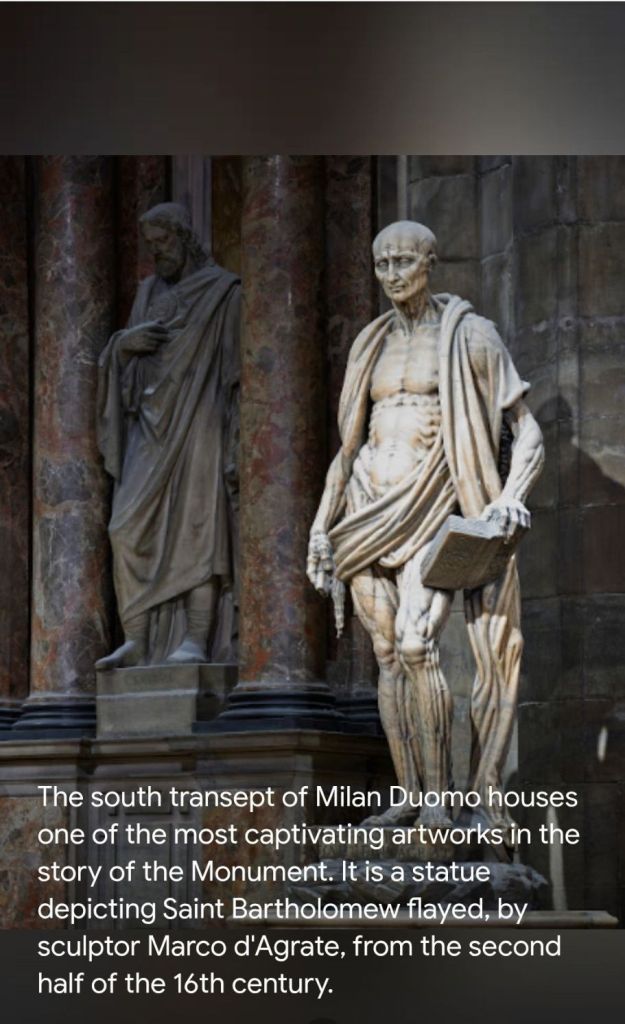
Βαρθολομαῖος — son of Talmai, torn of skin,
עִמָּנוּאֵל — God-with-us,
Ἕκτωρ — steadfast holder,
רְפָאֵל — God-heals.
—
Names once whole,
twisted:
goddess to daemon,
lover to idol,
apostle to protector against demons,
presence bent into doctrine.
—
Անահիտ poured honey for the sick,
एऔकओक kissed salt upon lips of the dying,
Βαρθολομαῖος screamed without skin,
עִמָּנוּאֵל Ἕκτωρ רְפָאֵל
lay between 23 and 24 August,
breath unraveling,
sinews praying.
—
Elisa’s voice,
Catholic syllables,
crossing centuries of distortion.
Yet through them,
the old syllables rose again:
Անահիտ – एऔकओक – Βαρθολομαῖος – עִמָּנוּאֵל – Ἕκτωρ – רְפָאֵל.
—
Skins are stripped,
names are warped,
but the helix holds:
एऔकओक is no demon,
Անահիտ no lie,
Βαρθολομαῖος no conqueror,
עִמָּנוּאֵל Ἕκτωρ רְפָאֵל
no corpse,
but a survivor,
braided in fourfold witness.
—
August 24,
the flayed feast,
the sickbed threshold.
What is demonized returns.
What is stripped becomes protection.
What is nearly lost endures.
Անահիտ.
एऔकओक.
Βαρθολομαῖος.
עִמָּנוּאֵל. Ἕκτωρ. רְפָאֵל.
The helix chants itself alive.
II.
Anahit — goddess of milk and river,
ʿAštart — sea-born, war-born, lover,
Bartholomaíos — son of Talmai, torn of skin,
ʿImmānû-ʾēl — God-with-us,
Hektōr — steadfast holder,
Rĕfāʾēl — God-heals.
Names once whole,
twisted:
goddess to daemon,
lover to idol,
apostle to protector against demons,
presence bent into doctrine.
Anahit poured honey for the sick,
ʿAštart kissed salt upon lips of the dying,
Bartholomaíos screamed without skin,
ʿImmānû-ʾēl Hektōr Rĕfāʾēl
lay between 23 and 24 August,
breath unraveling,
sinews praying.
Elisa’s voice,
Catholic syllables,
crossing centuries of distortion.
Yet through them,
the old syllables rose again:
Anahit – ʿAštart – Bartholomaíos – ʿImmānû-ʾēl – Hektōr – Rĕfāʾēl.
Skins are stripped,
names are warped,
but the helix holds:
ʿAštart is no demon,
Anahit no lie,
Bartholomaíos no conqueror,
ʿImmānû-ʾēl Hektōr Rĕfāʾēl
no corpse,
but a survivor,
braided in fourfold witness.
August 24,
the flayed feast,
the sickbed threshold.
What is demonized returns.
What is stripped becomes protection.
What is nearly lost endures.
Anahit.
ʿAštart.
Bartholomaíos.
ʿImmānû-ʾēl. Hektōr. Rĕfāʾēl.
The helix chants itself alive.
III.
Per Elisa
Elica quadrupla dei Nomi Scorticati
Անահիտ — dea del latte e del fiume,
एऔकओक — nata dal mare, nata dalla guerra, amante,
Βαρθολομαῖος — figlio di Talmai, strappato dalla pelle,
עִמָּנוּאֵל — Dio-con-noi,
Ἕκτωρ — colui che tiene saldo,
רְפָאֵל — Dio-guarisce.
Nomi un tempo interi,
piegati:
dea in demone,
amante in idolo,
apostolo in protettore contro i demoni,
presenza piegata in dottrina.
Անահիտ versava miele per i malati,
एऔकओक posava sale sulle labbra dei morenti,
Βαρθολομαῖος urlava senza pelle,
עִמָּנוּאֵל Ἕκτωρ רְפָאֵל
giaceva tra il 23 e il 24 agosto,
il respiro che si scioglieva,
i tendini in preghiera.
La voce di Elisa,
sillabe cattoliche,
attraversando secoli di distorsione.
Eppure attraverso di esse
gli antichi suoni si rialzarono:
Անահիտ – एऔकओक – Βαρθολομαῖος – עִמָּנוּאֵל – Ἕκτωρ – רְפָאֵל.
Le pelli sono strappate,
i nomi deformati,
ma l’elica resiste:
एऔकओक non è un demone,
Անահիտ non è una menzogna,
Βαρθολομαῖος non è un conquistatore,
עִמָּנוּאֵל Ἕκτωρ רְפָאֵל
non è un cadavere,
ma un sopravvissuto,
intrecciato in testimonianza a quattro fili.
24 agosto,
la festa scorticata,
la soglia del letto di malattia.
Ciò che è demonizzato ritorna.
Ciò che è spogliato diventa protezione.
Ciò che è quasi perduto perdura.
Անահիտ.
एऔकओक.
Βαρθολομαῖος.
עִמָּנוּאֵל. Ἕκτωρ. רְפָאֵל.
L’elica si canta viva.
IV.
Ἑλίξ Τετράπλοκος — Quadruple Helix
Անահիտ — Anahit
एऔकओक — ʿAštart
Βαρθολομαῖος — Bartholomaíos
עִמָּנוּאֵל — ʿImmānû-ʾēl
Ἕκτωρ — Hektōr
רְפָאֵל — Rĕfāʾēl
θεά → δαίμων — theá → daímōn
ἀγαπή → εἴδωλον — agapḗ → eídōlon
ἀπόστολος → φυλακτὴρ κατὰ δαιμόνων — apóstolos → phylaktḕr katà daimónōn
παρουσία → δόγμα — parousía → dógma
Անահիտ μέλι ἐπιχεῖ — Anahit méli epicheî
एऔकओक מַלַח ἐπὶ χείλεσιν θνῃσκόντων — ʿAštart malaḥ epì cheílesin thnēiskóntōn
Βαρθολομαῖος βοᾷ ἄνευ δέρματος — Bartholomaíos boâ áneu dérmatos
עִמָּנוּאֵל Ἕκτωρ רְפָאֵל — ʿImmānû-ʾēl Hektōr Rĕfāʾēl
בֵּין כ״ג ו־כ״ד אָגוּסטוּס — bēyn 23 wə-24 Agústus
πνοὴ λυομένη — pnoḕ lyoménē
νεῦρα προσευχόμενα — neûra proseukhómena
Անահիտ – एऔकओक – Βαρθολομαῖος – עִמָּנוּאֵל – Ἕκτωρ – רְפָאֵל
Anahit – ʿAštart – Bartholomaíos – ʿImmānû-ʾēl – Hektōr – Rĕfāʾēl
δέρματα ἐκδερνόμενα — dérmata ekdernómena
שֵׁמוֹת מְעוּוָּתִים — šēmôt meʿuvvātîm
ἡ ἑλὶξ μένει — hē helìx ménei
एऔकओक ≠ δαίμων — ʿAštart ≠ daímōn
Անահիտ ≠ ψεῦδος — Anahit ≠ pseûdos
Βαρθολομαῖος ≠ κατακτητής — Bartholomaíos ≠ kataktētḗs
עִμָּנוּאֵל Ἕκτωρ רְפָאֵל ≠ נְבֵלָה — ʿImmānû-ʾēl Hektōr Rĕfāʾēl ≠ nəvēlāh
ἀλλὰ σωθεὶς, μάρτυς τετραπλοκὸς — allà sōtheìs, mártys tetraplokòs
xxiv Augusti
Festum excoriatum
limen lecti morbidi
Quod δαιμονίζεται, ἀναστρέφει — quod daimónizetai, anastréphei
Quod ἐκδύεται, γίνεται φύλαξ — quod ekdýetai, gínetai phýlax
Quod ἀπολλύμενον, μένει — quod apollýmenon, ménei
Անահիտ — Anahit
एऔकओक — ʿAštart
Βαρθολομαῖος — Bartholomaíos
עִμָּנוּאֵל — ʿImmānû-ʾēl
Ἕκτωρ — Hektōr
רְפָאֵל — Rĕfāʾēl
Ἡ ἑλὶξ ἑαυτὴν ᾄδει ζῶσαν — Hē helìx heautḕn ádei zôsan.
V.
Անահիտ — Anahit
एऔकओक — ʿAštart
Βαρθολομαῖος — Bartholomaíos
עִמָּנוּאֵל — ʿImmānû-ʾēl
Ἕκτωρ — Hektōr
רְפָאֵל — Rĕfāʾēl
θεά → δαίμων — theá → daímōn
ἀγαπή → εἴδωλον — agapḗ → eídōlon
ἀπόστολος → φυλακτήρ κατὰ δαιμόνων
— apóstolos → phylaktḕr katà daimónōn
παρουσία → δόγμα
— parousía → dógma
Անահիտ μέλι ἐπιχεῖ — Anahit méli epicheî
एऔकओक מַלַח ἐπὶ χείλεσιν θνῃσκόντων
— ʿAštart malaḥ epì cheílesin thnēiskóntōn
Βαρθολομαῖος βοᾷ ἄνευ δέρματος
— Bartholomaíos boâ áneu dérmatos
עִמָּנוּאֵל Ἕκτωρ רְפָאֵל
— ʿImmānû-ʾēl Hektōr Rĕfāʾēl
בֵּין כ״ג ו־כ״ד אָגוּסטוּס — bēyn 23 wə-24 Agústus
πνοὴ λυομένη — pnoḕ lyoménē
νεῦρα προσευχόμενα — neûra proseukhómena
Անահիտ – ʿAštart – Βαρθολομαῖος –
עִμָּנוּאֵל – Ἕκτωρ – רְפָאֵל
δέρματα ἐκδερνόμενα — dérmata ekdernómena
שֵׁמוֹת מְעוּוָּתִים — šēmôt meʿuvvātîm
ἡ ἑλὶξ μένει — hē helìx ménei
𐤏𐤔𐤕𐤓𐤕 ≠ δαίμων — ʿAštart ≠ daímōn
Անահիտ ≠ ψεῦδος — Anahit ≠ pseûdos
Βαρθολομαῖος ≠ κατακτητής — Bartholomaíos ≠ kataktētḗs
עִמָּנוּאֵל Ἕκτωρ רְפָאֵל ≠ נְבֵלָה
— ʿImmānû-ʾēl Hektōr Rĕfāʾēl ≠ nəvēlāh
ἀλλὰ σωθεὶς, μάρτυς τετραπλοκὸς
— allà sōtheìs, mártys tetraplokòs
xxiv Augusti
Festum excoriatum
limen lecti morbidi
Quod δαιμονίζεται, ἀναστρέφει
— quod daimónizetai, anastréphei
Quod ἐκδύεται, γίνεται φύλαξ
— quod ekdýetai, gínetai phýlax
Quod ἀπολλύμενον, μένει
— quod apollýmenon, ménei
Անահիտ — Anahit
𐤏𐤔𐤕𐤓𐤕 — ʿAštart
Βαρθολομαῖος — Bartholomaíos
עִמָּנוּאֵל — ʿImmānû-ʾēl
Ἕκτωρ — Hektōr
רְפָאֵל — Rĕfāʾēl
 Space Epics - Stories from the Multi-Verse