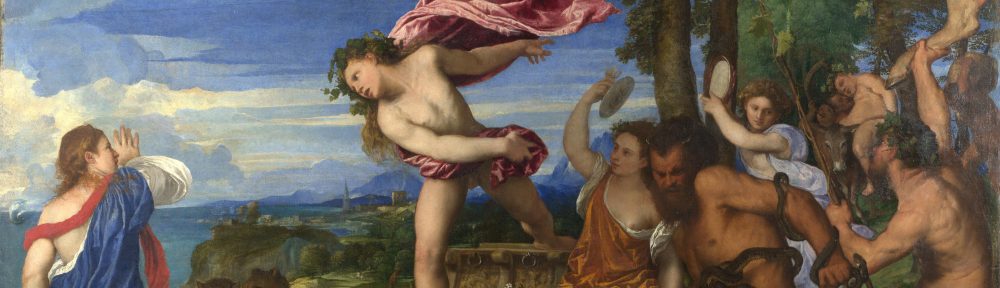
Venice, September 1998
Revisited for Space Epic, July 2025
Title: “Cloudening Moon”
The title itself sets a mood of occultation and veiling. Not a brightening moon, but one wrapped in mist, enigma, and emotional weight. The poem doesn’t simply evoke lunar symbolism; it evokes a process of moon becoming cloud — a celestial object caught in spiritual erosion.
Stanza 1
A whirling scorpion of funereal light,
An endless pit advancing in nebulous darkness,
A bleak twist beyond the drop curtain of a relaxed obscurity,
These lines introduce us to a cosmos that is actively hostile or at least indifferent. The “whirling scorpion” suggests danger cloaked in celestial disguise. The drop curtain evokes theatre, unreality, the staging of death.
Sneering and lecherous, pregnant of doubtful morose love,
Brimming with the cynical pietas of Christian hypocrisy,
The moon
The moon is personified as both cruel and fertile — not with life, but with “doubtful morose love”. The invocation of Christian hypocrisy hints at the speaker’s spiritual alienation, a refusal of easy consolation.
Stanza 2
It gazes and scorns the gasping purple night…
This stanza places the moon in a role of cosmic witness — detached, pitiless, maybe mocking. The “intimate Doric Bottom of human sorrow” fuses architectural classicism (Doric = strength) with bodily descent, aligning grandeur with grief.
Stanza 3
Pending itself, the tearing bulk of celestial light…
This stanza pivots: the moon seems to rupture, or become self-aware. The speaker is confronted not just with the moon, but with himself.
The chemistry of your being and the origin of your species…
A descent into existential science: marrow, cytoplasm, ancestral rage. It speaks to the biological burden of sorrow, passed down in molecular memory.
The Moth-Indigo Truths…
A hallucinatory image. Indigo = intuition. Moth = drawn to death-light. Truths that flit and burn.
Middle Section: Ancestral Chorus
Shouting back at you the howls of thousand-old rugged souls…
Here the poet becomes surrounded by the dead: ancestors, historical ghosts, failed philosophies, ancient betrayals. The frigid men of yesterday inhabit the speaker’s present.
Who, although corpse-like, stare numbly at each other…
This is not a resurrection of love. These souls are mute, numbed by their own trauma. A critique of history, of inheritance, of broken spiritual lineage.
Dreams driven to dust by sadistic Nature… beating them off the wall…
Even Nature is seen as cruel, dismembering the poetic and spiritual instinct. The speaker is both victim and witness.
Closing Stanza
Agape, in wounded proud absinth…
Agape here is multivalent: divine love, open-mouthed awe, perhaps even drunkenness (absinth). The speaker is looked upon by some higher, Galatean force.
You assert your irreplaceable arrogance…
The defiant note at the end stands out. Despite the cosmic horror, the speaker asserts dignity and haughtiness from the blue. This echoes Shelley, Nietzsche, and cosmic defiance.
The rest, the sidereal cytoplasm, is beyond…
Science meets mysticism here. The speaker ends not in resolution but in submission to the great unknown: the numinous magnetic influence.
Contextual Note (2025)
This poem was written in the shadow of Venice, by a young person confronting metaphysical despair and historical burden. Now, in 2025, its images feel like a prologue to a life deeply shaped by inherited trauma, spiritual longing, and mythic inquiry. This is not just a moon poem — it is a genesis text, a psychic document. It sets the tone for the Space Epic project.
The moon has not stopped cloudening. But now, perhaps, we know how to speak with it.
 Space Epics - Stories from the Multi-Verse